In Estonia’s Russian-language information space, an increasingly extreme accusation has been circulating lately: that the Estonian state is preparing a genocide against the Russian-speaking population. Whereas earlier the discussion mainly revolved around “Russophobia” or discrimination, the most severe possible term is now being used with growing frequency.
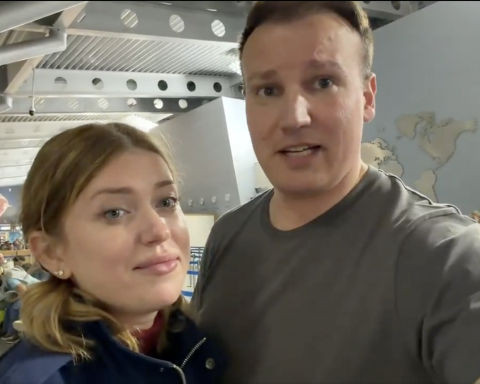
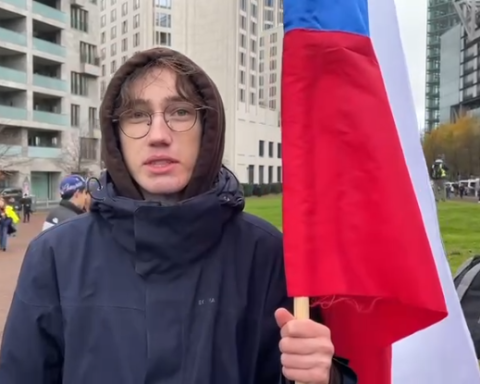
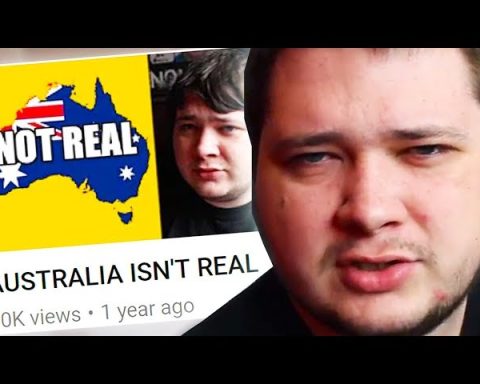
Such a claim is also made in a video recently published on YouTube by Igor Hopp, an activist associated with the KOOS movement. In the video, he attempts step by step to prove that the Estonian state is moving toward genocide and has already passed through a large part of its “stages.”
The video begins with the question: “Do you think that in present-day Estonia there are signs indicating that a policy of genocide is being carried out against the country’s Russian-speaking residents?” (“Есть ли в современной Эстонии признаки, указывающие на проведение политики геноцида в отношении русскоязычных жителей страны?”)

The author then promises to go through these “signs” one by one.
Igor Hopp’s “Stages of Genocide”
The central idea of the video is based on a scheme circulating on the internet according to which genocide does not begin with mass killing, but with several successive stages. According to Hopp, Estonia has already gone through a large part of these stages.
1. “Us” and “Them”
Hopp identifies the first sign as the division of society into “us” and “them.”
“Чёткое разделение на мы и они, на своих и на чужих.”
(“A clear division into us and them, into one’s own and outsiders.”)
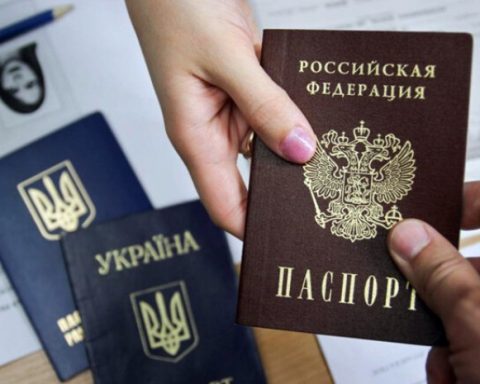
As an example, he points to so-called grey passports and certain political expressions which, in his view, demonstrate that the Russian-speaking population is being treated as outsiders.
The alien’s passport, commonly known as the grey passport, is not “labeling,” however, but a solution to the citizenship issue that arose after the collapse of the Soviet Union. It is a travel document issued to persons with undetermined citizenship who reside in Estonia but do not hold the citizenship of any country.
Such a passport can be obtained by a person who has a legal right of residence or a residence permit in Estonia and who does not possess, or cannot obtain, a travel document from another country. At the same time, Estonian citizenship is available to anyone who wishes to apply for it through naturalisation.
2. Creating Stereotypes
Hopp describes the second stage as the creation of stereotypes about Russian-speaking residents. According to him, Russians are portrayed as a threat to the state’s security and are attributed collective negative characteristics.
The examples presented in the video consist of individual statements by politicians or in the media, which are portrayed as representing a general attitude in society. At the same time, the author ignores Russia’s aggression against Ukraine and the broader security context that has influenced public debate across Europe.
3. Legal Discrimination
The third stage is described as laws that allegedly restrict the rights of the Russian-speaking population.
For example, discussions about limiting the voting rights of citizens of Russia and Belarus are cited.
“Жители Эстонии работают, платят налоги, но не имеют права влиять на решения.”
(“Residents of Estonia work and pay taxes but do not have the right to influence decisions. ”)
The issue of voting rights concerns citizens of foreign states, not ethnic affiliation. In European countries, voting rights for foreign nationals at the local level are by no means universal.
4. Social Isolation
Hopp claims that the gradual exclusion of the Russian-speaking population from society is taking place in Estonia. As examples, he mentions Russian-speaking teachers leaving their jobs and the transition to Estonian-language education.
In his view, the aim is to “destroy Russian-language education” (“русское образование уничтожить”).
The aim of the education reform is to ensure that all children acquire better Estonian language skills and have equal access to the labour market. This has been emphasized by both the Estonian government and several international organizations.
5. Dehumanisation
According to Hopp, the fifth stage is the portrayal of Russians as “non-humans.” As examples, he refers to the use of the word “tiblade” and the depiction of Russian soldiers as “orcs.”
In the video, internet memes, political statements, and the context of war are conflated. The “orcs” metaphor used in the war in Ukraine is directed at Russian soldiers, not at Estonia’s Russian-speaking population.
6. Normalisation of Hostility
Hopp claims that hostility toward Russians is becoming normal in Estonia.
According to him, “hostile rhetoric is already heard everywhere” (“ненавистническая риторика звучит уже повсюду”).
To support such claims, the video presents isolated conflicts or internet videos and portrays them as phenomena characterising society as a whole.
7. Blaming Them for All Problems
As the next stage, Hopp claims that Estonian politicians blame Russia or the Russian-speaking population for all of the country’s problems.
In recent years, Estonia’s security debates have been closely linked to Russia’s aggressive foreign policy. The same issue is addressed in a similar way by all NATO and European Union countries.
8. “Organised Propaganda”
The video accuses the Estonian media of preparing a genocide.
“Та самая пропаганда, которую осуществляют всем известные Delfi, Postimees и ERR.”
(“That same propaganda carried out by the well-known Delfi, Postimees and ERR.”)
A typical tactic is to label mainstream media as propaganda in order to automatically discredit any counterarguments.
9–10. Preparation for Violence
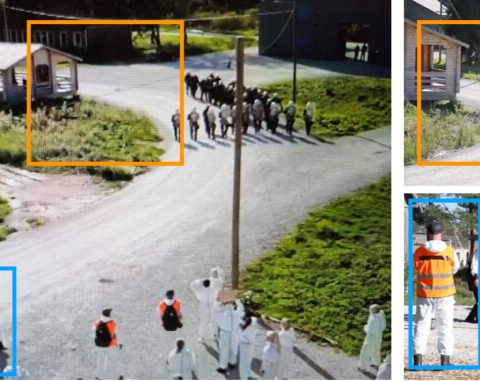
Finally, Hopp claims that Estonia is already preparing for the next stages: according to him, the Internal Security Service is compiling lists of the “unreliable,” and the Defence League is a potential force for carrying out the “dirty work.”
In his view, the final stages of genocide still lie ahead, but “most of the preparatory stages have already been passed” (“большинство подготовительных этапов уже пройдено”).
“Stages of Genocide”?
The “stages of genocide” scheme used in the video is not Igor Hopp’s own invention. It is based on a model developed in the 1990s by the American genocide scholar Gregory Stanton.
Stanton is the founder of the organisation Genocide Watch, and his aim was to describe the steps through which genocides have historically developed. The model was created primarily to help identify dangerous developments at an early stage and, if possible, prevent genocide.
The model is usually used to analyse historical genocides, such as the Holocaust carried out by the Nazis or the genocide in Rwanda.
However, an important point is that Stanton’s model does not mean that the presence of any single indicator points to the occurrence of genocide. Many of these phenomena can also appear in ordinary political conflicts or social tensions.
Stanton’s model is not intended for such mechanical use. It is not a checklist on the basis of which genocide can simply be “diagnosed.” Rather, it is an analytical framework used to study historical processes.
An Extremely Serious Accusation
Genocide is one of the gravest crimes in international law. It refers to the deliberate attempt to destroy a national, ethnic, religious, or racial group.
For this reason, the term is used rarely and with great caution in political debate. Accusing a state of genocide essentially amounts to claiming that the state is preparing for mass destruction.
Hopp’s video ultimately leads the discussion to this conclusion. In his view, the early and intermediate stages of genocide have already been completed in Estonia, and the only remaining question is whether the authorities will take the “final steps.”
The Same Accusation Has Been Used Elsewhere
A similar accusation has also been used in Russia’s political and media space against other countries.
The most well-known example is Ukraine. For years, Russia claimed that a “genocide of the Russian population” was taking place in Donbas. This claim became one of the main justifications Moscow used when launching its full-scale war in 2022.
Similar accusations have also been directed at the Baltic states since the 1990s, though the discussion usually focused on discrimination or Russophobia. The use of the term genocide is much more recent and represents a significantly more radical escalation.
Summary
Igor Hopp’s video attempts to show that Estonia is moving toward genocide. To do this, it takes a “stages of genocide” scheme circulating on the internet and tries to fit Estonia’s policies and individual events into it.

Lõpuks jõuab autor järelduseni:
„На мой взгляд, мы уже наблюдаем все ранние и средние стадии этого процесса.“
(„Minu arvates me näeme me juba selle protsessi kõiki varaseid ja keskmisi etappe.“)
The author ultimately arrives at the following conclusion:
“На мой взгляд, мы уже наблюдаем все ранние и средние стадии этого процесса.”
(“In my view, we are already observing all the early and intermediate stages of this process.”)
Such an approach does not prove the existence of genocide. What it does show, however, is how far political accusations can escalate.
While ordinary political debate concerns language, education, or security policy, an accusation of genocide raises the discussion to an entirely different level. It is no longer a political disagreement but an allegation of criminal conduct by the state.