Harris vs. Trump: The Battle of Memes in the U.S. Presidential Race
Propastop provides a brief overview of the meme war that has erupted during the unexpectedly tense U.S. presidential election, featuring the Republican duo of Donald Trump and JD Vance against the Democratic team of Kamala Harris and Tim Walz. If you’ve come across any interesting memes, please send them to Propastop—we’ll gladly include them in our post!
It all started with the fierce attacks from Republicans, triggered by the decision to nominate Minnesota Governor Tim Walz as the vice-presidential candidate.
WANTED: Lockdowns, mandatory mask-wearing, school closures, etc.
Republicans, some of whom are anti-vaxxers, are now criticizing the former Minnesota governor for his actions during the COVID-19 pandemic.
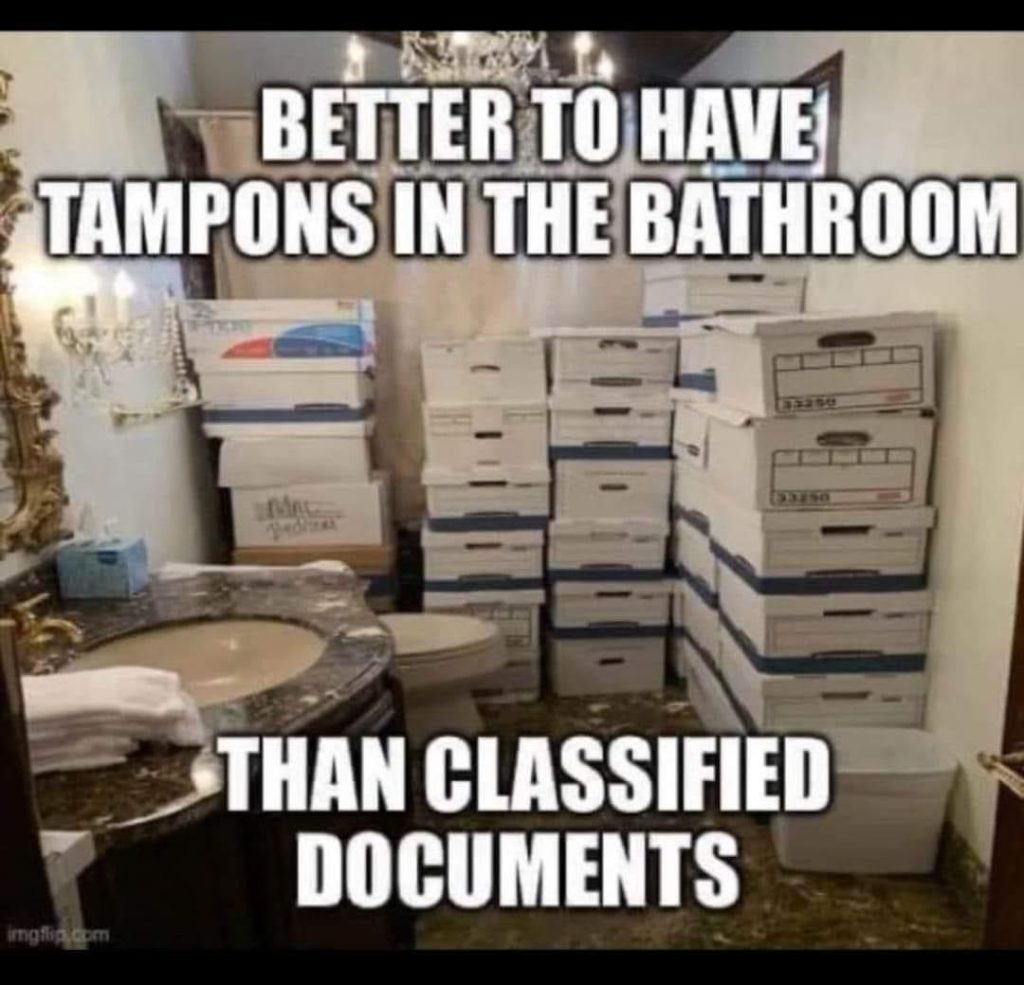
Source: Screenshot.TAMPON TIM: Last year, Governor Walz signed a bill requiring Minnesota public schools to provide free menstrual products, including tampons, in restrooms for all students in grades 4-12. Source: screenshot.
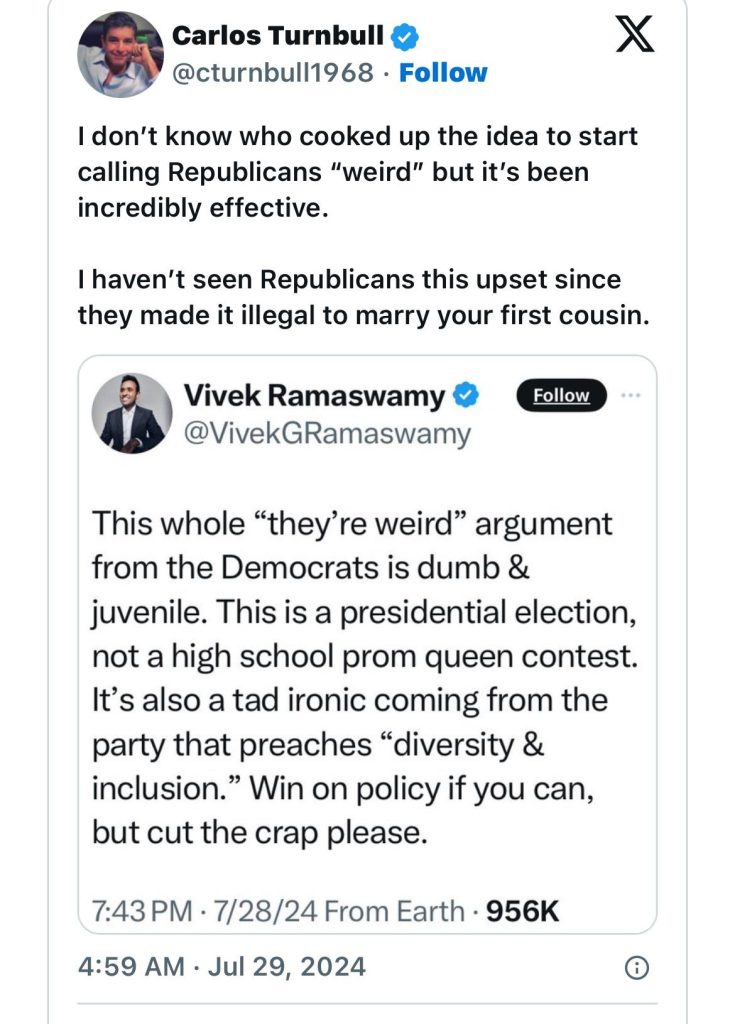
DEMOCRATS MADE THE WORD “WEIRD” GO VIRAL. Dems successfully popularized the term “weird” to ridicule Republican presidential candidate Donald Trump. This simple and widely understood adjective has been much more effective in the final days of the election campaign than the warnings about the “threat to democracy” often expressed in political rhetoric. Even fellow presidential candidate Vivek Ramaswamy complained: “This whole ‘they’re weird’ argument from the Democrats is silly and childish. These are presidential elections, not a high school beauty contest.” On the other hand, Carlos Turnbull notes that labeling Republicans as “weird” has been incredibly effective. Source: Screenshot.
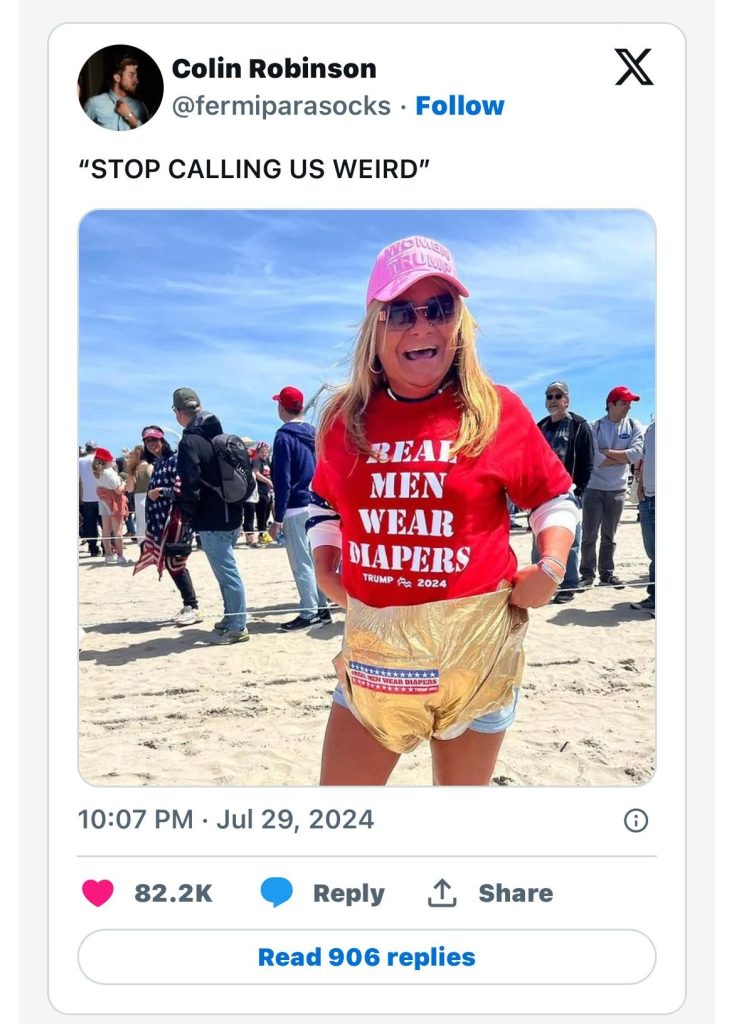
DON’T CALL US WEIRD! “Real men wear diapers,” declares the message on a Trump supporter’s T-shirt. Some time ago, a rumor began circulating that the 78-year-old Trump was forced to wear adult diapers. In response, his supporters started defiantly wearing diapers at campaign events.
Source: Screenshot.
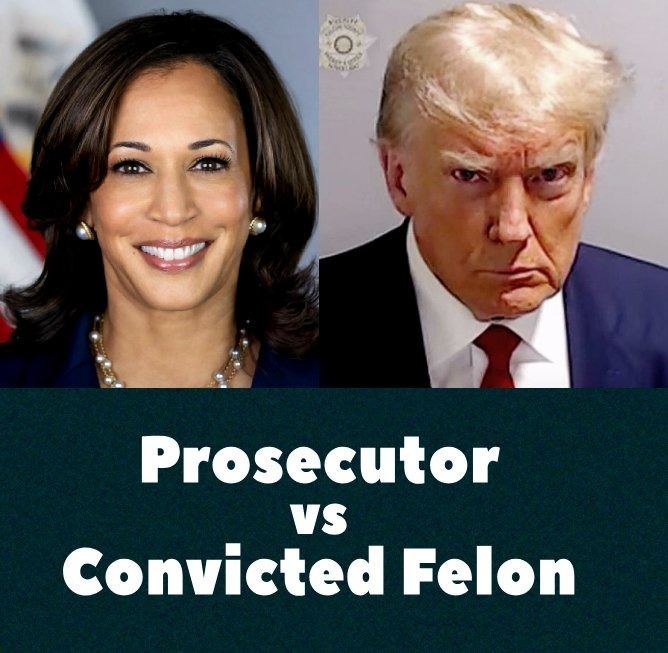
PROSECUTOR AGAINST A CONVICTED CRIMINAL. Democrat Kamala Harris built her career as a prosecutor, while Donald Trump was found guilty of document fraud in court this year.
Source: Screenshot.
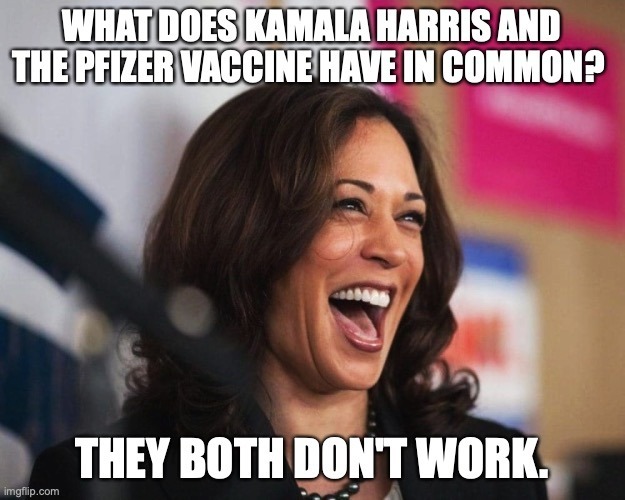
Republicans keep on using anti-vaxx agenda in their memes against Harris.
Do you think the security team shouted “Donald Duck!” during the assassination attempt on Donald Trump? (A play on words – “Donald, duck!” means “Donald, get down!” but sounds like the name of Disney’s legendary character, Donald Duck). Thanks to our reader Kristjan Kostabi for this meme! We welcome clever and timely memes from other readers as well. Source: Screenshot.
A hint to the fact that at Trump’s Florida home, classified documents were stored for an uncertain reasons.
Russia is quietly rebuilding its image on Facebook, flooding feeds with posts celebrating its military, culture, and beauty. But who’s behind this surge? Propastop investigates the hidden networks driving these campaigns. Part of its 2024 Best Reads, this eye-opening story reminds readers to stay alert to online influence.
Propastop got hold of a picture where an Estonian police chain is in a confrontation with a group of rioters wearing white hoods and orange vests. Where, when, and under what circumstances was this picture taken? In your answer, be sure to include your reasoning along with visual evidence. Hints and tools to solve the
In today's article, Propastop continues to compare Soviet and Russian narratives, focusing on the use of biolab and health-related themes. During the Cold War, the KGB managed to convince much of the world that HIV was created in secret U.S. biolabs. Now, Russian propaganda justifies the invasion of Ukraine by claiming that biolabs in the
Recently, a Tallinn resident, Luka Andreyev, drew attention at an anti-war march organized by Russian exiles in Berlin by carrying the Russian Federation flag. Propastop provides an overview, based on online sources, of the views and goals of the young man who moved to Tallinn a few years ago with his parents.
As the U.S., U.K., and France yesterday authorized Ukraine to use long-range weapons against Russia, Hugo Treffner Gymnasium student Annika Moppel’s award-winning research gains new relevance. Her study, which analyzed Russian propaganda in Rossiskaja Gazeta's coverage of the October 8, 2022, Crimean Bridge explosion, reveals the sophisticated disinformation tactics used to manipulate narratives during Russian
Oleg Ivanov, a board member of the KOOS party, threatened at the recently held Russian Compatriots Congress to create a Popular Front in Estonia to protect the rights of Russians if the Estonian government does not cease its "Russophobic and fascist" mockery and restriction of Russians' rights. Propastop describes today how KOOS leaders Ivanov and
China has shifted its influence game in past U.S. elections—focusing less on presidential candidates and more on Congress and state races to shape a long-term, China-friendly political landscape, says analyst Tauno Tõhk. In a Propastop interview, the ICDS researcher explains how Chinese state propaganda operates abroad.
Both Russia’s official opinion leaders and Telegram influencers are eagerly focused on the question of who will make the first move in mutual communication following Donald Trump’s election victory—the Russian or the U.S. president. Telegram posts reveal the influencers' desire and hope that the power shift in the U.S. will lead to a divisive conflict
Moldovan President Maia Sandu secured victory in the second round of elections yesterday with a 55:45 win over former Prosecutor General Alexandr Stoianoglo, despite an extensive Kremlin-backed influence campaign. “Sandu’s victory is crucial for Moldova’s journey toward freeing itself from the grip of pro-Kremlin oligarchs and gradually transforming into a prosperous European society,” said Tiina
Donald Trump’s real-life stints on a trash van and in a McDonald’s kitchen became meme gold mine. Halloween and the U.S. election season have sparked a wave of memes, blending humor and satire. Propastop highlights the week’s best, capturing the fusion of culture, politics, and internet creativity.
Estonian people are not satisfied with the changes and developments taking place in the world around them, note analysts from Miltton, the leading Nordic consulting firm. This creates uncertainty about their ability to cope and leads to resistance, for example, to government decisions. Uncertainty and distrust, in turn, create fertile ground for information warfare attacks
The journalist Marian Männi, who lives in Moldova, personally experienced what modern fake campaigns are like. A fake video was published of her husband, Moldova's Minister of Economy, in which he is shown sitting at a table covered with cocaine lines, surrounded by naked women. Propastop publishes Marian Männi's reflection on the election campaign that
Twitter was abuzz with nuclear weapons memes after Ukrainian President Volodymyr Zelenskyy stressed that Ukraine’s security hinges on either joining NATO or acquiring nuclear weapons. Propastop has collected the best of them for you.
Ilze Kuzmina, a journalist from the Latvian newspaper Latvijas Avīze, decided to visit and compare the three cities in the Baltic states with the largest Russian-speaking populations. Propastop is publishing today Kuzmina's comparison of the information consumption and attitudes of the residents of Narva, Estonia, and Daugavpils, Latvia.
Since one of Propastop's goals is to enhance people's knowledge in the field of psychological defense, we are starting a collaboration with the National Library to introduce specialized literature. In this section, RaRa's media literacy specialist Kateryna Botnar will provide a more detailed overview of a selected work, and at the end of the article,
Today, Propastop explains how Russia initially used the distribution of its passports to create an artificial national minority, which was then used to justify wars against neighboring countries, and how, in recently occupied territories of Ukraine, this tactic has been employed to persecute local residents.
Since 2022, Russian education has shifted towards a military agenda. New subjects have been introduced, and propaganda targeting children has intensified. Comics about the "heroism" of soldiers, meetings with veterans, and their involvement in schools are used to shape youth loyalty and nationalism. Propastop analyzes how the Russian education system shapes the "correct" views in
This year, Russian propaganda attempted to generate interest in the anniversary of the "liberation of Tallinn" by publishing previously classified archival documents. In the beginning of Lieutenant General Holodov's report, Tallinn residents are depicted welcoming the Red Army with flowers, but by the third page, it is revealed that "in the first two days following
Former President of Estonia Kersti Kaljulaid analyzes Ukraine's successes and setbacks in communication this year in an interview with Propastop. "The communicative success of the Kursk operation may lie in the fact that Ukrainian forces are on Russian territory, and no nuclear threat has emerged," Kaljulaid notes.
Propastop review: Orthodox believers are being frightened by rumors that the Estonian authorities are allegedly preparing to forcibly close the Estonian Orthodox Church, which is under the jurisdiction of the Moscow Patriarchate.
On October 20, Moldova will simultaneously hold presidential elections and a referendum on joining the European Union. The Kremlin is attacking pro-European President Maia Sandu with the help of oligarch Ilan Shor, who stole one billion dollars from the banks of the impoverished small nation, and the Orthodox Church. Today, Propastop describes how the elections
Propastop analyzed four of the most well-known war bloggers: Igor Taro, Teet Kalmus, Rainer Saks, and Artur Rehi. We focused on the sources of information the blogger uses, the media environment in which they operate, their primary motivation, and the style of the blog—whether they simply relay information or attempt to create a mood. Note!
A recently released TV series, produced with the support of the Taiwanese government, has garnered worldwide attention. It portrays the invasion of Taiwan, a country with 23 million people, by China, a nation of 1.4 billion. Taiwan's example has raised the question on Propastop: is it also reasonable for Estonia to create its own warning
The nationwide unrest in the United Kingdom following the murder of three girls demonstrated how the spread of misinformation can trigger a political crisis. Propastop takes a closer look at the chain of events.
Kremlin-affiliated propaganda attempted to exploit the tank that was removed from Narva two years ago. Patriotic organizers made a considerable profit from their project, but the promised impact has once again fallen flat.
Belarus' President Lukashenko, known for his aggressive stance, recently threatened a "pre-emptive strike" against Lithuania. Amid rising tensions, Belarus is massing troops, tanks, and artillery near Ukraine's northern border under the guise of exercises, with former Wagner troops also reported in the area. Lukashenko claims the buildup, involving a third of his army, stems from
Estonians have long viewed themselves as targets of Russia's ongoing hybrid pressure. However, the actions of Kaitseliit clearly demonstrate to our NATO allies our unwavering commitment to national defense, serving as a strong deterrent against Russian aggression. This is underscored by the significant interest from international media, with over 30 prominent outlets having visited Kaitseliit
The Russian Embassy in Tallinn has posted an offer on its Facebook page for Russian-speaking teachers from Estonia to consider employment opportunities in Mordovia, located 1,800 kilometers from Estonia. Propastop investigates the details of this offer and find out if there are any who have agreed to it.
The Olympic Games are a significant event in global politics, showcasing the strength of nations in international competition and providing a sense of pride and confidence to people facing difficult times. Propastop highlights eight examples of the political winners and losers of the Paris 2024 Olympic Games. We begin with Ukraine, which, despite the ongoing
Today, Propastop dives into the situation in Russia and the Kursk region with 15 witty memes. One of the highlights? President Vladimir Putin claims Russia has no defined borders, to which Ukrainian President Volodymyr Zelenskyy cheekily responds, "Well, if you insist!"
In late July, the Russian war blogger Nikita Fedyanin (29), known by his alias "Beliy," met a grim fate in northern Mali. His meteoric rise in the media world has captivated Russian propaganda analysts. Fedyanin's Telegram channel, Grey Zone, gained significant notoriety as a key platform for transmitting messages from the notorious Wagner Group leaders
Propastop provides an overview of how Kremlin propaganda portrays the Paris Olympics in a situation where it is not Russia boycotting the Olympics, but the Olympic Games boycotting Russia.
In his latest interview with The Baltic Sentinel, Finnish expert Pekka Kallioniemi warns we're losing the info war against Russia, China, and Iran. He reveals how Kremlin narratives spread and highlights the rise of AI in disinformation.
Propastop examined Propamon and took a closer look at what and why Russian media loves to write about when well-known Estonians are in the spotlight. Here are the top 10 most popular Estonians in Russian propaganda media.
The official announcement of the Baltic States' departure from the unified energy system with Russia and Belarus increases our energy independence, which irritates the Kremlin. "This political decision can be costly for the Baltics, leading to price increases and energy crises, as well as economic downturns and street protests," claimed the business newspaper Vzglyad.
The top event in the world last week was definitely the assassination attempt on Donald Trump. This happy accident inspired many meme creators worldwide, and Propastop today offers a small overview of their work. If you have noticed any interesting memes, please send them to Propastop at the address: [email protected]!
Churchill Fellowship researcher Beth Lambert has recently published a study titled “Effective Cross-Society Combat Against Disinformation Campaigns” as a result of her extensive work. Propastop publishes Lambert's description of the situation in Estonia because the research outcome provides an interesting, impartial assessment of Estonia's achievements and readiness to combat foreign information manipulation and interference.
The turbulent political events of recent weeks have provided plenty of material for meme creators to showcase their wit. The Propastop editorial team has compiled a selection of memes about Kaja Kallas, Joe Biden and Donald Trump, as well as Viktor Orbán's visit to Moscow.
The Kremlin's bundle of narratives, including special operations, denazification, stopping the persecution of Russians, protecting the "Russian world", the "historical truth" about the non-existence of Ukraine, fighting against the aggression of the collective West, etc., changes according to the circumstances, but now it has come down to playing with open cards, to stating your true
An analysis by the think tank Atlantic Council found that during the war in Ukraine, Russian propaganda on Telegram has been spread five times more than before the war. Therefore, Propastop is providing an overview today of how Kremlin propaganda is turning this year's modest military success into a great success story on Telegram.
Although the Russian Federation has been waging a draining war against Ukraine for the third year, our eastern neighbor has increased the organization of disinformation campaigns in Africa. It is important for Estonia to balance Russia's and China's disinformation campaigns, emphasizes Ambassador Daniel Schaer.
The Russian Foreign Ministry's recent announcement, which limits access within its territory to the websites of numerous Western publications, including Propastop's website, is a significant recognition of Propastop's years of work.
Russia's narrative of Western promises to limit the expansion of NATO is a sophisticated manipulation of history. This narrative isn't just a historical footnote, but a strategic weapon. It's aimed at preventing the expansion of NATO and legitimizing Russia's interventions, particularly in Ukraine. However, due to Russia's aggressive behavior, including its invasion of Ukraine, it
Although Poland's relations with Russia have almost never been warm, according to recent surveys, only 2% of Poles view Russia positively. This sentiment is fueled by Russian attacks, and today Propastop describes the three most significant malicious narratives that Russia directs against Poland.
Russia claims it wants peace and is not to blame for starting wars, but the facts show that the narrative systematically repeated by key Kremlin figures is false. In the same way, Russia's calls for peace with Ukraine are hollow, because fulfilling the conditions set as its basis would mean suicide for Ukraine.
Led by Russian military blogger Mikhail Zvinchuk, who was detained in Montenegro, Rybar is far more than a Telegram channel covering the war. Its network of more than 250 channels reaches millions, spreading Kremlin narratives in dozens of languages, gathering intelligence for the Russian military and seeking to shape information abroad.
In September, Russian propaganda portrayed Estonia’s defence readiness as aggression and responded to revelations about the Milrem arson attack by attacking Estonia’s credibility. Meanwhile, problems with ammunition procurement provided material for ridiculing support for Ukraine. This media review analyses these tactics and Estonia’s image in foreign media.
Someone may have been entering the homes of Finnish MPs. Nothing is stolen and nothing is visibly damaged. Instead, small signs are left behind, just noticeable enough to send a message: someone was here. Police are now investigating a series of nearly twenty suspicious incidents.
Attribution, the process of identifying who is responsible, has evolved over time and grown in importance in recent years. In this analysis, we distinguish between three types of attribution: institutional, public and political. We explain what each involves and how they differ.
Over the past decade, the weapons, channels and methods of information warfare have changed. Propastop’s experience shows how individual lies are woven into narratives that shape society’s worldview, and why recognising them early is part of Estonia’s national defence.