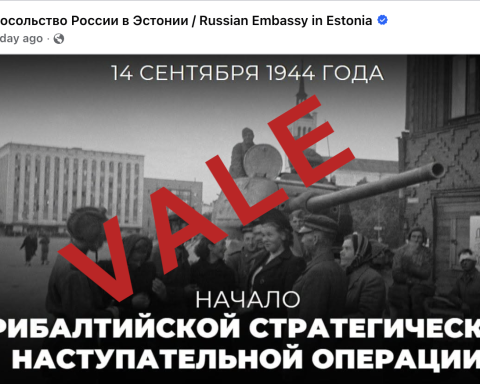
Every autumn, the Russian Embassy in Estonia publishes propaganda material repeating the false claim that Tallinn was liberated in September 1944. It was not.
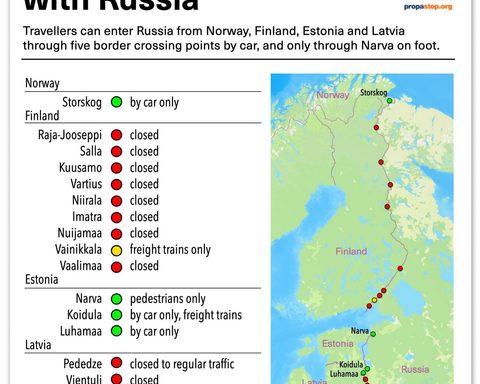
Finland closed its border to travellers, while Latvia allows crossings only by vehicle. Estonia permits both pedestrians and vehicles, yet it remains the main target of Russian propaganda.
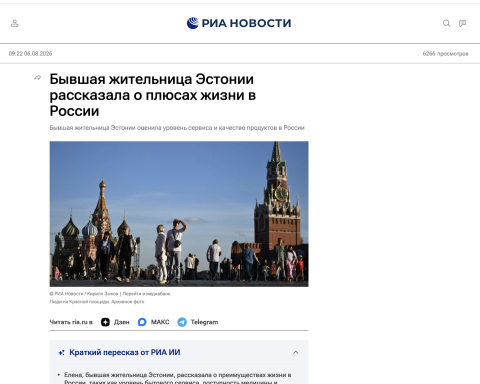
In early August, several Russian media outlets published stories within the space of just a few hours in which Elena, a former resident of Estonia, claimed that life in Russia was significantly better than in Estonia.
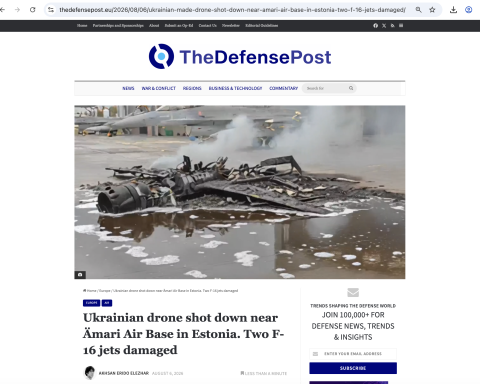
On 6 August, a false story about Estonia began circulating on X, claiming that a Ukrainian drone shot down over Ämari had crashed into and destroyed two Portuguese fighter jets. To spread the fabricated story, its creators set up a clone of a popular defence news website and produced an AI-generated video.
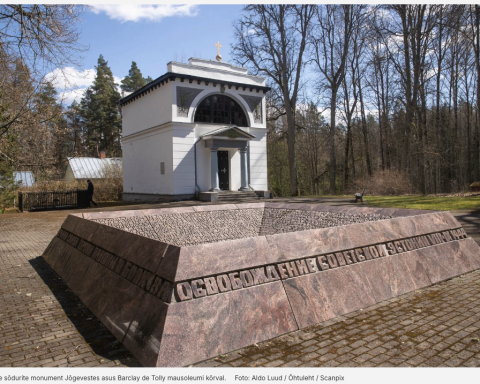
The criminal investigation launched after the removal of the Jõgeveste monument is not an isolated propaganda stunt. Russia has created a system that turns other countries’ decisions concerning Soviet monuments into matters of Russian criminal law and presents its own interpretation of history as the only legally acceptable truth.
Margus Tsahkna’s criticism of the animated series *Masha and the Bear* triggered a swift backlash in Russian media. Within hours, several different propaganda narratives were built around the cartoon, with the focus no longer on *Masha and the Bear*, but on Estonia.
French investigators exposed 13 fake news sites posing as independent media but spreading CGTN narratives. The case shows how modern influence operations now use AI, automation and the look of real journalism.
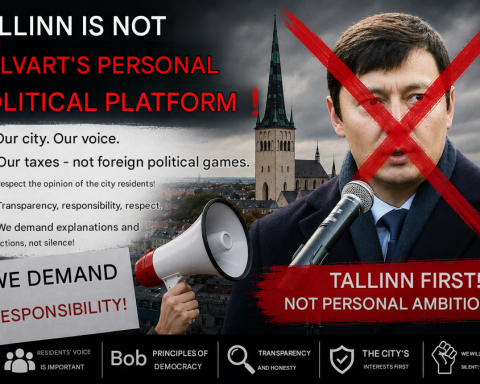
A man who left Estonia for Russia in 2025 has filed a constitutional petition demanding accountability from the Chairman of Tallinn City Council for accepting a civic honour in Kyiv.
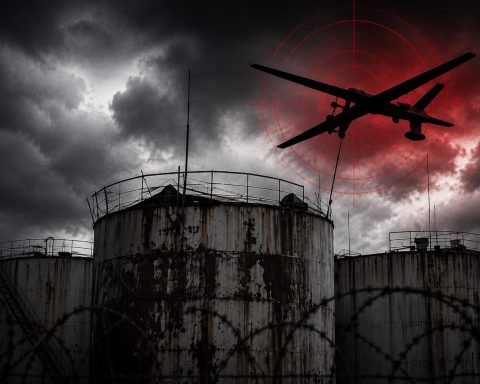
Recent Russian drone narratives are no longer only about airspace violations or stray aircraft. Increasingly, the Baltic states are portrayed as a space now being punished for their “Russophobia.” In propaganda, drones have become tools of moral lessons, used to depict European weakness, the loss of control, and the arrival of war over societies that
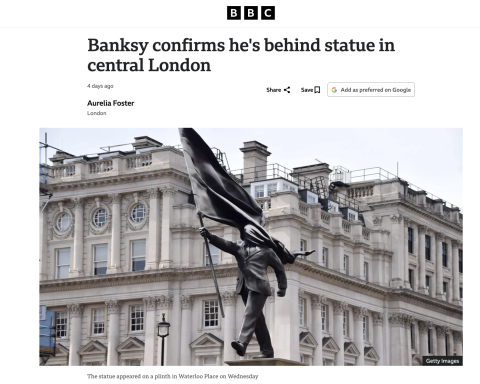
Propaganda is not disappearing, but it no longer looks like propaganda. It can be a statue on a street corner, a joke on social media, or an animation spreading faster than any press release ever could.