In Finland, police are currently investigating an unusual series of incidents. A significant number of members of parliament suspect that someone has entered their homes while they were away. However, the cases do not resemble ordinary burglaries: no locks have been broken, no valuables have been taken, and the homes have not been ransacked. Instead, whoever entered appears to have left behind small but noticeable signs. In some homes, residents returned to find lights on or doors open that they were certain they had not left that way. One Finnish MP found in the middle of the floor a removed electrical outlet cover and later the plinth from beneath a kitchen cabinet. Another discovered excrement left in the toilet. According to Yle, there have been fewer than twenty suspicious incidents over roughly the past year.
The Finnish police launched a preliminary inquiry on 1 October and are cooperating with the National Bureau of Investigation. Who entered the homes and why remains unknown. This is important to emphasize, because the public discussion quickly turned to possible Russian involvement.
Pekka Turunen, head of intelligence at the Finnish Defence Forces, said that entering the homes of decision-makers is among the known methods in Russia’s influence toolkit. At the same time, the Finnish Security and Intelligence Service, Supo, has been more cautious. According to Supo, such practices by the security services of authoritarian states are known to occur within their own countries, but it has no information indicating that Russia has used this method in Finland or elsewhere in Europe. Supo has not currently attributed the incidents in Finland to Russia.
What Happened in Finland Is Not the First Such Case
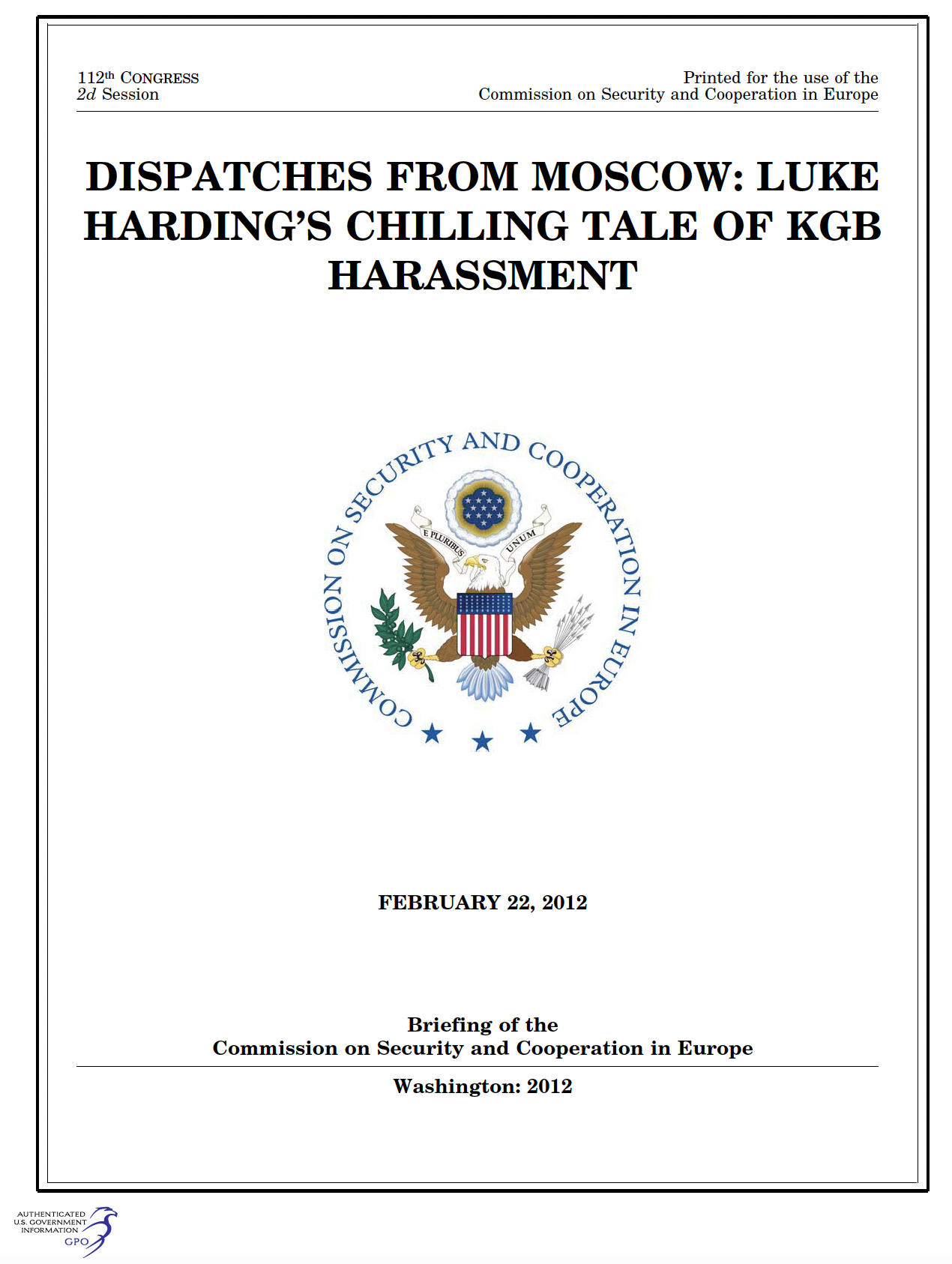
One of the best-documented cases bears an unsettling resemblance to what is now being reported in Finland.British journalist Luke Harding served as The Guardian’s Moscow correspondent from 2007 to 2011. In testimony before the U.S. Helsinki Commission in 2012, he described a pattern of repeated intrusions into his apartment and office that he attributed to the FSB.The intruders did not behave like burglars. Nothing was stolen. Instead, they left signs designed to make their presence known.Windows were left open. The heating was switched off in the middle of the Russian winter. Batteries were removed from all 14 sensors of his home security system. At his office, the internet modem was unplugged and a telephone receiver was left off the hook. The message was difficult to miss: someone had been inside, could get inside again, and wanted Harding to know it. Harding believed the purpose was psychological rather than material, to create anxiety, uncertainty and the persistent sense of being watched. Perhaps the strangest incident came when he discovered a sex and relationship manual beside his bed, apparently left there by whoever had entered the apartment.
In the same testimony, Harding describes another incident involving a Russian employee of The Guardian. When she returned home, she found her beret lying in the middle of the living-room floor. Normally, it hung on a hook in the hallway. Nothing else appeared to have been touched.There was no way for her to prove that anyone had entered the apartment. But that was precisely what made the incident so disturbing: a tiny, inexplicable detail suggesting that someone might have been inside, while leaving no evidence that could confirm it. According to Harding, the psychological impact was devastating. The woman suffered a nervous breakdown, resigned from her job and cut off contact with her former colleagues.
According to former U.S. Ambassador to Moscow John Beyrle, by 2009 intrusions into the homes of American diplomats had become increasingly frequent and brazen. He attributed them to the FSB. The report also states that Harding was told by the British Embassy that it had an entire file documenting similar incidents.
An even more detailed account appeared in 2016, when Washington Post journalist Josh Rogin reported on what U.S. officials described as a systematic campaign by Russian intelligence services against American diplomats in Moscow and other European capitals.
Diplomats’ homes had allegedly been entered at night. Furniture was moved. Televisions and lights were switched on. In one particularly disturbing case, an intruder defecated on the carpet in a diplomat’s living room. Former U.S. Ambassador Michael McFaul told Rogin that the purpose of the Russian intelligence operation was unmistakable: his family was meant to notice what was happening and understand that they were being watched. That is precisely what distinguishes this kind of activity from conventional covert surveillance. An intelligence operation would normally seek to prevent the target from realizing that they are under surveillance. Here, the logic is reversed: the trace is meant to be found. Yet it must remain small and ambiguous enough that the target cannot conclusively prove what happened, who entered the home, or even whether anyone entered at all. The uncertainty is not a flaw in the method. It is part of the method.
A Method Straight from the Classic Playbook
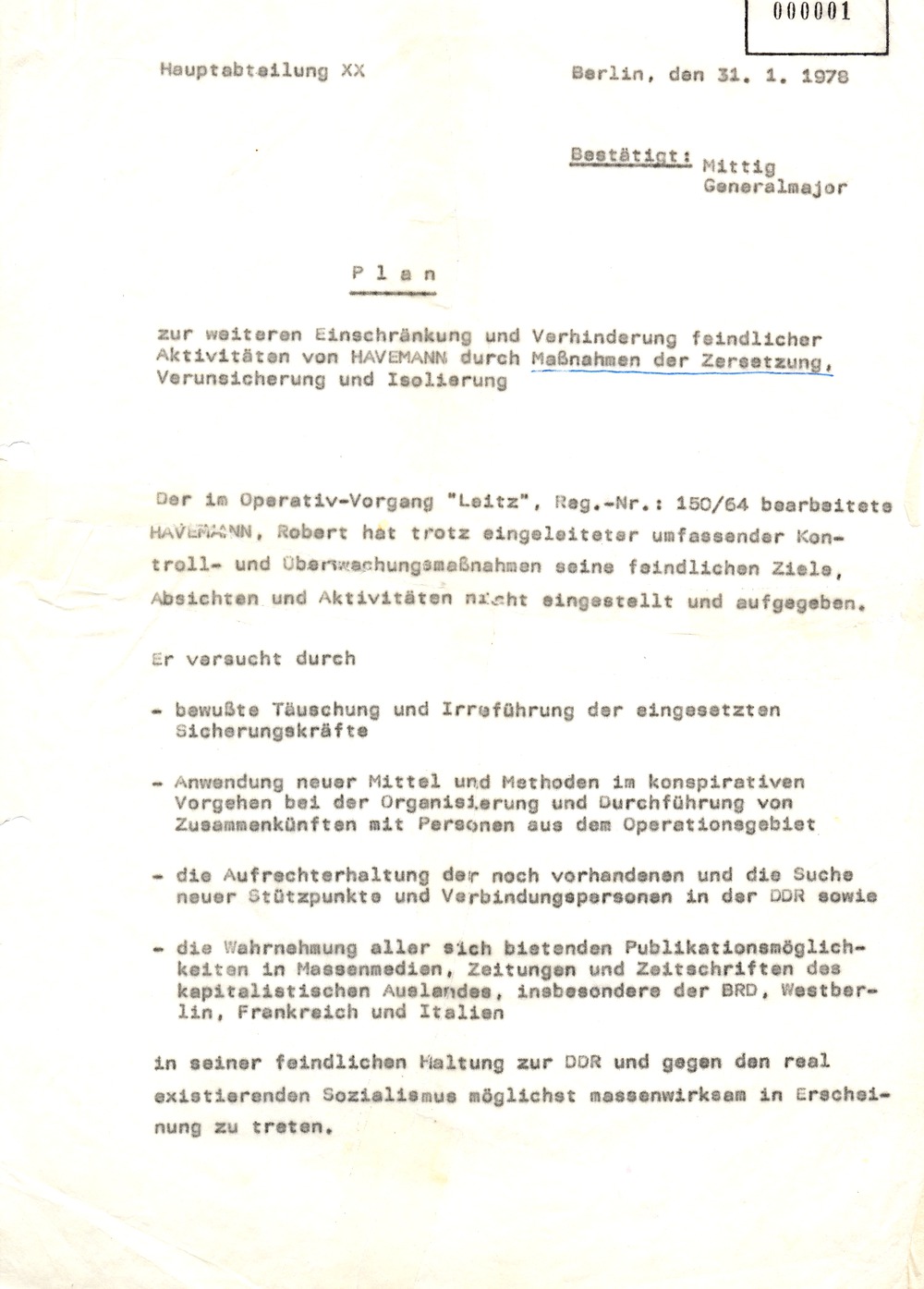
The method has a long history. Harding linked his experience to an East German Stasi practice known as Zersetzung. The term can be translated as “decomposition” or “subversion.” According to materials from the Stasi archives, Zersetzung was a systematic method used to divide, paralyze, distract and isolate people regarded as opponents of the state. A 1976 directive formally made it part of the Stasi’s operational activities.
Zersetzung did not involve only breaking into people’s homes. It included spreading rumors, engineering professional failures, disrupting relationships, surveillance and discrediting. But one of its most psychologically sophisticated forms was covertly entering people’s homes. Objects were removed or rearranged in ways intended to make the target question their own memory and, eventually, even themselves. According to the German Federal Agency for Civic Education (Bundeszentrale für politische Bildung), the aim was to create panic, confusion and fear, and to undermine the individual’s confidence in their own perceptions.
The technique has a long history. Harding himself compared what happened to him in Moscow to Zersetzung, a method of psychological harassment developed by East Germany’s Stasi. Formalized as part of Stasi operations in 1976, Zersetzung was designed to destabilize, isolate and undermine people considered opponents of the state. Its methods ranged from spreading rumors and sabotaging careers and relationships to covertly entering homes and subtly moving or removing objects, leaving targets unsure whether someone had actually been there or whether they could trust their own memory.
That uncertainty is precisely where the technique draws its power. If a television is stolen from an apartment, what happened is unambiguous: it was a break-in. If the television is still there but someone has switched it on, a far more unsettling question arises: who was here, and why did they want me to know? More unsettling still is the second question: was anyone here at all, or am I remembering it wrong?
Uncertainty Is the Objective
A single open window, a misplaced object or a light left on may seem insignificant. But when such incidents recur, they become a message. The target understands clearly that their home is not secure, that their movements may be monitored, and that someone is capable of entering their most private space. At the same time, they often have no evidence they can take to the police, their employer or the public.
The result can be an unusually heightened state of vigilance: the person begins checking doors, objects, their phone and their surroundings, wondering whether every irregularity is an accident or a message. Harding told the U.S. Helsinki Commission that the cumulative effect of such methods can be extremely powerful and can lead to self-censorship. A journalist may begin to wonder whether writing the next story is worth the possible consequences for themselves and their family.
This is why the real target of such an operation may not be the apartment or the information inside it, but the target’s psychological sense of security. Once the operation succeeds, there is no need to enter the person’s home every time. It is enough for them to know that it can be done, and to start looking for the next signs themselves.
In the Finnish cases, we do not yet know whether this is such an operation or something else. But historical parallels help explain why seemingly insignificant details, a light left on, an open door or an object lying in the middle of the floor, need to be taken seriously from a security perspective. Sometimes the purpose of an intrusion is not to take something away. It may be to leave something behind: the knowledge that someone was here.
Opening photo: Flickr / “Suspicious.” by Khaki, CC BY 2.0
Screenshots from the U.S. Helsinki Commission report and the Stasi Mediathek report
Read more
Attribution: Who Do We Point the Finger At?
We Need to Talk About Hybrid Attacks!