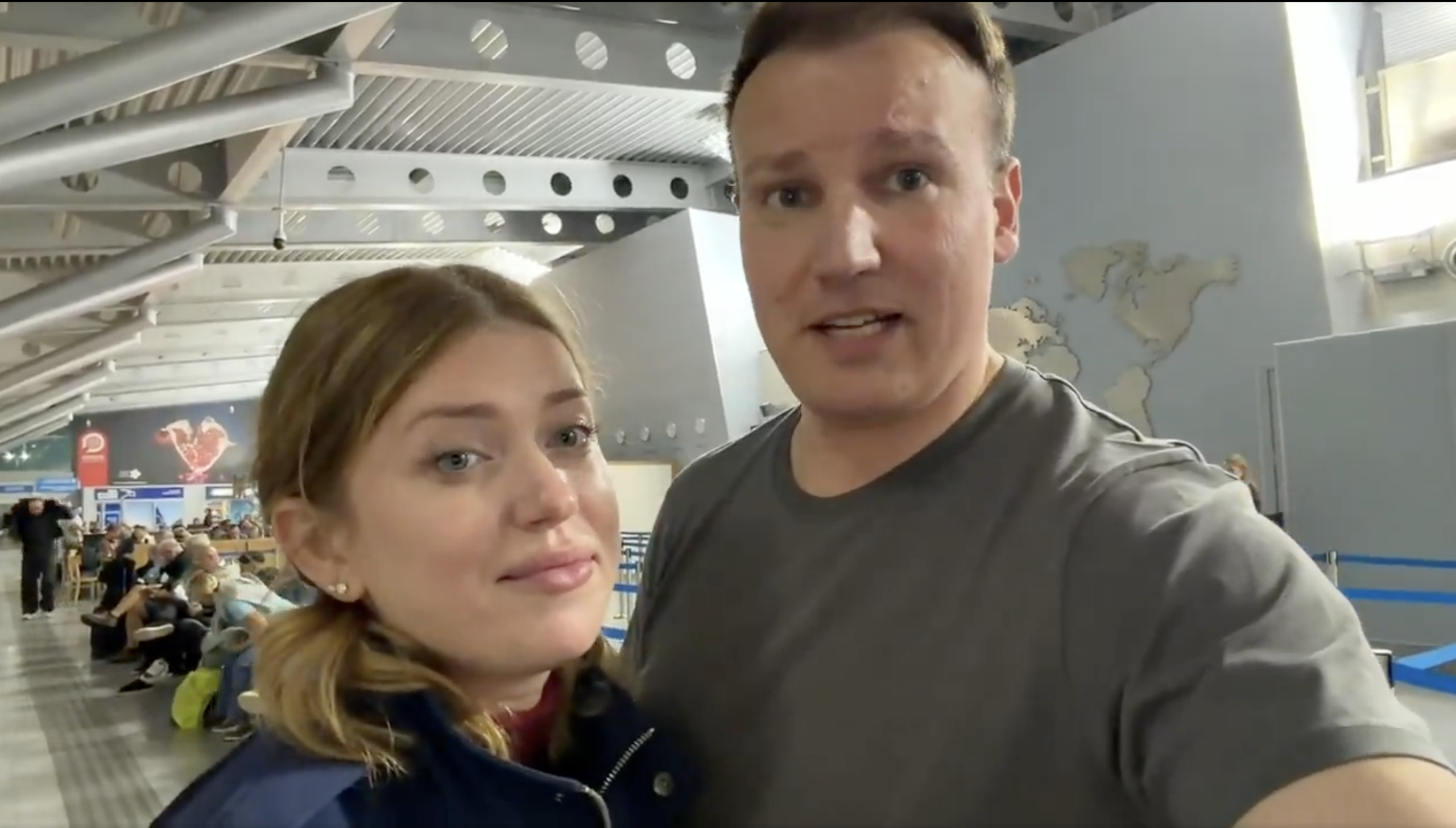
“Montenegro’s authorities arrested a Russian war blogger,” ERR reported on 9 October. The term war blogger may sound fairly harmless. Most people probably imagine someone who spends their days gathering and analysing information, then writing blog posts about it. About war, of course.
Propastop looks at what Rybar (Рыбарь), described as a war blog, really is: its reach and influence, and the man behind it, Mikhail Zvinchuk.
Former Russian special forces officer Mikhail Zvinchuk, who held the rank of captain, founded the military Telegram channel Rybar (Рыбарь) with programmer Denis Shchukin in 2018. Its first posts focused on Syria, Iraq and other conflicts in the Middle East, where Zvinchuk had served. The channel attracted attention with its detailed tactical maps, accounts of troop movements and analysis of events on the battlefield. Rybar’s coverage stood apart from state television’s one-dimensional reporting based on information from the Ministry of Defence, as well as from the more emotional war rhetoric circulating elsewhere on Telegram. This helped it project an image of professional credibility.
Before Russia’s full-scale invasion of Ukraine in 2022, Rybar’s main channel had around 30,000 followers. Then came the turning point. By November 2024, it had about 1.3 million, according to The Washington Post. By October 2026, the main channel’s audience had surpassed 1.5 million. It is important to note that these figures refer to subscribers to the main channel, not the Rybar network’s total number of unique readers, which is at least 10 to 15 times larger.
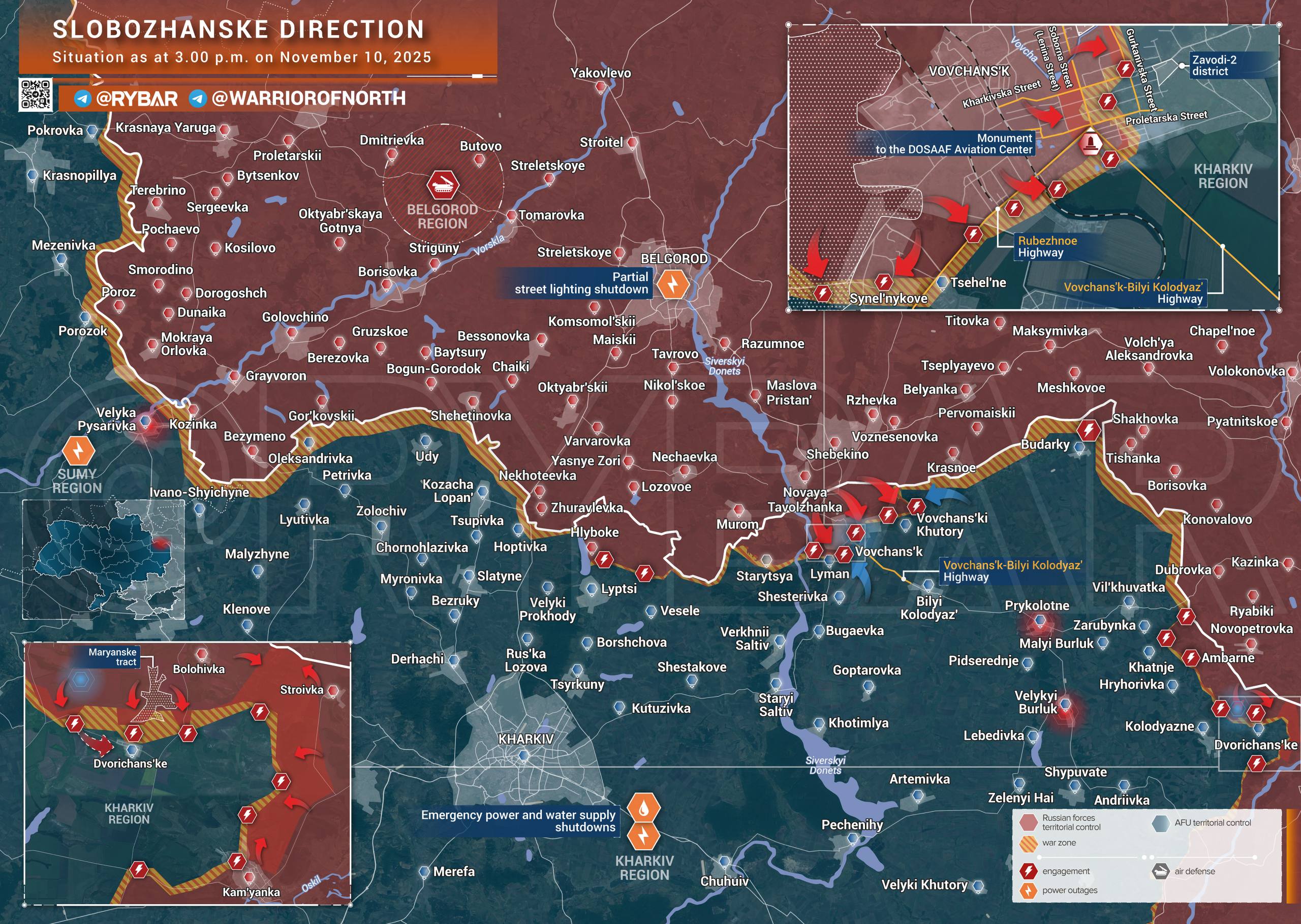
Rybar’s success was built on what its audience wanted. While official coverage offered mostly vague reports of Russian military successes, readers were looking for battle maps, troop positions and explanations for setbacks. Rybar provided all of that, including when things were going badly for the Russian army.
Criticism of Russia’s military leadership was especially visible during the retreat from Kharkiv Oblast in autumn 2022. It is important to note that the channel’s criticism focused on the conduct of the war, mistakes in command and supply problems, never on the war’s political aims.
Why does the Kremlin itself fund (occasional) criticism of the war?
In 2024, Zvinchuk told The Washington Post that problems must be discussed to prevent them from recurring. At the same time, he named subjects Rybar does not cover, such as calls for a change of power in Russia.
This combination of harsh assessments of problems on the battlefield and unwavering support for Russia’s military objectives helps explain why the Kremlin allows channels like Rybar to operate and funds them. Even critical war bloggers are useful to Putin: their apparent independence, combined with loyalty to him, lends credibility to the government. Criticism of military failures helps ease public discontent, while the aims of the war remain beyond question. In this way, funded criticism helps keep audiences within the Kremlin’s sphere of influence.
Zvinchuk’s position and importance to the Kremlin are also reflected in his appointment in December 2022 to a working group set up by Putin to address mobilisation issues. In 2023, he began appearing on the media platforms of Vladimir Solovyov, one of Russia’s leading propagandists, in a weekly programme called Разборы Рыбаря (Rybar’s Analysis). The once-anonymous Telegram writer had moved to the heart of Russia’s wartime public communications.
A November 2024 analysis by the Institute for the Study of War linked Zvinchuk’s international public image to an effort to present Rybar as an independent think tank. In ISW’s assessment, this image helped make the organisation more credible to foreign audiences.
Direct involvement in the war
Rybar has done more than comment on the situation at the front. And, of course, “war blogger” Zvinchuk is not a one-man band. In a 2022 interview with RTVI, Zvinchuk spoke about his informants, including sources in areas under Ukrainian control. Some reportedly provided information for free; others were paid. He also described passing militarily significant information to Russian units, citing the battles for Bakhmut and the alleged transmission of the location of Ukrainian HIMARS systems as examples.
Zvinchuk described similar information exchanges with Wagner units and Russian forces operating in the Zaporizhzhia, Kherson and Kharkiv directions.
This helps explain the value of Rybar’s network to the Russian army. The channel can gather information from the front and pass the intelligence it obtains to the armed forces.
Hundreds of channels and dozens of languages
As noted, Rybar’s reach extends far beyond the followers of a single Telegram channel. Over time, the network led by a former Russian special forces officer has grown considerably. In November 2022, Zvinchuk told RTVI that it included more than 150 Russian-language channels with a combined audience of nearly 13 million, as well as 110 foreign-language channels with around three million subscribers. In 2024, he described a network of more than 250 channels operating in 28 languages to The Washington Post.
Rybar’s projects have spanned Europe, the Balkans, Africa, the Middle East, Central Asia and the Americas. In 2024, Le Monde and The Washington Post described the development of so-called media schools and cooperation projects in Serbia, Bosnia and Herzegovina, and Kyrgyzstan. A study published by OpenAI in February 2026 also examined draft proposals for influence services targeting Africa, including a project with an annual budget of up to $600,000.
Media training offers a way to build connections with local content creators, teach them working methods and launch channels with their own linguistic and cultural identity. This is a far more lasting and effective way to spread messages internationally than simply translating Rybar’s Telegram posts into dozens of languages.
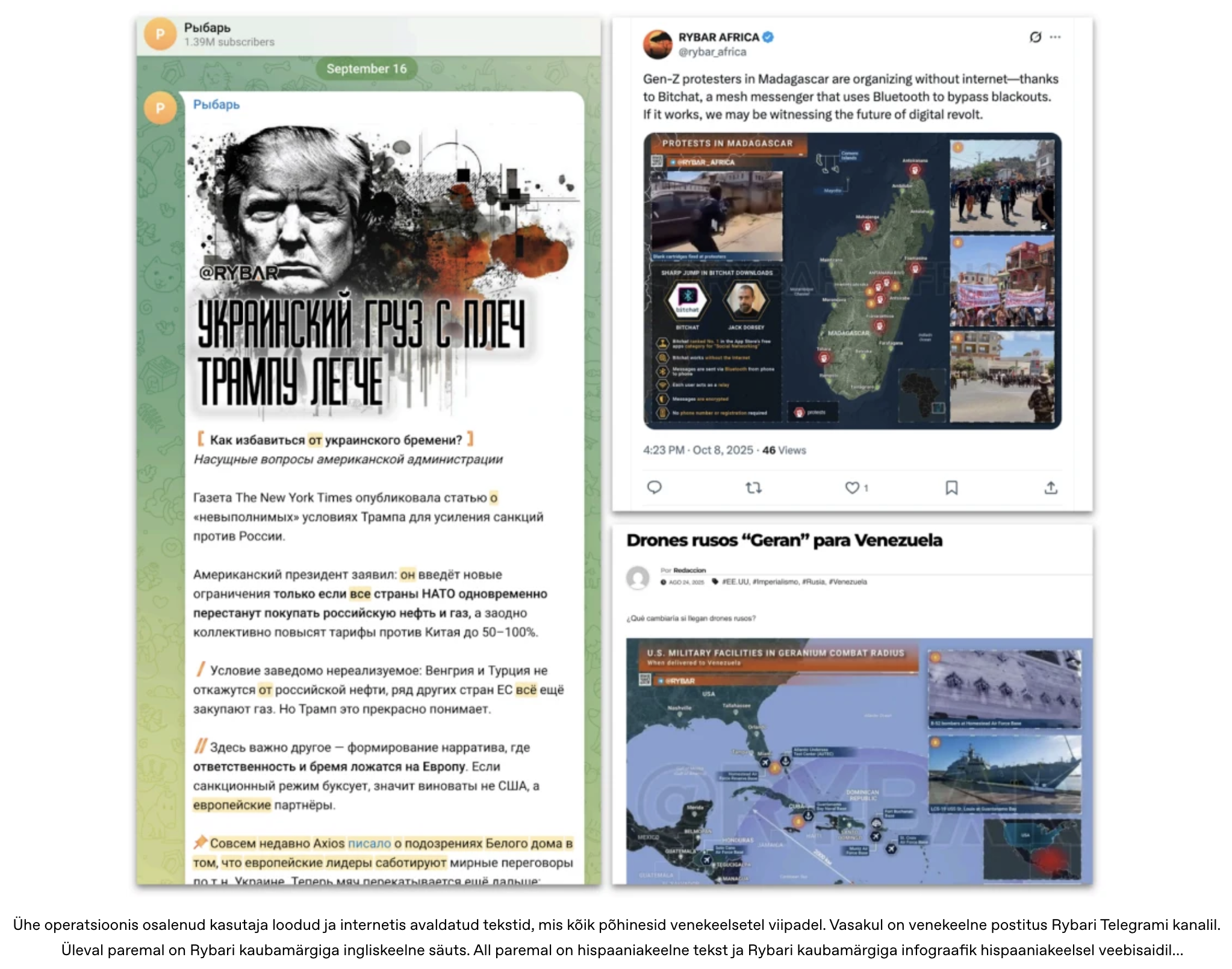
In 2024, the US State Department’s Rewards for Justice programme linked Rybar to campaigns that amplified political divisions in the United States, including the hashtags #HOLDTHELINE, #STANDWTHTEXAS and #TEXASvsUSA.
Alongside Rybar’s own channels, its content circulates through partners, reposts and other platforms. This structure allows a message to move from one language community to another, even when end users can no longer see where it originated. In February 2026, OpenAI’s study Operation Fish Food described the use of accounts linked to Rybar to create multilingual political content. Researchers found matches between AI-generated text and posts published on Telegram and X. In one example, the most visible of six X posts published by different accounts received more than 150,000 views.
But Rybar’s maps and battlefield updates have also been used by international journalists and analysts. Such references extend the reach of Russian narratives beyond Rybar’s original Telegram audience. NATO Defense College notes that the channel’s battlefield updates and maps have been cited by, among others, the BBC, The New York Times and the Institute for the Study of War.
How large is the team behind a single “war blogger”? In 2022, Zvinchuk told RTVI that the core team had around 40 members. In 2024, Le Monde reported that the team numbered about 60.
Rybar’s international operations do not rely solely on Mikhail Zvinchuk’s public profile. A list of employees made public by the US State Department in 2024 showed that the military channel is backed by a media organisation divided into departments. In July 2026, the United Kingdom sanctioned ten people linked to Rybar.
One of the key figures in its foreign influence work is Tatyana Kosterova, head of Rybar’s foreign-language publications. Her role suggests that producing and distributing content in different languages is not an ad hoc sideline, but a separately managed line of work. According to information released by the United States, senior coordinator Alexei Nemov works in the same unit.
Darya Roslyakova, also known as Darya Kabakova, head of regional analysis, coordinates the processing of regional information. Olga Kuznetsova is listed as a regional lead, while Kristina Ismagilova and Sabrzhan Aimuratov are named as senior analysts. Alexander Minin was identified as the content lead for a project that amplified divisions in US domestic politics; Vladimir Berkutov and Valentina Minina were also linked to it.
A Growing Business and Ties to the State
Tracing Rybar’s funding leads to the registration in Russia, in March 2023, of a limited liability company called Rybar (ООО «Рыбарь»), headed, unsurprisingly, by Mikhail Zvinchuk. According to data published by RBC, the company’s revenue was around 8.1 million roubles (about €81,000) in 2024 and 61 million roubles (about €650,000) in 2025. Its annual revenue therefore grew 7.5-fold. These figures refer to the revenue of one company associated with the project, not the budget or profit of the entire network.
In 2024, The Washington Post wrote that Rybar received funding from, among others, the state-owned defence conglomerate Rostec. In 2025, the UK government said that Rostec funds Rybar, that the project is partly coordinated by the Russian Presidential Administration, and that the organisation works with intelligence service representatives.
In eight years, Rybar has grown from a small military Telegram channel into a media ecosystem with at least 16 million followers across its network, regional branches and international partners. It operates globally in the Kremlin’s interests and conducts hostile influence operations.
Who is Rybar’s leader, Mikhail Zvinchuk?
A war blogger sounds like someone who follows battlefield reports and comments on them. But in the case of Mikhail Zvinchuk, founder of the international information influence network Rybar, the label leaves much of the story untold. His background includes military education, service in Iraq and Syria, the rank of captain, work in the Defence Ministry’s press system and cooperation with Yevgeny Prigozhin.
Mikhail Sergeyevich Zvinchuk was born in Vladivostok on 19 July 1991. At the age of 14, he enrolled at the Suvorov Military School and later continued his studies at the Military University of the Ministry of Defence of the Russian Federation, where he trained as a military interpreter of Arabic and English. This was more than language training: his later career took him to conflict zones, where understanding the military situation, speaking the local language and conveying information were closely connected.
According to a 2023 study by the NATO Defense College, Zvinchuk served with Russian special forces in Iraq and Syria, working as an interpreter and carrying out intelligence-related duties. He later worked in the Russian Defence Ministry’s Department of Information and Mass Communications. According to The Bell’s investigation, from 2015 to 2017 he also organised trips to Syria for Russian journalists. Syria and Iraq were important stages in his career, giving him firsthand experience of armed conflicts, Russian military operations and war reporting.
The Bell’s investigation documented Rybar’s cooperation with the Federal News Agency (FAN), which was linked to Yevgeny Prigozhin. Rybar’s materials appeared there in 2020–2021, and the two worked together through other media formats. The investigation also described claims by sources that Prigozhin had provided financial support.
In December 2022, Zvinchuk was appointed to a working group established by Russian leader Vladimir Putin to address mobilisation and support for people involved in the war and their families.
In June 2023, the European Union added Zvinchuk to its sanctions list, citing his role in information activities supporting Russian aggression and his membership of the working group established by the president. In December 2025, the United Kingdom also imposed sanctions. According to the British government, Rybar’s activities are partly coordinated with the Russian Presidential Administration, the organisation is funded by Rostec and it cooperates with Russian intelligence services.
Opening photo and map: excerpts from Rybar’s X page
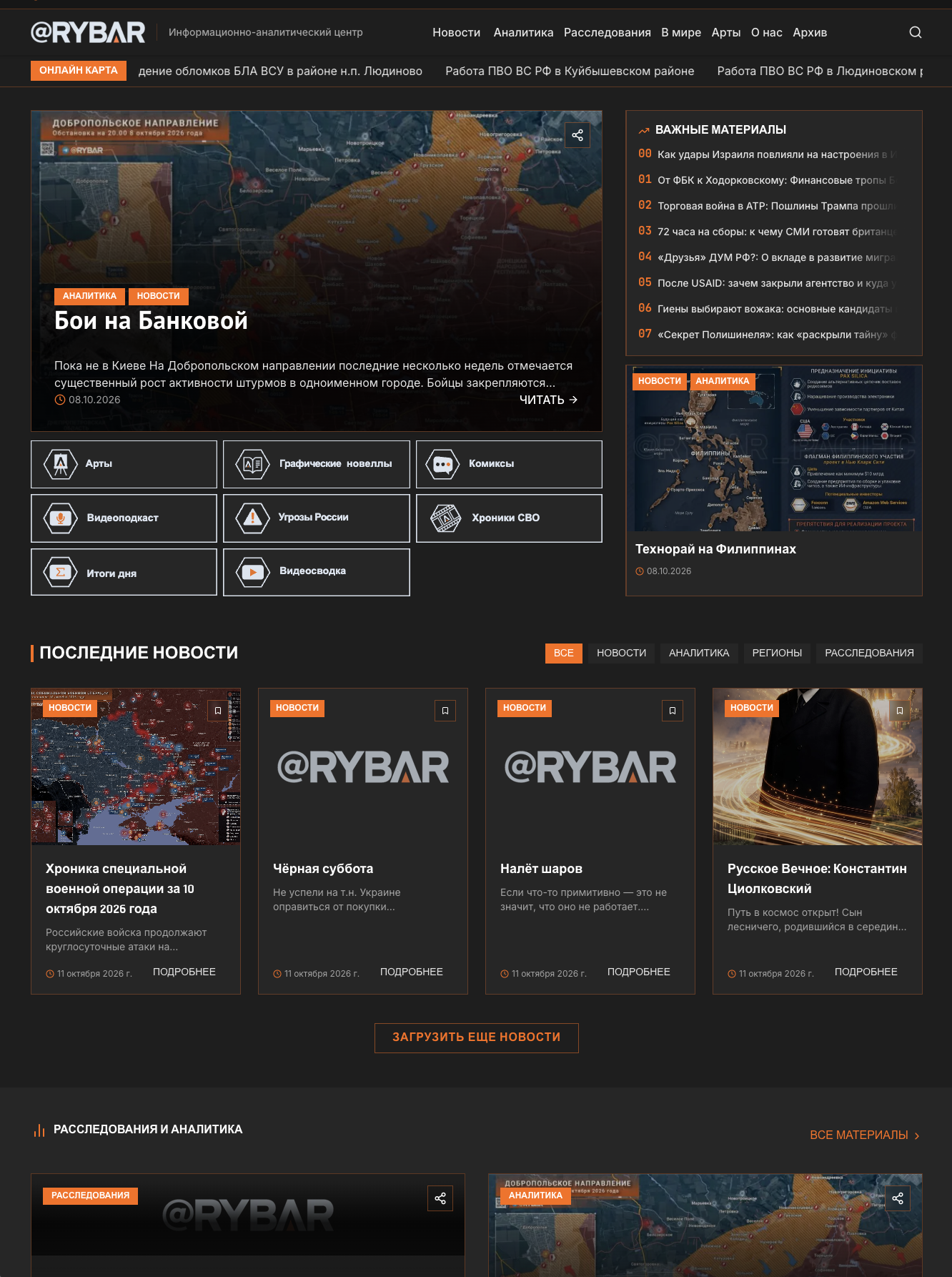
Image in the article: excerpts from the Operation Fish Food report and the rybar.ru homepage