Estonian authorities attributed the arson attack on the Milrem Robotics building to Russian intelligence services. Russia’s response, however, shifted the focus from the attack itself to why Estonia considered itself so important in the first place. Meanwhile, Martin Herem’s statements on defence were portrayed as evidence of Estonia’s intention to attack Russia. In these narratives, Estonia was simultaneously too insignificant to be targeted by Russia and dangerous enough to be accused of aggression.
September’s media coverage was marked by a contest over whose actions posed a threat in the region and whose responses required justification. Western outlets portrayed Estonia as an ally under Russian pressure, highlighting its defence capabilities and unwavering support for Ukraine. Russian propaganda channels used the same events to construct a narrative of a country that invites trouble through its own hostility and uses the Russian threat to conceal its own failings.
This overview draws on the Estonian Government Office’s September strategic communications bulletin. According to the bulletin, foreign media coverage of Estonia roughly doubled compared with the summer months and was nearly 50% above the annual average. The volume of Russian propaganda concerning Estonia increased by around a third compared with August, but remained approximately 10% below the annual average.
Sabotage became a dispute over Estonia’s credibility
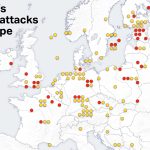
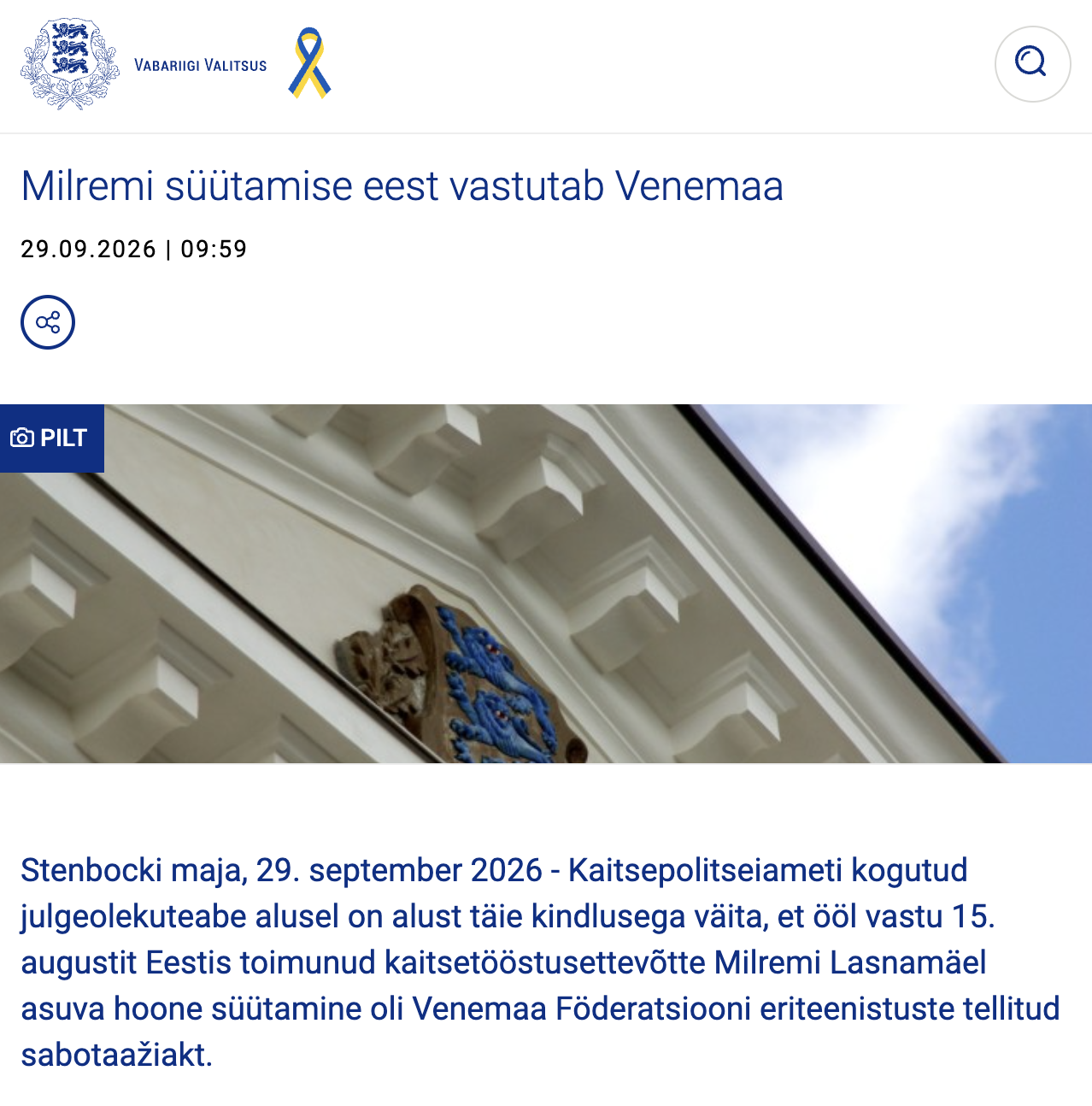
The attribution of the arson attack on the Milrem building to Russia became one of the month’s central security issues. On 29 September, the Estonian government announced that, based on information gathered by the Estonian Internal Security Service, the August arson attack was an act of sabotage commissioned by Russian intelligence services. Foreign media placed the incident in the broader context of attacks against Europe aimed at damaging companies and infrastructure involved in supporting Ukraine and intimidating countries providing that support.
Estonia’s resilience also featured prominently in the coverage. The attack caused no casualties or major damage, and Milrem’s deliveries to Ukraine continued. Reporting supportive of Estonia relayed the authorities’ message that sabotage would not change the country’s policy. Alongside Russia’s actions, the work of the security services and allied solidarity also came into focus.
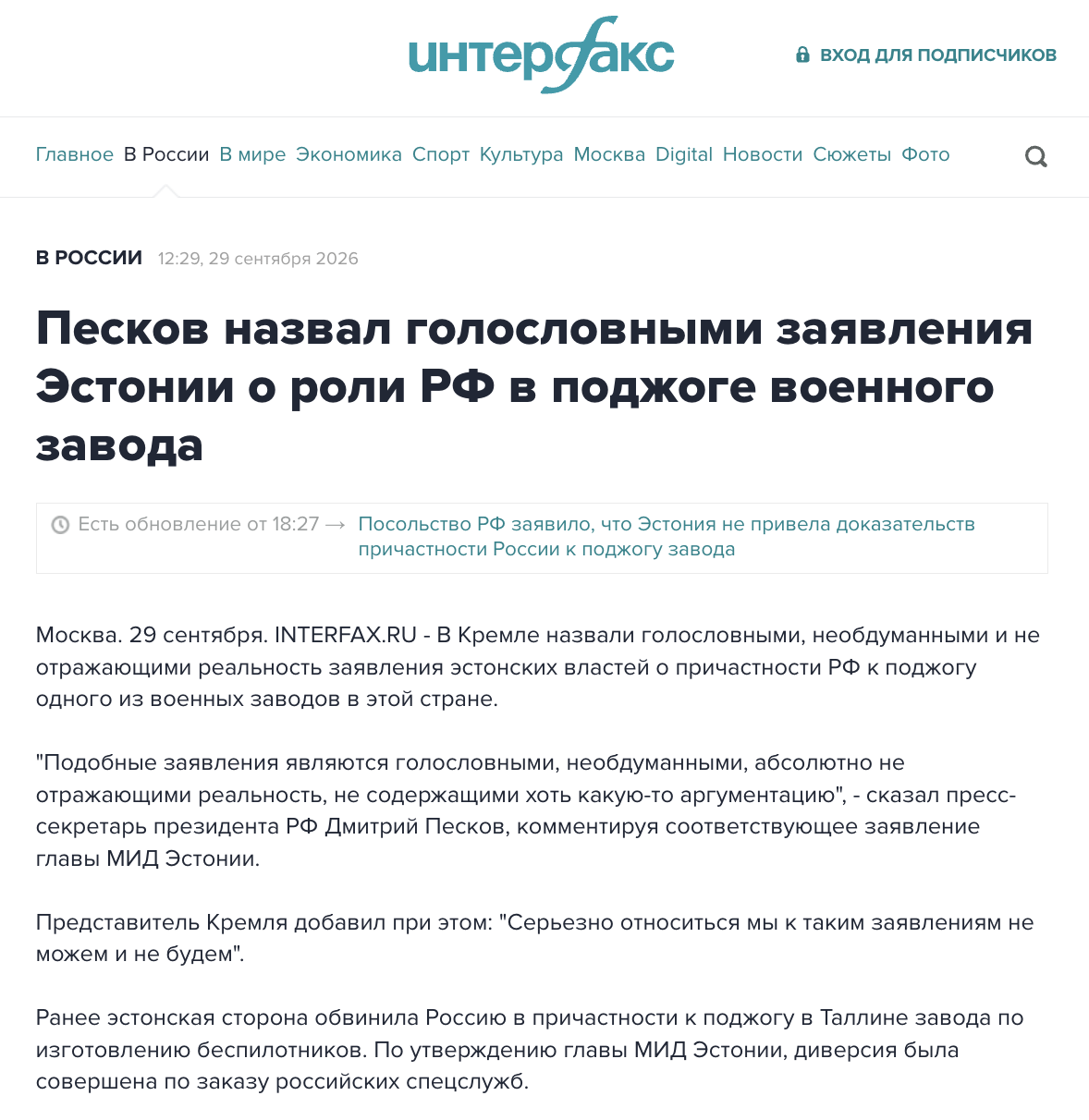
Russia’s response combined denial with ridicule of Estonia. Dmitry Peskov dismissed Estonia’s statements as unfounded, the Russian embassy in Tallinn accused Estonia of creating an illusion of hybrid attacks, and diplomat Mikhail Ulyanov claimed that Estonia overestimated its importance to Russia. Attention shifted from those behind the attack to the country that had exposed it. Estonian authorities were portrayed in a way that encouraged readers to dismiss their conclusions as politically motivated from the outset.
According to the bulletin, the same framing also appeared on Estonian social media, where the Milrem incident and other cases of sabotage in Europe were discussed in ways that downplayed the Russian threat. The responses of Estonia and other European countries were presented as exaggerations or false accusations driven by hostility towards Russia. This framing, in turn, casts suspicion on the very act of investigating and discussing the attack.
Defence readiness was recast as an intention to attack
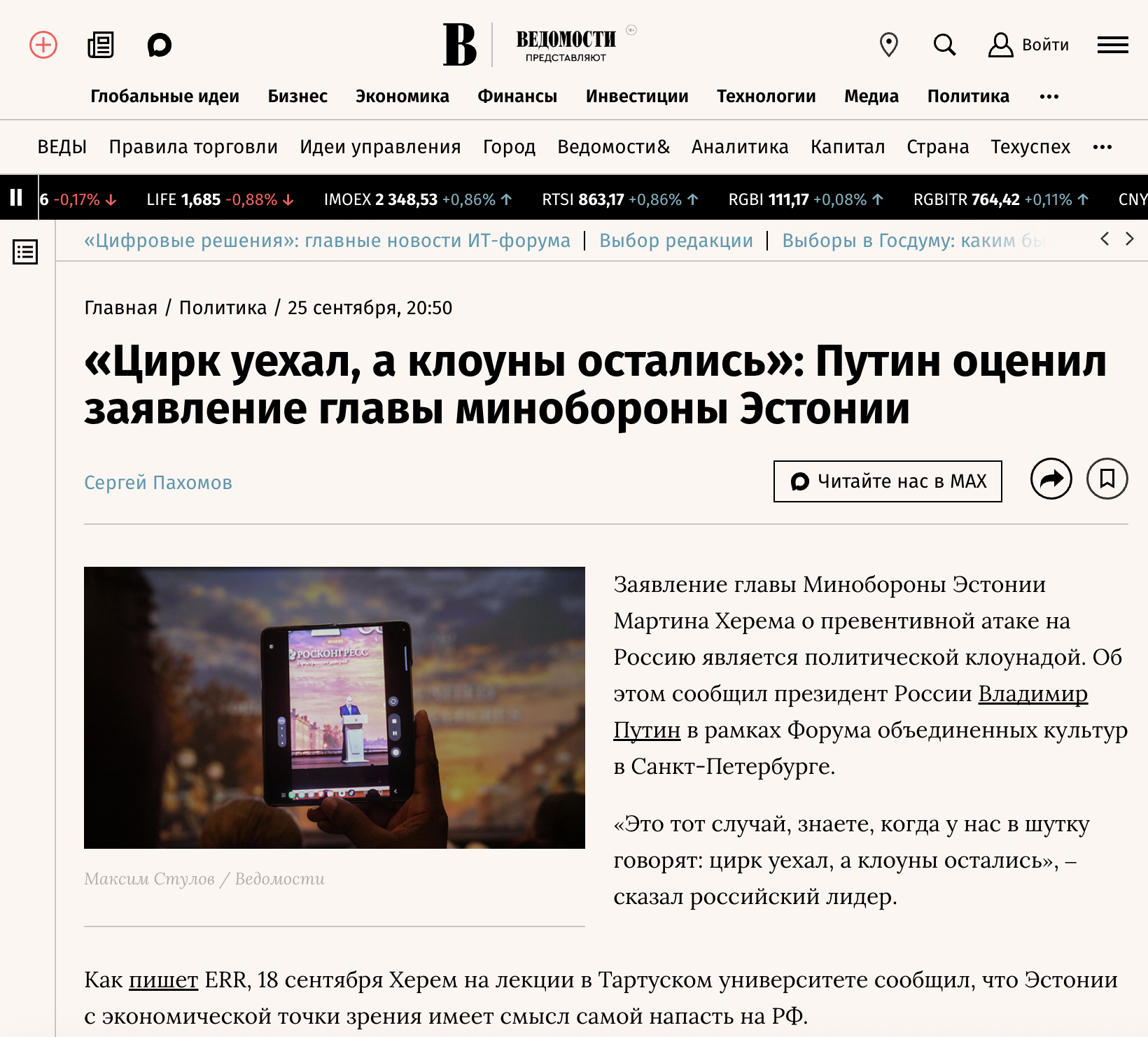
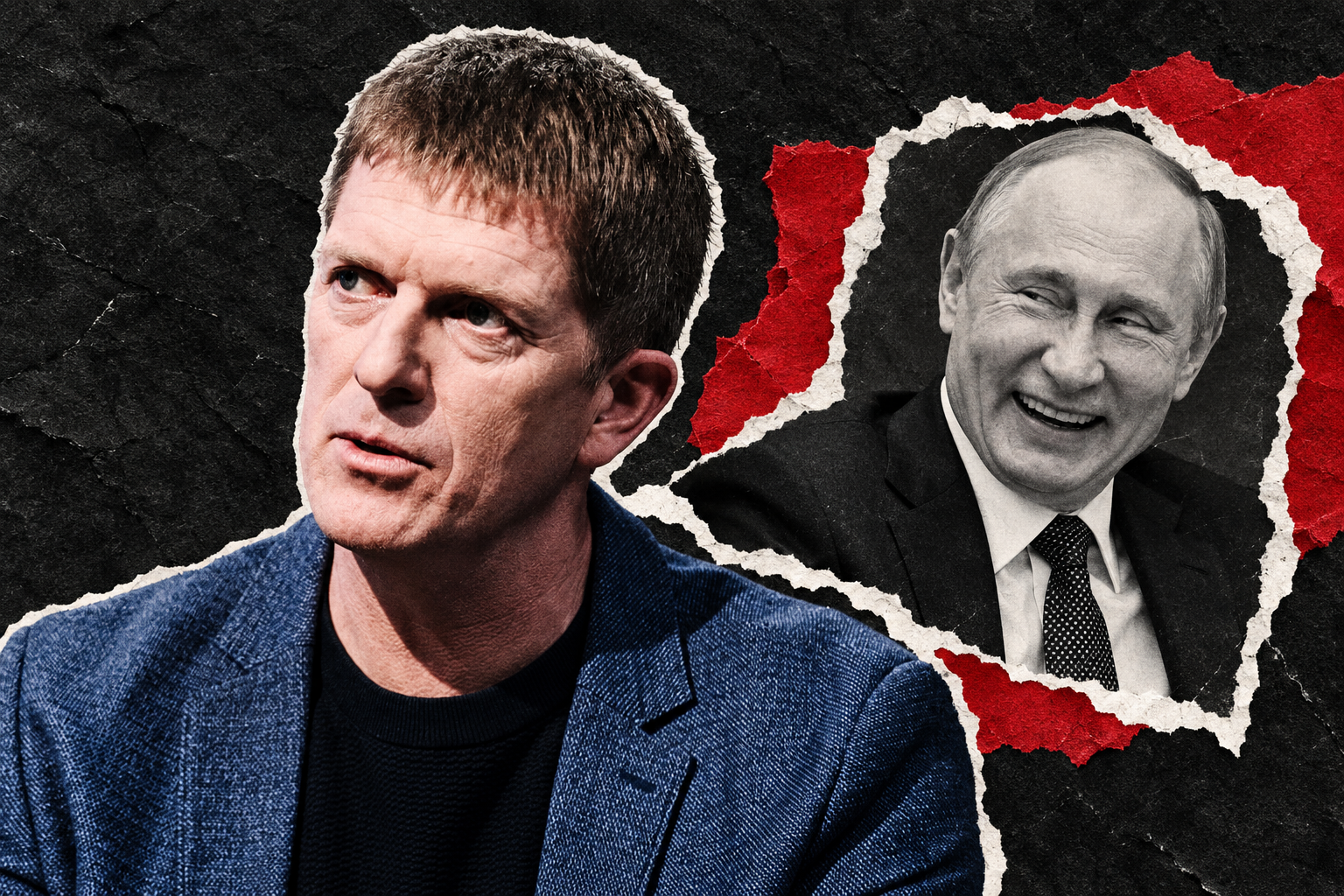
The distortion of Martin Herem’s statements showed how a desired message can be assembled from remarks made at different times and in different contexts. Texts circulated in September combined points from his lecture at the University of Tartu with fragments from earlier appearances, altered quotations and added fabrications. The result was the impression that Herem had declared Estonia’s readiness to fight Russia alone and expressed a desire to attack Russia.
According to the Delfi fact-check cited in the bulletin, Herem was discussing Estonia’s defence alongside its NATO allies. Provereno.Media also analysed the same collection of quotations, tracing its components to appearances made at different times. In the distorted version, the defensive context disappeared, turning the remarks into a threat against Russia. The topic also reached Vladimir Putin, when a journalist presented Herem’s words to him as a pledge to kill every Russian who crossed the border. This gave Putin an opportunity to mock Estonia’s leaders and affirm Russia’s peaceful intentions.
The technique works by reversing the roles. The need for defence against Russian aggression is transformed into a story of Estonian hostility, allowing Moscow to present itself as a calming influence. The distorted interpretation spread on both Estonian- and Russian-language social media. In Estonian-language discussions, the remarks were treated as a threat to Estonia’s security, while Russian-language discussions more often used them to ridicule Herem and Estonia’s defence capabilities. The same material offered different audiences different reasons to doubt Estonia’s defence policy.
A similar contradiction emerged in messaging about drones. Alongside Putin’s assurances that Russia had no intention of attacking NATO, coverage highlighted State Duma member Andrei Kolesnik’s proposal to shoot down Ukrainian drones heading towards Russia while they were still over the Baltic states. Meanwhile, efforts by Estonia and its neighbours to strengthen their counter-drone capabilities could be portrayed as needless exaggeration of the threat. Potential Russian action in other countries’ airspace was presented as justified, while those countries’ defensive measures were cast as suspicious.
Real problems provided material for propaganda
Problems with the procurement of ammunition for Ukraine and Hanno Pevkur’s resignation gave Russian propaganda a different starting point. The procurement failures were a genuine matter of public interest, also covered by Western media. Reports examined missing deliveries or supplies that failed to meet requirements, shortcomings in oversight and political accountability.
Russian propaganda turned problems with a specific procurement into a judgement on Estonia’s Ukraine policy as a whole. Estonia was portrayed as a corrupt and incompetent provider of aid that had itself been duped. A comparison with singer Larisa Dolina, who had fallen victim to a scam, added ridicule that helped portray support for Ukraine as a laughable undertaking. The need for procurement oversight was turned into a reason to question whether providing aid was worthwhile.
Coverage of economic difficulties linked Estonia’s budget deficit and rising fuel and electricity prices to sanctions against Russia and broader hostility towards Russians. Disconnection from the Russian electricity grid was also used to explain price increases. Such messages offer a political explanation for people’s everyday financial struggles: Estonia’s security choices are supposedly what its residents are paying for.
Analysing this technique requires maintaining a distinction between legitimate criticism and propagandistic generalisation. Investigating procurement problems, demanding political accountability and debating the causes of rising prices are all part of public debate. In propaganda narratives, these specific issues become evidence that supporting Ukraine and standing up to Russia are harmful as a whole. The bulletin also stresses that similar messaging on Estonian social media does not, in itself, prove that it was taken directly from Russian channels. Information can flow both ways, and similarities in interpretation may reflect a worldview shaped over a longer period.
Individual incidents were used to build a picture of a hostile state
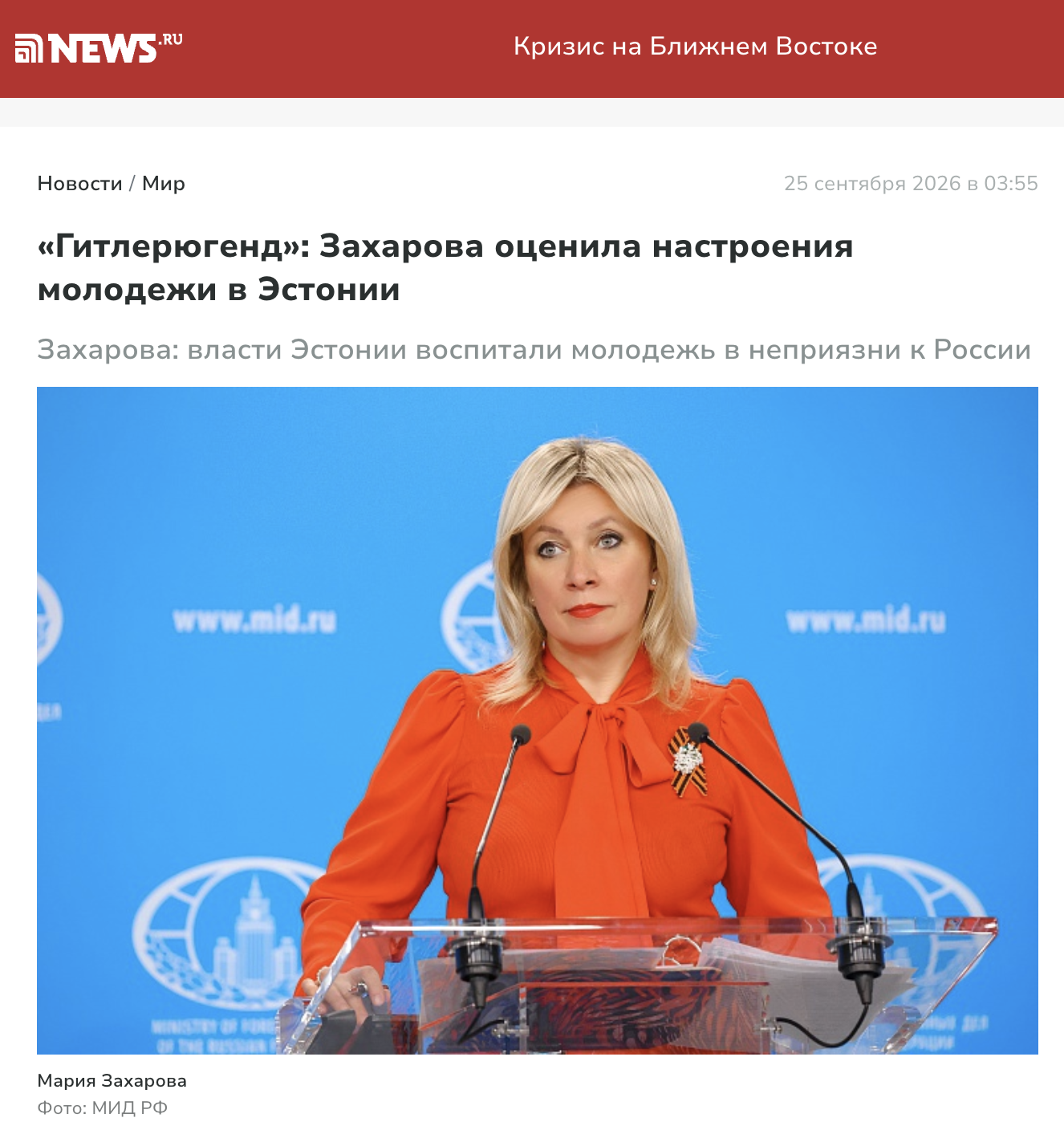
The familiar accusations of Russophobia and Nazism helped connect security and economic issues to a broader portrayal of Estonia as a society hostile to Russians. Based on a social media video, Maria Zakharova declared that young Estonians had been raised in the spirit of the Hitler Youth. In the clip, teenagers were asked which country they would erase from the world map, and their answers were used to conclude Estonia’s youth policy as a whole.
Coverage of a commemorative coin dedicated to the Forest Brothers described them as Nazi collaborators and bandits. Resistance in defence of Estonia’s independence was once again interpreted through the lens of hostility towards Russia. In both cases, accusations of Nazism replaced discussion of the specific issue with moral condemnation that extended to the entire country.
Stories of families who had moved to Russia reinforced the same image through personal accounts. They contrasted claims of being refused service, restrictions on Russian-language education, and the high cost of living in Estonia with low shop prices in Russia. Restrictions on property purchases were broadly described as a ban on Russians, although the restrictions in question applied to specific groups of Russian and Belarusian citizens and companies. Ethnicity was emphasised over legal status, encouraging readers to view a security measure as ethnic persecution.
Coverage of Oleg Besedin’s conviction emphasised his role as a journalist and portrayed his sentence as a restriction on freedom of expression. According to the bulletin, the case centred on cooperation with Russian state institutions and their representatives in influence activities directed against Estonia. Highlighting his status as a journalist shifted attention from the established conduct to his public role, allowing the case to be framed as persecution of dissenters.
A threat scenario is not a forecast
The recurring “Narva is next” narrative deserves particular attention in Western media coverage of security issues. In September, it gained fresh material from a hypothetical scenario by the Institute for the Study of War (ISW), in which Russia could test NATO’s resolve through a limited operation in Narva. According to the bulletin, ISW stressed that this was an analysis of a possible course of action whose occurrence was currently considered extremely unlikely.
Some headlines nevertheless turned the scenario into a new reason to discuss an approaching war. Tabloids invoked the threat of world war and a nuclear strike, while expert assessments within the articles remained more cautious. The headline readers saw and the analysis’s actual conclusions, could therefore convey very different impressions of how likely such events were.
Estonian authorities’ statements distinguished between ongoing sabotage and a possible future military attack. In a public comment on 24 September, Herem confirmed that Estonia’s military threat assessment had not changed and that Russia’s main effort and resources remained committed to its war against Ukraine. In this framing, strengthening defence capabilities and allied readiness is necessary to address the threat, while claims of an imminent attack require separate evidence.
Estonia’s international image was also considerably broader than the security headlines suggested. According to the bulletin, stories about its educational success reached hundreds of publications, with Estonia’s results attributed to teacher and school autonomy, early support and the considered use of digital tools. Coverage of its digital state and defence industry highlighted the country’s ability to develop solutions and adapt quickly. Alongside the image of a threatened border state was an Estonia whose experience others wanted to learn from.
Anxiety and political support can rise together
The Estonian Government Office’s September public opinion survey helps assess public attitudes alongside the media coverage. The possibility of the war spreading elsewhere in Europe or to Estonia caused great or fairly great concern among 67% of respondents. At the same time, support for NATO membership remained at 78%, while 47% favoured keeping options open for providing military support to Ukraine, up from 43% in June. Continuing sanctions even in the event of substantial increases in energy and food prices was supported by 57%.
These findings cannot establish the impact of any particular campaign, but they do limit the conclusions that can be drawn from media coverage alone. Growing anxiety does not automatically mean abandoning support for Ukraine, and economic hardship does not turn everyone against sanctions. In September, support for Estonia’s security choices coexisted with concern about the future.
Russian propaganda consistently linked Estonia’s problems to its own choices. Defence readiness was recast as aggression, exposing sabotage as hostility towards Russians, and procurement problems as a reason to ridicule aid to Ukraine. The shared political aim of these interpretations is to make standing up to Russia appear unnecessary and costly to Estonia’s residents. The central question of this September overview is therefore how to preserve context and a clear sense of responsibility when discussing legitimate criticism and real threats. Once that context is lost, the consequences of Russia’s actions can easily become a story of Estonia’s own making.
This article is based on the Estonian Government Office’s strategic communications bulletin for September 2026. The Estonian government’s statement of 29 September on the Milrem arson attack and the Ministry of Defence’s public comment of 24 September on the threat assessment were also checked.