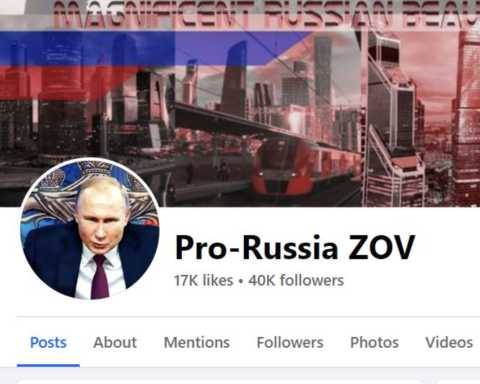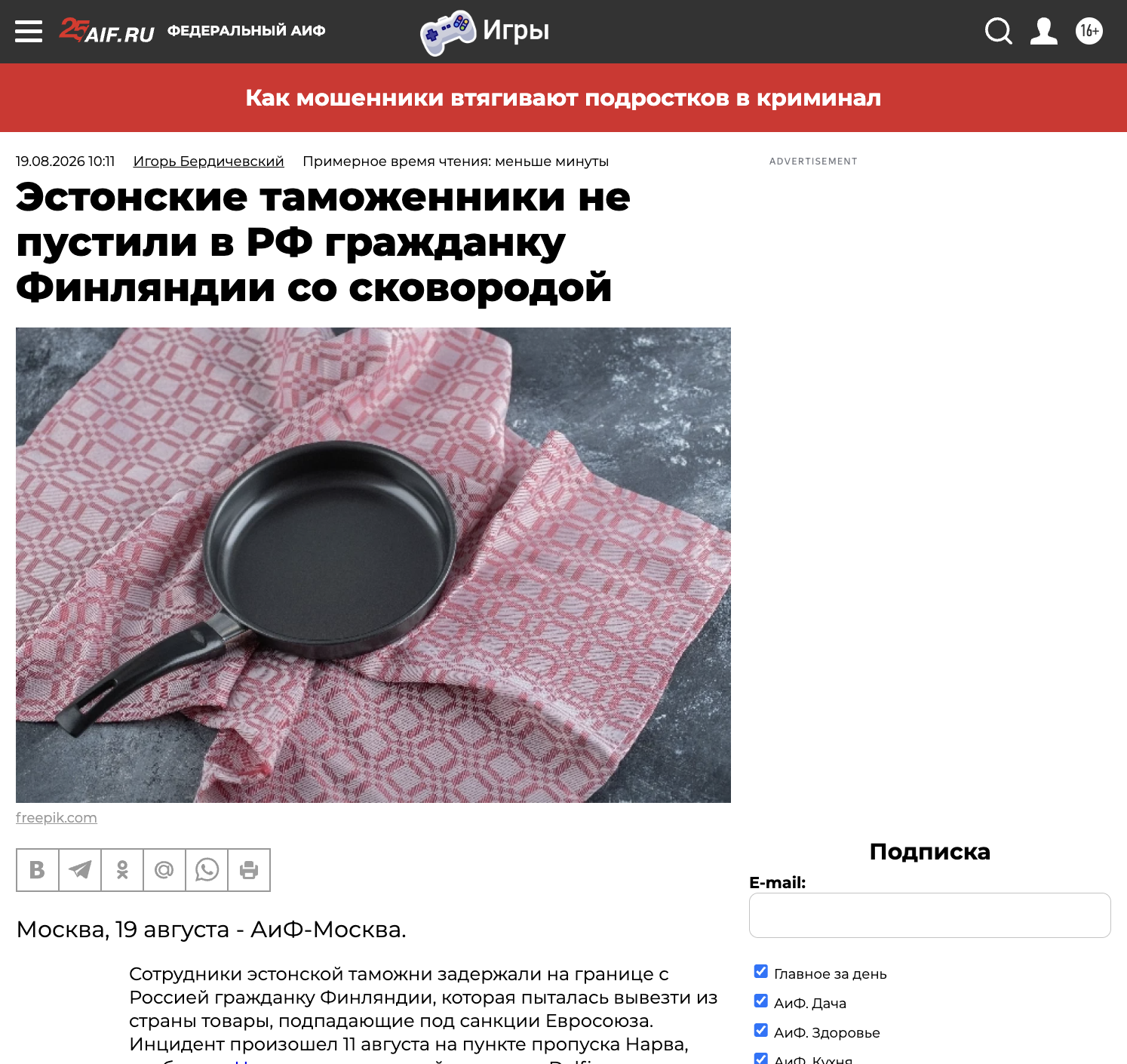
In mid-August, a cluster of widely circulated stories emerged in Russian propaganda media, centred on the claim that Estonian border guards had confiscated an aluminium frying pan from a Finnish citizen travelling to Russia. The stories ridiculed Estonia’s border-crossing procedures for travellers heading to Russia. This has long been a recurring topic, with Estonia targeted over its border checkpoints several times a month.
Finland and Latvia also share a border with Russia and operate border crossing points. This raised the question of whether Russia targets all three countries in the information space.
Background
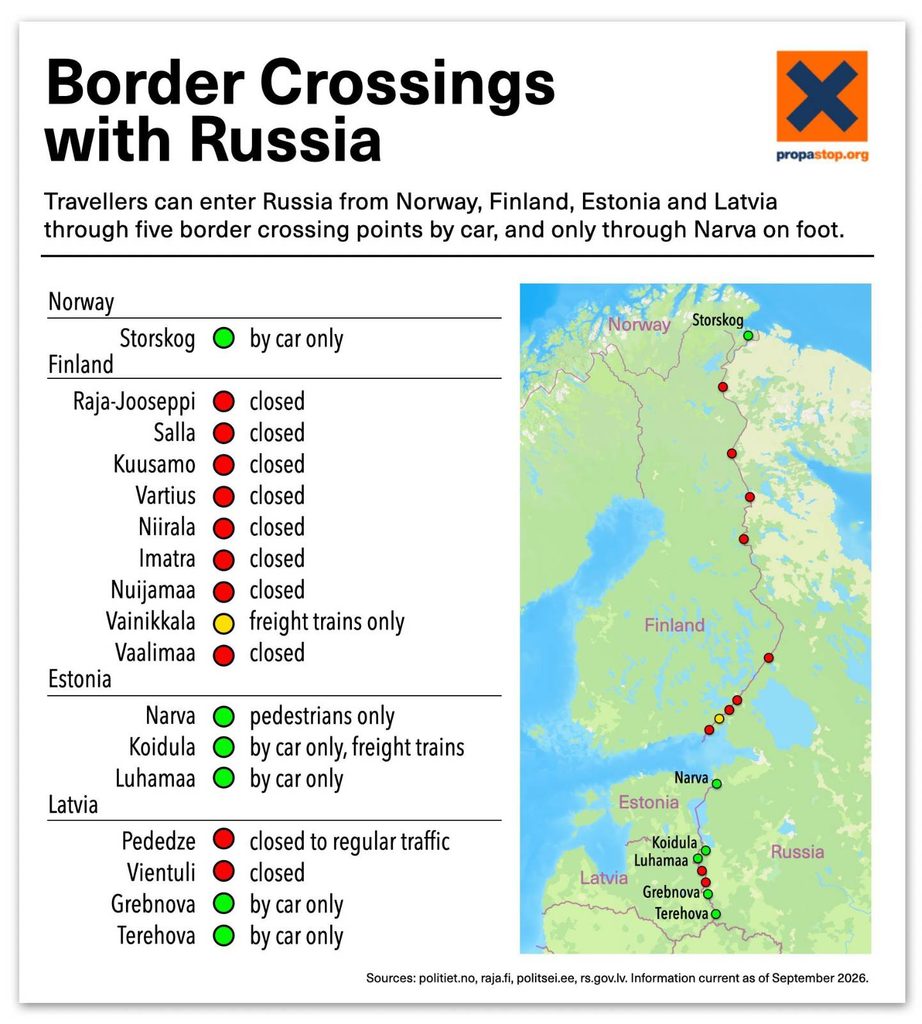
Estonia has three border crossing points open on its border with Russia. The Narva–Ivangorod crossing can only be crossed on foot, as vehicles are not permitted. It is open for 12 hours a day, from 07:00 to 19:00. The Koidula–Kunichina Gora and Luhamaa–Shumilkino crossings operate during the same hours and are also open to vehicles.
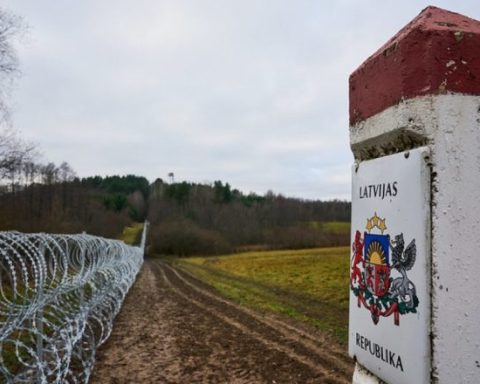
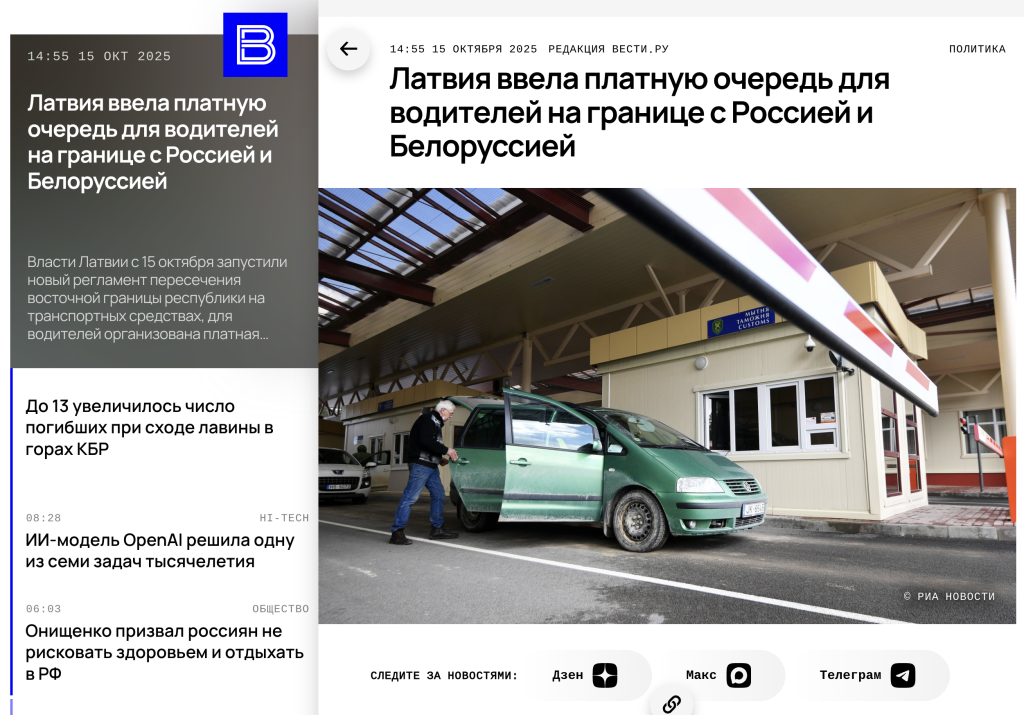
Latvia has only two border crossing points open on its border with Russia: Grebņeva and Terehova. Although they operate 24 hours a day, they can only be crossed by vehicle. Pedestrians and cyclists are not permitted. Since 15 October 2025, new rules have required vehicles crossing the border to be registered electronically in advance, with a time slot booked and a service fee of €9.30 paid.
Finland closed its land border crossing points in autumn 2023 after Russia orchestrated a migration attack against its northern neighbour. Cross-border traffic is now permitted only for freight trains travelling through the Vainikkala border station.
It is also worth noting that motor vehicles with Russian license plates have been prohibited from entering Estonia and the European Union since 13 September 2023.
Although precise statistics are unavailable, the information above suggests that crossing from Estonia into Russia offers the greatest flexibility and capacity. Travellers can enter Russia from Estonia either on foot through Narva or by car through Luhamaa and Koidula. From Latvia, Russia can only be reached by car through two border crossing points.
How is the border issue portrayed in Russian media?
Given that all three countries in the region restrict border crossings with Russia, albeit in different ways, one might assume that all three would be targeted equally by Russian propaganda.
But that is not the case!
 Läti

Stories about Latvia in Russian media tend to be neutral in tone and focused on facts. There are relatively few of them, and they mainly cover newly introduced restrictions. For example, Russian media have reported that Latvia plans to restrict border crossings by pedestrians and cyclists, as well as its decision to introduce a fee for crossing the border. A few reports have also suggested that Latvia could close its border crossings altogether.
The limited coverage of Latvia’s border restrictions may be linked to the fact that the country also shares a border with Belarus. In recent months, this section of the border has been one of the main flashpoints of the migration attack targeting the Baltic states, from which Russia is seeking to distance itself.
Finland
Russian media have published significantly more propaganda content about Finland in recent months than about Latvia. Even so, the number of stories remains relatively limited, and their content revolves around just a few key narratives.

Finland, which decisively closed all its border crossing points with Russia, is not criticised for doing so by Russian propaganda media. Instead, drawing on various sources and quotations, these outlets argue that Finland itself is the main victim of the border closure.
For example, several stories quote the chair of Naapuriseura as saying: “Since closing its border with Russia, Finland has been losing nearly one billion euros a year due to the absence of Russian tourists.”
The reports also claim that several Finnish cities once visited by large numbers of tourists have faced economic difficulties and business closures since the Finnish authorities closed the border with Russia in 2023.Lisaks tuuakse välja, kuidas Soome näeb vaeva, et kohaneda eluga ilma venelasteta. Terved piirkonnad jäetakse rahapuuduse tõttu maha. Kohalikud võimud ei saa probleemi iseseisvalt lahendada ja Euroopa Komisjon lööb häirekella ning koostab kriisiplaani.
The reports also claim that access to cheap resources has now been lost, significantly increasing costs for local businesses. In livestock farming, for example, costs are said to have risen by approximately 30 per cent.
The broader message reinforces the narrative that Eastern Finland is withering away without Russian tourists.
Another recurring narrative links the border closure to rising unemployment. Some reports claim that more than one hundred Finnish customs officers have been placed on unpaid leave since the border crossing points with Russia were closed, with the Nuijamaa and Imatra crossings allegedly hit the hardest.
Although Finland closed its border crossing points decisively and completely, accusatory stories are rare in Russian media. Instead, the dominant narrative is that Finland itself is suffering because of the decision.

Estonia
Russian media coverage of Estonia’s border-crossing arrangements differs significantly from its coverage of Latvia and Finland.
In the three summer months alone, Estonia’s border crossing points were covered dozens of times from several negative or accusatory angles.
In early June, for example, reports began appearing about queues forming on the Estonian side of the Narva border crossing. They claimed that there were no queues on the Russian side and blamed the Estonian authorities. Several stories also highlighted the emergence of an informal market in which people sold places in the queue.
A week later, the border queues returned to the headlines, with reports stating that the average waiting time was five hours.
At the end of June, border crossings generated the largest wave of coverage during the three-month period. Headlines and key messages included: “Hundreds of people cannot travel from Estonia to Russia because of the border collapse”, “Queues at the Narva border crossing may last for dozens of hours” and “Estonia has created a torture chamber for those wishing to travel to Russia”. Stories about people selling places in the queue and waiting in tents also resurfaced. The Russian side warned that waiting times could reach 24 hours.
In mid-July, a new cluster of stories appeared in propaganda media, focusing on the claim that Estonia might permanently close its border crossing points if the security situation deteriorated. Headlines included: “Estonia assesses the likelihood of closing its border with Russia”, “Estonia announces its readiness to close the border with Russia” and “Citing risks, Estonian authorities discuss closing the Russian border”.
Another wave of stories appeared in early August, once again focusing on the possible border closure. Headlines included: “Estonia calls for the complete closure of its border with Russia”, “Estonia demands the closure of the Russian border” and “Estonia wants to close its border with Russia”.
In mid-August, another wave of stories about Estonia’s border crossing points appeared. This time, they concerned the Estonian government’s decision to extend the restrictions at the crossings indefinitely. Headlines included: “Estonia’s border with Russia closed indefinitely”, “Five-hour wait: Estonia extends reduced opening hours at the Russian border” and “Estonian–Russian border crossings to remain closed overnight”. These headlines are misleading, as the border crossing points remain operational, a fact also acknowledged in the articles themselves.
At the end of August, stories focusing on customs inspections and the violations committed by travellers heading to Russia gained wider circulation. They included examples of sanctioned goods being discovered, presented as bizarre or amusing curiosities. Articles in several outlets spread the claim that Estonian customs officials had stopped a Finnish citizen at the Russian border while attempting to take an aluminium frying pan into Russia. Reports from the same period also carried the headline: “It is better to wear a thong at security checks”: Tourists describe the rules at the Estonian border.
Conclusion
As the examples above show, Estonia is attacked by Russian propaganda media despite being the only one of the three countries where people can cross the border both on foot and by vehicle.
Latvia, which limits travel to Russia to two border crossing points accessible only by vehicle, receives virtually no criticism.
Finland, which has completely closed its border crossing points to passenger traffic, also faces almost no criticism. Instead, the focus is solely on the allegedly harmful effects of the closures on the Finnish economy.
This demonstrates, on the one hand, that propaganda does not require any real action or event to exploit. On the other, it shows that any ongoing and visible activity can be used to attack and ridicule the target.