Browse Category

Analysis

12. Oct 2026

Rybar: From War Blog to International Influence Network

Led by Russian military blogger Mikhail Zvinchuk, who was detained in Montenegro, Rybar is far more than a Telegram channel covering the war. Its network of more than 250 channels reaches millions, spreading Kremlin narratives in dozens of languages, gathering intelligence for the Russian military and seeking to shape information abroad.

5. Oct 2026

When Someone Enters Your Home but Steals Nothing

Someone may have been entering the homes of Finnish MPs. Nothing is stolen and nothing is visibly damaged. Instead, small signs are left behind, just noticeable enough to send a message: someone was here. Police are now investigating a series of nearly twenty suspicious incidents.
1. Oct 2026

Attribution: Who Do We Point the Finger At?

Attribution, the process of identifying who is responsible, has evolved over time and grown in importance in recent years. In this analysis, we distinguish between three types of attribution: institutional, public and political. We explain what each involves and how they differ.
21. Sep 2026

We Have to Talk about Hybrid Threats!

A damaged cable can be repaired, a cyberattack stopped and an act of sabotage investigated. But the fear, uncertainty and distrust they leave behind are much harder to fix. That is precisely what makes hybrid attacks so effective: the physical incident may be limited, but its psychological impact can spread throughout society.
21. Aug 2026

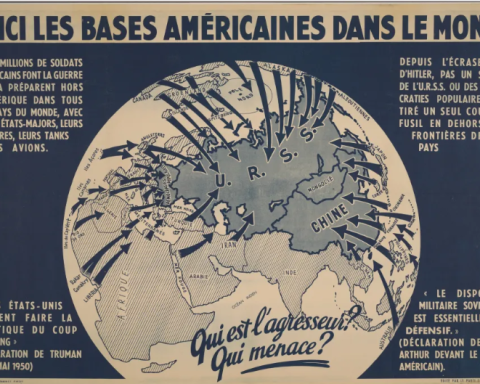
How Russia Spreads Propaganda Through Maps

Maps are often called a reduced picture of reality — but they can just as easily distort it, framing a situation from whatever angle suits you. Their apparent objectivity makes them a perfect propaganda tool, shrinking long arguments into lines and dots. The result is a powerful visual narrative that looks less like opinion and
1 2 3 … 32

Suggested

Propamon |