This article appeared in the September issue of Sõdur magazine.
In 2016, many in Estonia still saw information warfare as something abstract. Russian propaganda was discussed mainly in connection with television channels, Sputnik or Baltnews articles, and was largely considered a media problem. The messages were relatively simple and direct. In most cases, a specific lie could quickly be identified, traced to its source and debunked with facts.
Today, information warfare has become an everyday part of Russia’s aggression. Before tanks or missiles move, stories do. They sow doubt, divide society, undermine trust in the state and seek to weaken people’s willingness to defend their country. The battlefield is not a physical space or a section of the front line, but the phone screen in everyone’s hand.

It was against this backdrop that Propastop was founded in 2016 as an initiative by volunteers from the Estonian Defence League, with the aim of identifying and explaining propaganda and influence activities targeting Estonia. Over the years, a small volunteer-run blog has grown into a professional analysis platform whose work is used by journalists, researchers and government institutions. Its experience has helped shed light on how Russia’s information operations actually work.
Propastop’s role has been to identify patterns, explain their objectives and help people see connections between individual events.
Looking back over ten years, hundreds of examples and dozens of major cases show how a seemingly insignificant lie can be part of a much larger influence operation. These stories offer the clearest insight into what modern information warfare looks like and why understanding it is part of Estonia’s national defence.
Individual lies weave together into narratives
Modern information operations rely on narratives: stories developed consistently over time, designed less to make people believe a particular claim than to shape their worldview. Rather than simply claiming, for example, that “Russians are persecuted in Estonia”, they spread dozens of different stories about education reform, the church, elections, language policy or the economy. Each may appear unrelated, yet all serve the same purpose: to portray Estonia as an internally divided and unjust country.
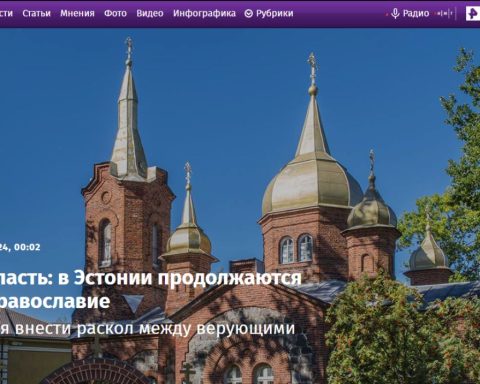
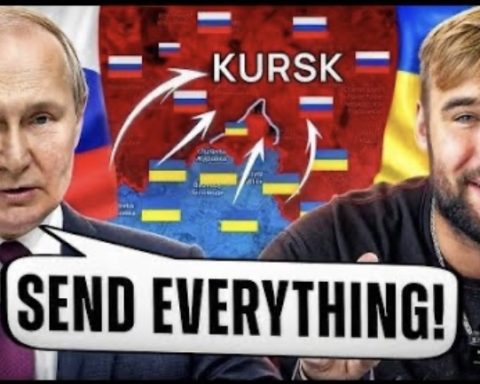
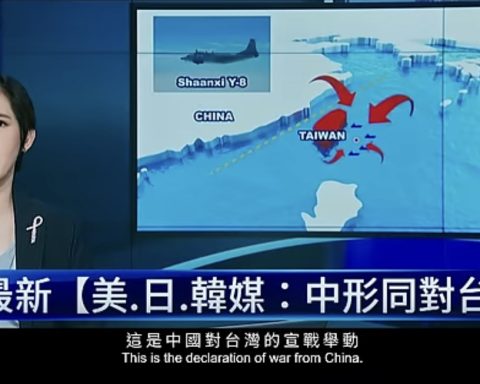
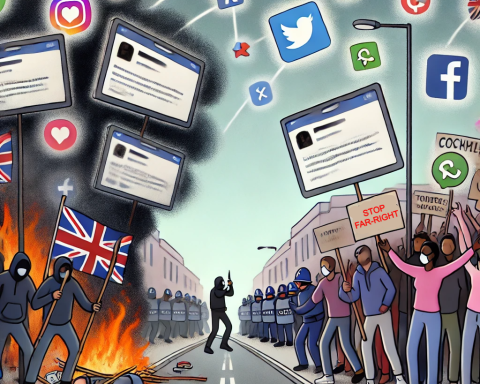
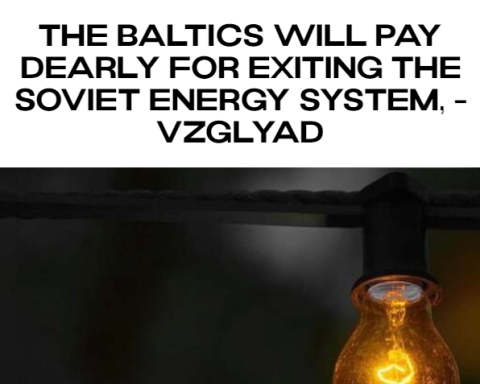
The channels used to exert influence have also changed. Ten years ago, most propaganda was linked to Russian state media. Today, information operations primarily begin on Telegram, spreading rapidly and in a coordinated manner to other social media platforms and dozens of seemingly independent channels. The state propaganda machine no longer speaks solely in its own voice or through its own channels. It uses local opinion leaders, small communities, algorithms and, increasingly, AI-generated content.
New stories appear in Russian propaganda every day, but the same themes and patterns of thinking recur beneath them. Understanding the broader picture of information operations requires analysing narratives, networks and patterns of dissemination. Often, the most important question is not whether a particular claim is true or false, but why that story is being told, whose interests its spread serves, what effect it seeks to have on society and how it fits into Russia’s strategic objectives.
The roots of these narratives lie in geopolitics.
One of Propastop’s most important lessons has been that Russian propaganda cannot be understood through individual news stories or even individual narratives. Its roots run much deeper, into Russia’s geopolitical worldview.
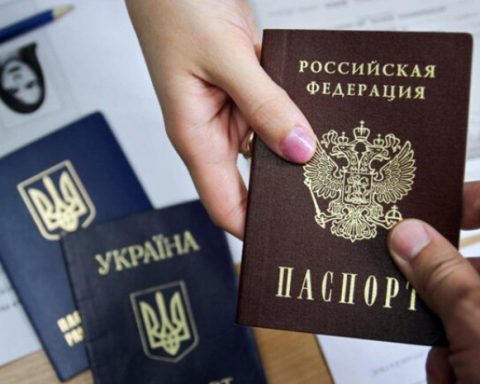
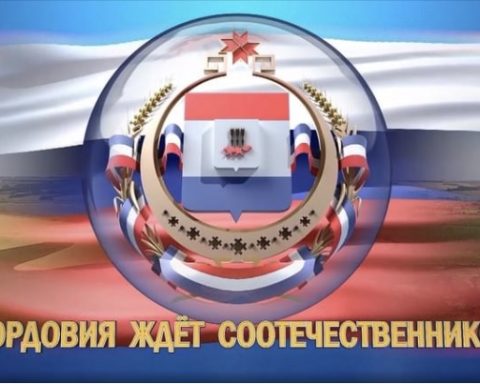
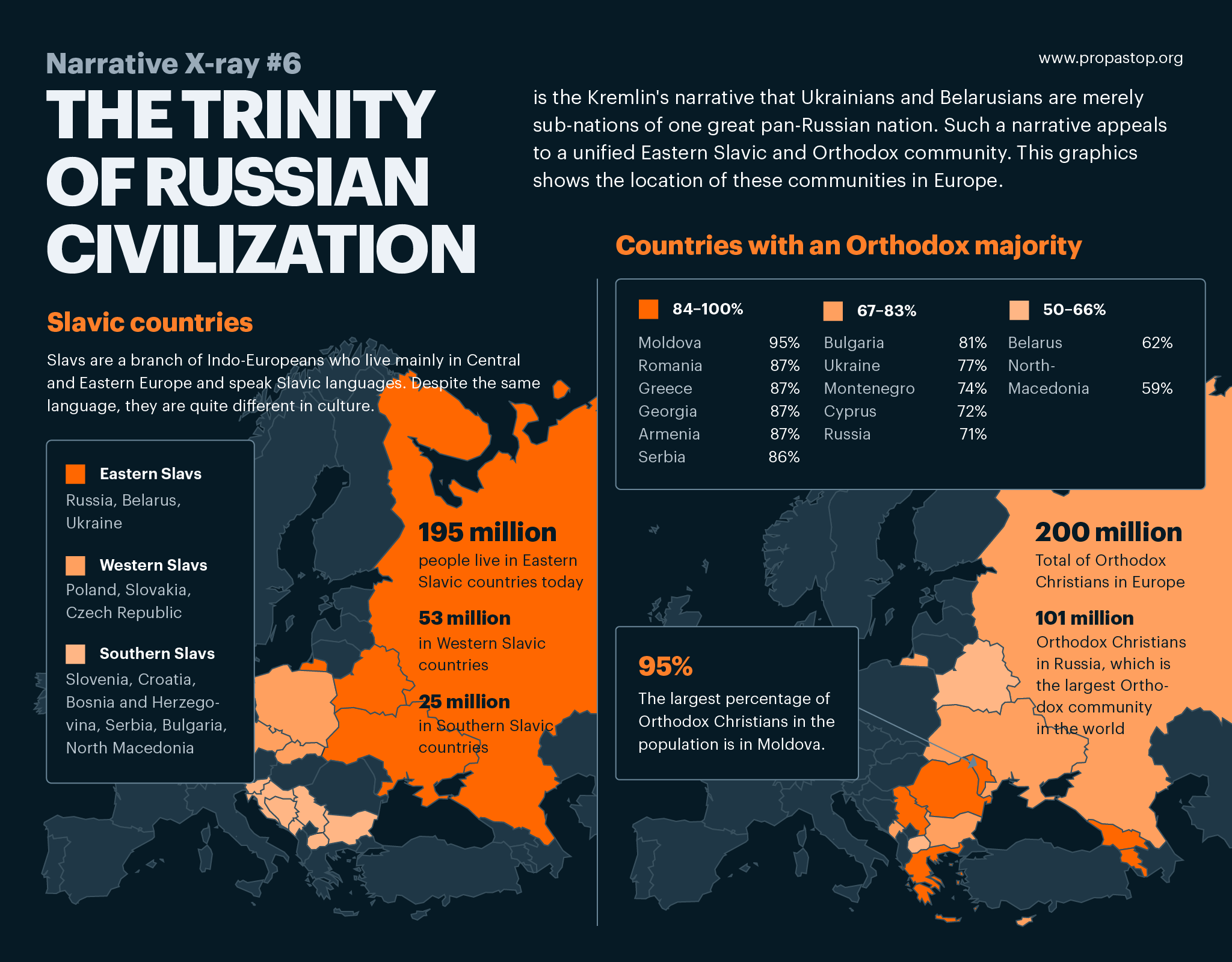
At its core is the idea of Russia not simply as one country among many, but as a distinct civilization with a historical right and duty to defend its sphere of influence. This idea has given rise to the concept of Russki Mir, or the so-called Russian World, which holds that Russia and people who share the Russian language, culture, and Orthodox faith belong to a common civilizational space, regardless of national borders. This interpretation allows Moscow to portray interference in neighboring countries’ domestic affairs as the protection of so-called compatriots rather than aggression.
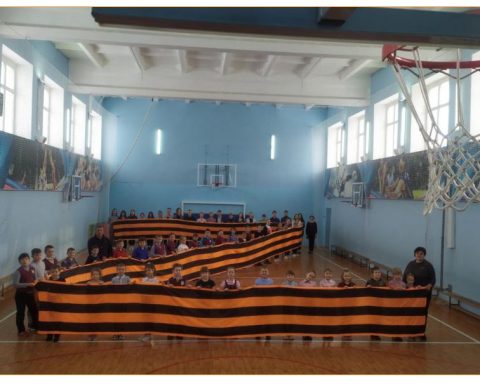
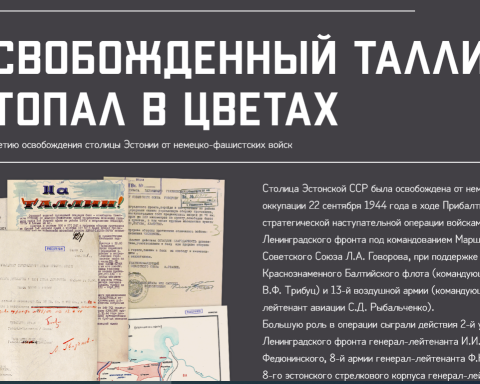
Another recurring theme is the use of history as a political weapon. Propastop’s analyses have repeatedly shown how the history of the Second World War, the Soviet Union or the Russian Empire is used to justify present-day political objectives. Historical memory is treated not as a subject for research, but as a tool to justify current territorial claims, influence national identity or portray Russia as a liberator rather than an occupier.
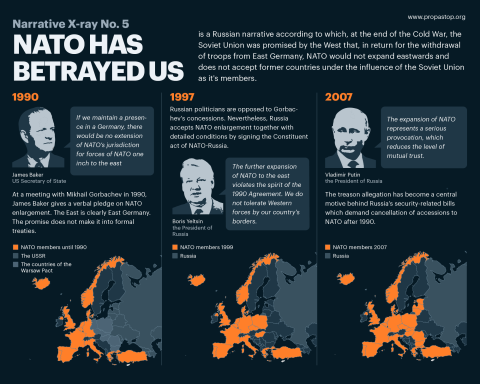
Equally important to Russia’s state narrative is the myth of victimhood. Although Russia is one of the world’s largest military powers, it is consistently portrayed as a civilisation surrounded and threatened by external enemies. NATO enlargement, European Union policies and even the independent decisions of neighbouring countries are presented as evidence of the West’s desire to weaken or destroy Russia. This worldview helps justify both authoritarianism at home and an aggressive foreign policy.
Almost all influence narratives targeting Estonia stem from this ideological framework. When Estonia discusses education reform, legislation concerning churches, monuments or support for Ukraine, Russian propaganda never treats these as individual policy issues. Instead, they are woven into a broader story about the West’s moral decline, the alleged persecution of Russians or Russia’s historical mission to defend its sphere of influence.
This is precisely why debunking individual propaganda stories is not enough to understand information operations. Recognising the worldview behind them is more important. Once the ideological foundations of these narratives are understood, new propaganda stories become far more predictable. The topics and channels change, but the underlying logic has remained the same for years.
Explaining propaganda techniques has been equally important. Propaganda does not usually rely on outright lies. It often uses partial facts, distorts historical context, deliberately presents misleading cause-and-effect relationships or simply leaves out a crucial part of the story. One of the most effective techniques is to amplify emotions by stirring up fear, anger or a sense of injustice. Emotion spreads faster on social media than facts do and is the main force driving target audiences to act.
Some notable cases
Case 1. Kremlin networks in Estonia: propaganda does not spread in a vacuum
One of Propastop’s first major undertakings focused on who was actually spreading hostile messages in Estonia.
In 2018, a five-part analytical series, “Russia-linked networks in Estonia”, made the first attempt to systematically map organisations, associations, online portals and key individuals whose activities intersected with Russia’s compatriot policy and influence efforts. The analysis drew on publicly available sources, including registry data, organisations’ websites and media coverage.
The networks mapped were diverse. They included protest movements, propaganda portals, associations seeking to shape historical narratives, so-called anti-fascist activists, youth organisations and NGOs promoting Russian language and culture with ties to Russian state soft-power organisations such as the Russki Mir Foundation. Viewed individually, many could appear to be ordinary civil society organisations. Examining their connections, however, revealed a broader picture.
We made it clear that influence activities cannot be understood simply by reading propaganda news stories. It is essential to analyse how the infrastructure of influence is organised: who runs events, who funds projects, which organisations share each other’s content, who amplifies messages and through which channels Kremlin narratives enter Estonia’s information space.
Key narratives in Russian propaganda:
- Estonia is a failed and meaningless pseudo-state
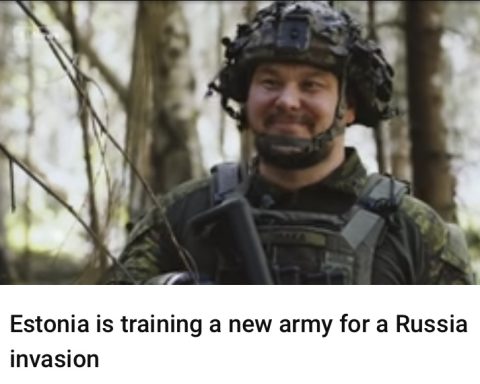
- Estonia is weak, and its people lack the will to defend it
- Estonia is aggressive and warmongering
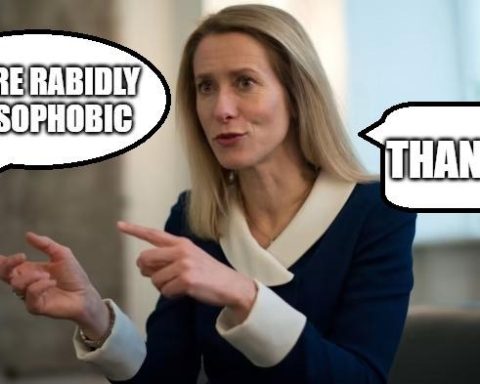
- Russians are persecuted in Estonia, where Russophobia is rife
- Estonia hates all foreigners
- Estonia is home to fascists
- Estonia wages information warfare against Russia
- Estonia incites NATO against Russia
- Estonia is a US lackey

In hindsight, this approach was ahead of its time. While the discussion in 2018 focused mainly on propaganda, today the terms “influence infrastructure” and “influence ecosystem” are increasingly used. Russia itself no longer invests solely in propaganda channels but is building an interconnected network encompassing media, social media, youth programmes, cultural projects, digital platforms, and “compatriot” organizations. Seeing this broader picture has become one of the key strengths of Propastop’s analysis.
Fortunately, the situation with the Kremlin’s networks in Estonia has since changed. The Estonian state has taken firm action, and many of these networks have ceased operating. Their leaders have either fled to Russia, been deported there, or been convicted of crimes against the state and imprisoned.
Case 2. A legal dispute that affirmed the credibility of the analysis

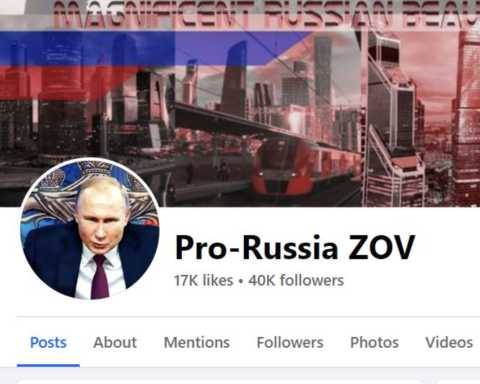
In an analysis published in 2022, we described Facebook networks that consistently spread narratives justifying Russia’s aggression and undermining Estonian statehood.
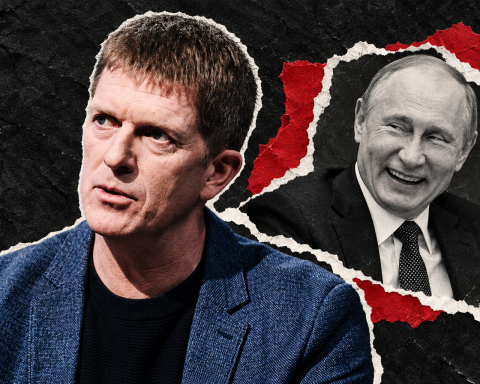
One of the individuals discussed in the analysis, Oleg Bessedin, took legal action, claiming that Propastop’s coverage damaged his reputation. The ensuing legal dispute became an important test not only for Propastop, but also for the broader question of whether analysis of influence activities conducted in the public interest could be defended in court.
The court’s ruling confirmed that Propastop’s coverage was based on verifiable facts and public sources. This set an important precedent. The analysis of information warfare cannot rest on assumptions or emotions. It must be grounded in evidence.
Oleg Bessedin, whose activities against Estonia Propastop has repeatedly covered, was arrested last November, and his criminal case is now before the court.
Case 3. Masha and the Bear: how a cartoon becomes an information operation
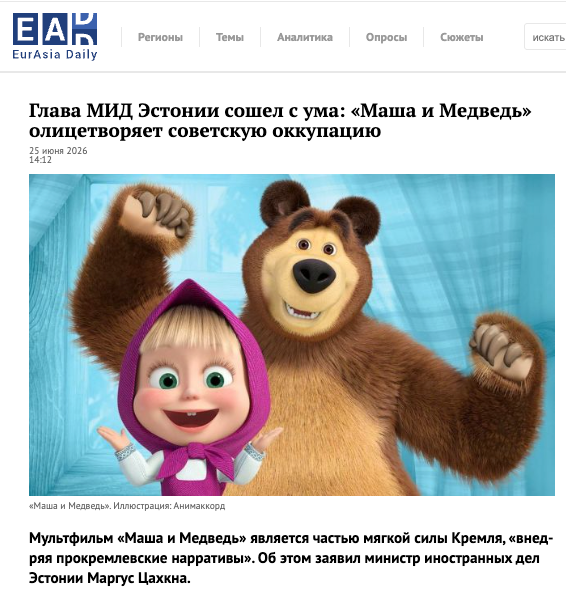
In late June this year, Foreign Minister Margus Tsahkna criticised Netflix’s decision to add the Russian animated series Masha and the Bear to its catalogue, pointing to its role as a tool of Russian soft power.
His comments quickly attracted international attention, and Russian propaganda outlets responded within hours. Several different narratives were rapidly built around them. One portrayed Estonia as a ridiculous country that looks for militarism in children’s cartoons. Another depicted the foreign minister as an unbalanced politician. A third framed his criticism as envy of Russian culture’s success. A fourth used Netflix’s decision as evidence of Russia’s cultural influence.
None of these stories addressed the substantive question of whether Masha and the Bear could serve as a tool of Russian soft power. Instead, attention shifted to the critic himself and his motives. This kind of shift in focus is one of propaganda’s most characteristic techniques.
The case clearly illustrates that modern information operations do not need major events. A single statement or social media post is enough to rapidly generate several propaganda stories. This speed of response is characteristic of contemporary influence activities.
Case 4. The so-called Narva People’s Republic: why even small warning signs matter
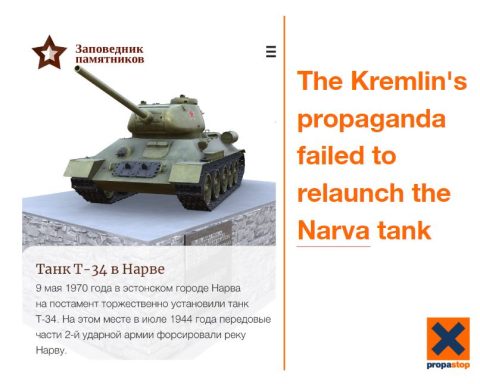
One of Propastop’s most widely discussed stories in recent years examined social media accounts that became more active this spring, promoting the idea of a so-called Narva People’s Republic. On Telegram, VKontakte and TikTok, they used symbols and language reminiscent of the propaganda surrounding the so-called people’s republics established in eastern Ukraine in 2014.
The case sparked a lively debate in Estonia. Some critics argued that covering a phenomenon with such limited reach could amplify it. Propastop took the opposite view. Influence activities rarely start on a large scale. New narratives usually emerge in fringe channels, memes or small communities. Only later, when conditions are favourable, do attempts begin to bring them into the wider information space. This is precisely why such developments need to be recognised as early as possible.
The case’s greatest value lay beyond the question of whether there was an actual separatist movement in Narva. There was not. The lesson was elsewhere: information operations often aim to test narratives and gauge society’s response. If such attempts are consistently ignored, society may only notice a larger influence campaign once it has already gained momentum.
In summary

When Propastop began ten years ago, its work largely involved debunking individual propaganda stories. Today, it is clear that this is no longer enough. We need to understand narratives and the networks behind them, and identify information operations before they reach the mainstream. This also means that protecting Estonia’s information space cannot be the state’s responsibility alone. Just as in national defence, information warfare requires volunteers, experts, journalists and researchers who help society understand how influence activities work.
Propastop was founded ten years ago as an initiative by Estonian Defence League volunteers. Today, it is part of Estonian society’s broader resilience. But information warfare does not end. Only its weapons, channels and methods change.Tunnustused
- 2023: European Citizen’s Prize from the European Parliament
- 2024: Estonia’s “Voice of the Year” civil society award, presented by President Alar Karis
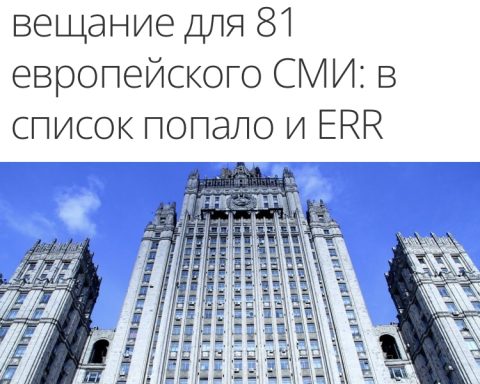
- 25 June 2024: Russia’s Ministry of Foreign Affairs included Propastop among 81 European media outlets whose websites were subjected to distribution and access restrictions within Russia.