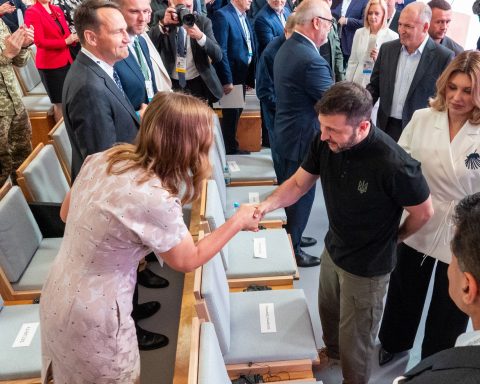
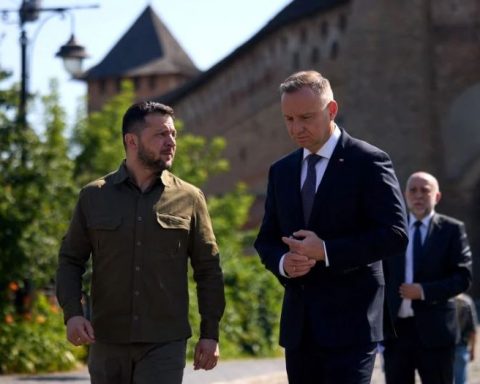
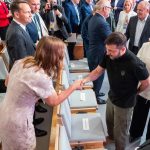
On 26 May 2026, President Zelensky awarded Tallinn the honorary distinction “Rescuer City” at the IV International Summit of Cities and Regions in Kyiv. Chairman of Tallinn City Council Mihhail Kõlvart accepted it in his official capacity. Twenty-four hours later, a petition appeared on rahvaalgatus.ee demanding his political accountability for doing so.

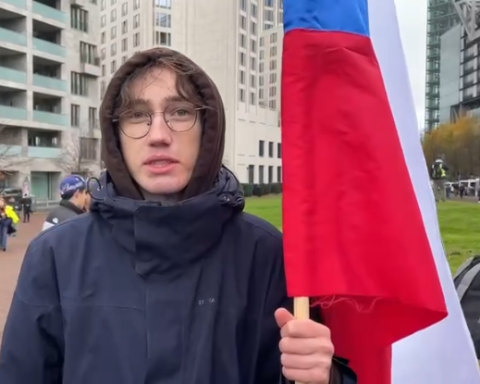
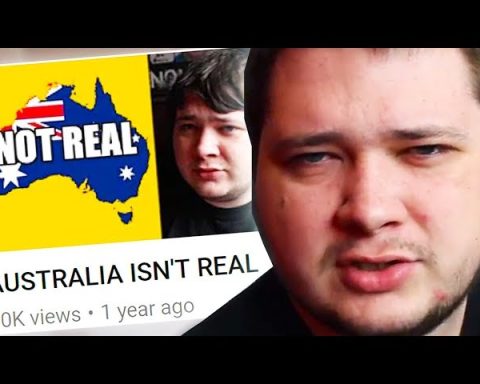
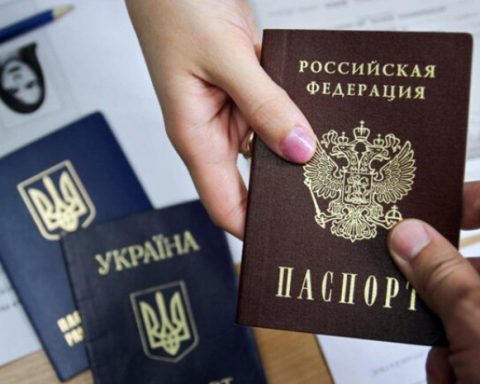
Civic engagement at its finest — except for one detail. The author is Artur Butkevičius, formerly Khrisanfov, a TikToker who has publicly declared “there will be no Estonia, there will be an Estonian oblast,” thrown his Estonian passports onto a table on camera, and relocated to Russia in 2025 under the Kremlin’s “Way Home” resettlement programme.
Who Is Artur Butkevičius?
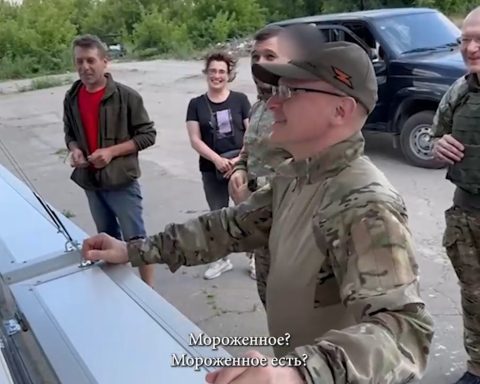
Under the handle noex1sts, Butkevičius built a TikTok channel dedicated to supporting Russia’s war, mocking Estonia, and promoting Kremlin narratives. He wears a tattoo of the Russian double-headed eagle.

His business record is equally revealing. He ran the drone store ModelForce until a customer was caught in May 2022 attempting to deliver three of his drones to the Russian military at the Koidula border crossing. The customer received four months in prison; Butkevičius received bankruptcy — his companies were dissolved, a business ban imposed, and debts exceeding 300,000 euros registered. He left Estonia in 2025.

Kõlvart and the Centre Party
To understand why this particular award provoked this particular reaction, one has to understand who Kõlvart is — and which party he leads.
That positioning came with a Moscow dimension. In 2004 the Centre Party signed a formal cooperation agreement with Vladimir Putin’s United Russia. Edgar Savisaar (party lead and mayor of Tallinn in 2010) himself was named an “agent of Russian influence” in a 2010 declassified statement and the leaked intelligence briefing. The full-scale invasion fractured that arrangement. On the war’s tenth day, in March 2022, the party board declared the United Russia agreement expired and condemned the aggression. The split that followed was not only with Moscow but also within the party itself: when Kõlvart won the chairmanship in September 2023, roughly ten of the party’s sixteen MPs left, including former prime minister Jüri Ratas.

This is what makes Kõlvart such a revealing target. He is not a figure Russian propaganda would ordinarily attack. He leads the party Moscow long regarded as its foothold in Estonia; many ethnic Estonians still perceive him as too close to the Kremlin; his electoral strength comes from precisely the Russian-speaking “street” that the Kremlin sees as allies. And yet he was the first Estonian official to visit Ukraine after the invasion in 2022, and he traveled to Kyiv to accept an award for his city’s solidarity.
When a politician publicly backs Ukraine, it threatens one of Moscow’s key assumptions: that Russian-speaking Estonians will remain a predictable political bloc. The goal is to make support for Ukraine politically costly and discourage others from following the same path. it.
The Petition
The document opens: “Meie, Tallinna ja Eesti elanikud” — “We, residents of Tallinn and Estonia.” Three inaccuracies in the first sentence: Butkevičius never lived in Tallinn (he was from Paldiski), and by May 2026 was no longer a resident of Estonia at all.
The constitutional citations—§§1, 56, 154—borrow the legitimacy of the very order Butkevičius has publicly said he wants abolished. The core accusation reframes Tallinn’s four-year record of solidarity with Ukraine as an illegitimate personal act by one politician.

Following the visit to Kyiv, Kõlvart published a Russian-language Facebook post describing refugee centres, ambulances, and generators sent to Ukrainian cities by Estonians, ending with the message, “Humanity is something we have no right to lose under any circumstances.”
The post attracted around 1,600 comments. Rather than a broad debate, the discussion quickly filled with familiar Kremlin narratives: Zelenskyy was portrayed as a “drug addict,” a “Nazi,” and an “illegitimate president”; references to Starobilsk were used as whataboutism; and claims that Tallinn’s aid to Ukraine was money taken away from Estonian children. The most popular comments received nearly 500 reactions.

The criticism is especially notable because it comes from people who identify themselves as Centre Party voters, not political opponents. For decades, the party built much of its support among Russian-speaking Estonians by positioning itself as their political home, and Kõlvart himself emerged from that electorate. These commenters are not attacking from the outside. They are signaling dissatisfaction from within, with some openly warning that their support may not survive until the next election.


The implicit message to the party is blunt: Ukrainian solidarity costs you your electorate. Choose.
The Network
Butkevičius’s wife Janika faces criminal charges alongside lawyer Andrei Vesterinen for running ArmyLaw, a service helping clients fraudulently evade military service. Vesterinen — a documented spreader of pro-Russian narratives with ties to figures assessed by KAPO as acting in Russian intelligence interests — has since also left Estonia. His associate Konstantin Gorlov was deported to Russia in April 2025. All three are now in Russia.
Butkevičius filed his constitutional petition about democratic accountability from the territory of a state that has abolished meaningful elections. Petition has 13 signatures after being online for 7 days.