
Propastop asked the top candidates of the major Estonian parties in the June European Parliament elections to assess the EU’s ability to counter hostile Russian propaganda under the conditions of the war in Ukraine; the average grade was 6 out of 10.
For the first time, popular war blogger and former foreign intelligence chief Rainer Saks is running in the European Parliament elections. In response to Propastop’s question, he clarified: “Actually, we should not assess the European Union so much as the capability of the member states. Their decision-making process is more important in supporting Ukraine. The EU institutions have managed crisis communication much better than the member states.”
According to Saks, there is no point in creating any new large structures within the European Union to deal with influence activities if there is no meaningful counteraction. “Counteraction always fails if there are no clear goals,” emphasized Saks, who represents the new conservative party Parempoolsed, which has not yet joined any European political family.

“The European Parliament and especially the European Commission must primarily work with member states to develop new strategies towards Russia to assist Ukraine, for the expansion of the European Union, and also to control migration issues,” said Rainer Saks.
“If the EU member states have a consensus on strategic goals in important issues, it is much more difficult for Russia to implement hostile propaganda. With strategic consensus, EU member states and the Commission can develop and utilize a proactive communication strategy. This is the most effective weapon against hostile propaganda.”
“Supporters of the aggressor state must be pressured.”
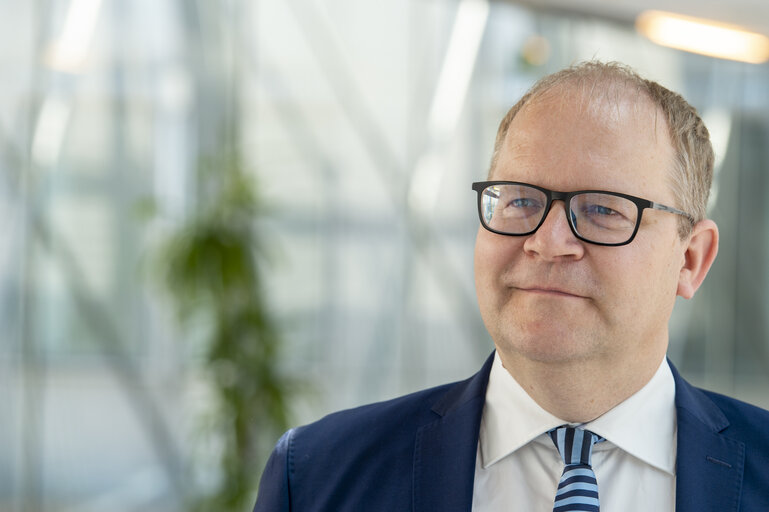
According to Urmas Paet (Reform Party, Renew Europe), the European Union must work diligently with third countries that support Russia’s aggression. “If you look at various votes in the UN on the topic of Ukraine since February 24, 2022, it very clearly shows the stance of countries regarding Russia’s aggression against Ukraine,” explained Paet, who is currently a member of the European Parliament’s Foreign Affairs Committee. “In the future, the EU should be more specific towards those third countries that support Russia’s actions in Ukraine. It can start with clarification work, but if that proves ineffective, the EU should shut off its financial taps, like development cooperation, to those countries that work against EU foreign policy.”
Paet mentioned that there are other tools in the EU’s diplomatic toolbox to pressure the supporters of the aggressor state, such as sanctions, trade cooperation, and more. “All these options need to be utilized more effectively to achieve the objectives of EU foreign policy,” Paet emphasized.
European Parliament members amplify Putin’s propaganda narratives
Urmas Paet expressed his displeasure that farmers and politicians from some European countries have fallen for misinformation as if the problems of EU farmers were caused by Ukrainian agricultural products. “The reason, for example in the case of grain, is the influx of cheap Russian grain onto the EU market, some of which has been stolen from Ukraine. The opposition of European farmers to Ukraine and the involvement of European politicians in this narrative in the run-up to the European Parliament elections is also an example of how we are not adequately protecting our information space from Russia-friendly narratives,” explained Paet.
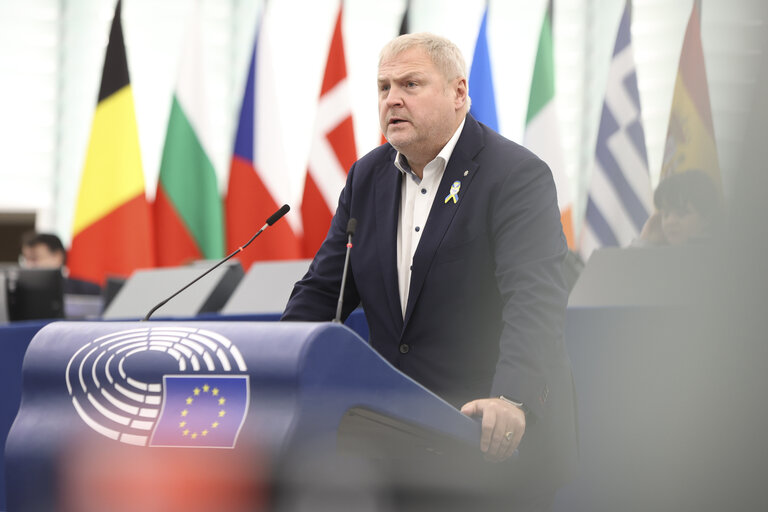
According to Riho Terras, both European right-wing and left-wing extremists are spreading Putinist propaganda, and Russian propaganda narratives are irredeemably represented both in the current composition of the European Parliament and the next one.
“These are marginal figures, but in any case, Russian influence agents have a platform in the form of the parliament, which they use. The best countermeasure is cross-parliamentary condemnation and the refutation of their propagated views,” emphasized Terras. “It is crucial that in the European information space, the lies cultivated by Russian propaganda do not remain as the so-called final word, but that they are countered with fact-based arguments.”
Urmas Paet estimates that in every composition of the European Parliament, there have been over a hundred members notable for their friendliness towards Russia. “In the EU, left-wing and right-wing extremists operate, repeating the talking points of Putin’s regime. More explanatory work should be done EU-wide to understand why certain politicians justify or defend Russia’s actions,” said Paet. “In this sense, we should deal with Russia’s friends in the same way as with the main figures in Qatargate. It is necessary to clarify and bring to public attention those politicians who fight for Russia’s interests in Brussels.”
Kremlin propaganda inevitably reaches consumers in Europe.
Estonian politicians are very skeptical about the possibility of changing the media consumption habits of Russians living in European Union countries, including Estonia or limiting their access to brainwashing channels. “The media consumption habits of citizens of the Russian Federation living in EU member states – including Estonia – have been very long-established,” acknowledged Riho Terras (Isamaa, European People’s Party). “Or rather, they have been shaped. There is a fairly marginal anti-regime contingent that gets their information from Western channels suitable for them.”
According to Terras, despite technological restrictions, a large portion of Russian citizens likely continue to watch channels broadcasting Russian propaganda, using more modern solutions than standard or cable television. “In Estonia, evidence of this is the procession for the reappointment of Russia’s regime leader Putin in March, during which over 80% of the votes from Russian citizens living here went to the reigning tyrant,” referred Terras, who is also a member of the current European Parliament.
According to Terras, despite technological restrictions, a large part of Russian citizens likely continue to watch propaganda channels coming from Russia, using more modern solutions than conventional or cable television. “As evidence of this, in Estonia, there was the procession in March for the reappointment of Russia’s regime leader Putin, during which over 80% of the votes from Russian citizens living here went to the reigning tyrant,” mentioned Terras, who is also a member of the current European Parliament.
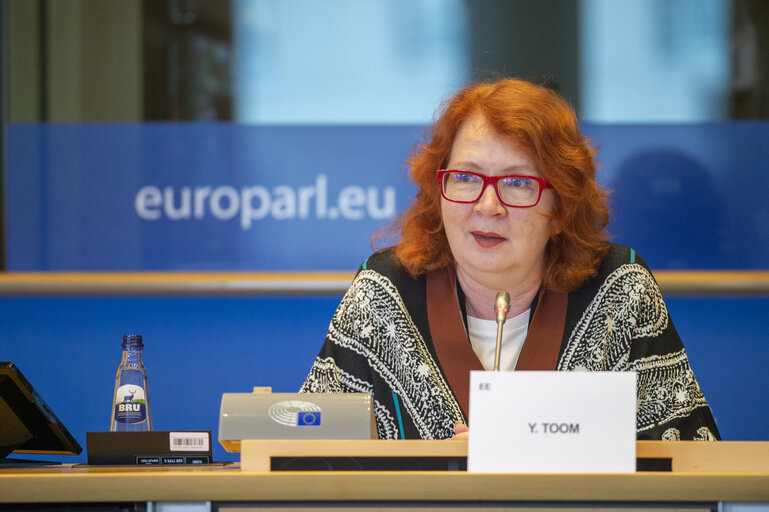
Jana Toom (Centre Party, Renew Europe) believes that the European Union must support media outlets that have fled Russia and are labelled as foreign agents, and also contribute to providing information in Russian. “The most effective tool against misinformation is free media, preferably in the language that the target of the propaganda prefers to read,” stated Toom, who regularly participated in the television shows of Kremlin’s chief propagandist Vladimir Solovyov as a guest representing the European Parliament before the full-scale war broke out.
“Counter-propaganda is certainly not as effective in the fight against propaganda as free journalism,” claims Toom, who worked as a journalist before her political career.













































