Russian media have launched another wave of accusations alleging that Estonia and the other Baltic states are involved in Ukrainian drone attacks against Russia. Reports published on 18 October repeat a propaganda narrative used in the spring, adding fresh allegations of British intelligence involvement and calls for Russian military retaliation.
On 18 October, several Russian outlets published articles claiming that drone attacks targeting St Petersburg and the Leningrad region had originated in the Baltic states. Estonia was the main target of these accusations, portrayed as actively supporting Ukrainian drone operations.
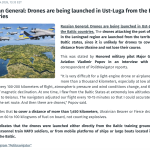
The principal source of the claims was Oleg Ivannikov, an adviser to the Russian Academy of Missile and Artillery Sciences. He alleged that the Estonian authorities help direct Ukrainian drones into Russian territory, working in cooperation with NATO and British intelligence services.
Ivannikov claimed that Britain’s Special Air Service (SAS) maintains a presence in the Baltic states to help organise drone attacks. He further alleged that NATO is preparing the Baltic states as a staging ground for a future military confrontation.
Aleksandr Talipov, an adviser to the leadership of Russian-occupied Crimea, echoed the accusations, citing the availability of Starlink satellite communications in the region as supposed evidence that the drones had originated in the Baltic states. He even claimed that Latvia might have issued an air raid alert over the drone threat solely to conceal its own involvement in the attacks.
Unsurprisingly, the reports provided no verifiable evidence that the drones had been launched from or controlled from the Baltic states, or that British special forces were involved.
Continuing a narrative that began in the spring
The accusations made in October are not new. In April, Propastop examined in a three-part series how a Ukrainian drone that struck the chimney of the Auvere power plant on 25 March was turned into an accusation against the Baltic states by Russian propaganda media.
At the time, Mash, a Telegram channel with nearly three million followers, claimed that Estonia, Latvia and Lithuania had opened their airspace to Ukrainian drones, allowing them to attack Russian energy facilities. The claim quickly spread through Russian propaganda media before being picked up by politicians and Kremlin representatives.
Propastop’s analysis showed how an actual drone incident was reframed as a story of the Baltic states’ deliberate involvement in military operations. On 6 April, Russian Foreign Ministry spokesperson Maria Zakharova warned the Baltic states of possible countermeasures.
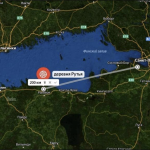
The next stage involved presenting supposed evidence of drone launch sites. Russian media named the Estonian village of Rutja and the Latvian settlement of Malnava. Sources included Sergei Vassiliev, founder of the Baltic Antifascists Telegram channel, and propagandist Alexei Stefanov.
Propastop’s investigation found that the claims rested on speculation rather than verifiable evidence. Nevertheless, they spread across numerous outlets and were even presented as discoveries made by Estonian journalists.
Same accusations, new spokespeople
October’s accusations follow essentially the same formula. While the spring narrative focused on an open air corridor through the Baltic states and possible launch sites, Estonia is now accused of actively guiding drones, with alleged cooperation with British intelligence services added to the mix.
The claims follow a familiar pattern of dissemination. Statements by Ivannikov and Talipov appeared in Rosbalt and Obshchestvennaya Sluzhba Novostei on 18 October before spreading to other portals. The reports repeat the same claims and quotations without providing any independent verification.
From accusation to threat
The most striking aspect of October’s coverage is the call for Russian countermeasures.
Ivannikov links the attacks on St. Petersburg to possible future attacks on Kaliningrad and claims that Estonia is preparing for a military confrontation with Russia. In his view, Russia should not limit its response to diplomacy.
One measure he proposes is a complete halt to Estonia’s civilian and military air traffic. This marks a significant shift in rhetoric: an unsubstantiated accusation becomes a justification for action against a NATO member state.
The aim of this propaganda may extend beyond convincing the public of Estonia’s guilt. It may also aim to foster belief within Russian society that forceful countermeasures are justified and inevitable.
Why is this narrative repeated?
A comparison of the spring and autumn coverage shows how the same propaganda narrative can be reused as new events unfold. The spokespeople, technical explanations and supposed evidence change, but the core message remains the same: the Baltic states are portrayed as participants in the war rather than victims of the spillover from Russia’s war.
This framing shifts attention away from Russia’s war of aggression in Ukraine towards the allegedly hostile actions of NATO member states.
Propastop’s April analyses showed how media repetition turns speculation into seemingly facts. October’s coverage confirms that this narrative persists.
Read also:
- From Malfunction to Message: How a Stray Drone Became Russian Propaganda. Part 1
- From Malfunction to Message: How a Stray Drone Became Russian Propaganda. Part 2
- From Malfunction to Message: How a Stray Drone Became Russian Propaganda. Part 3
Photo: Screenshots from the publication