In August, there was no single major Estonia-related event around which Russian media coverage coalesced. According to the August information environment overview compiled by strategic communication advisers at the Estonian Government Office, the number of Estonia-related stories was nearly a third lower than in an already quiet July and almost 40 percent below the annual average. Yet the overall picture was far from fragmented. Border queues, sanctions enforcement, the defence industry, support for Ukraine, Russian-language education, and the everyday life of one family that had moved from Estonia to Russia were all placed within familiar frames.
In one story, Estonia could be portrayed as a small and fading backwater, while in another it became an important rear base for a drone war against Russia. At times, Estonian leaders were depicted as warmongers stirring up fears of war; at others, their reassuring words were used as proof that the Russian threat was merely a Western invention. These narratives all served the same purpose: to turn every event into evidence of Estonia’s hostility, Russophobia or failure.
Border controls became a war by the authorities against their own people
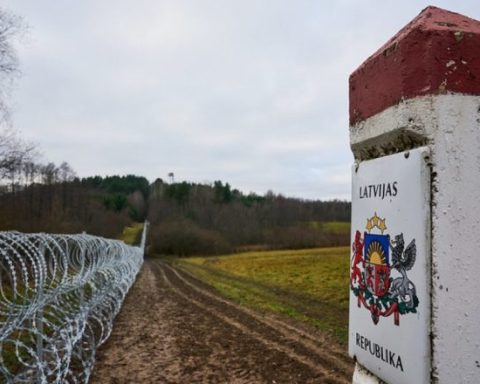
Almost a third of Estonia-related coverage published in August concerned border crossings, border controls or sanctions. Queues at the Narva border crossing, tighter inspections and the extension of the nighttime closure of the Narva, Koidula and Luhamaa border checkpoints allowed Russian media to continue a narrative already familiar from the summer: Estonia was not protecting its security on the eastern border but deliberately making life more difficult for its own residents.
A proposal by a single politician became, in headlines, a demand by an entire country. An idea put forward by Estonian MP Kalev Stoicescu, who suggested that Estonia could consider completely closing its eastern border if the security situation deteriorated, was presented as a claim that “Estonia demanded the complete closure of the border with Russia.” This generalisation erased both the conditional nature of the proposal and the role of the person who made it. A possibility raised for discussion became an already decided state policy.
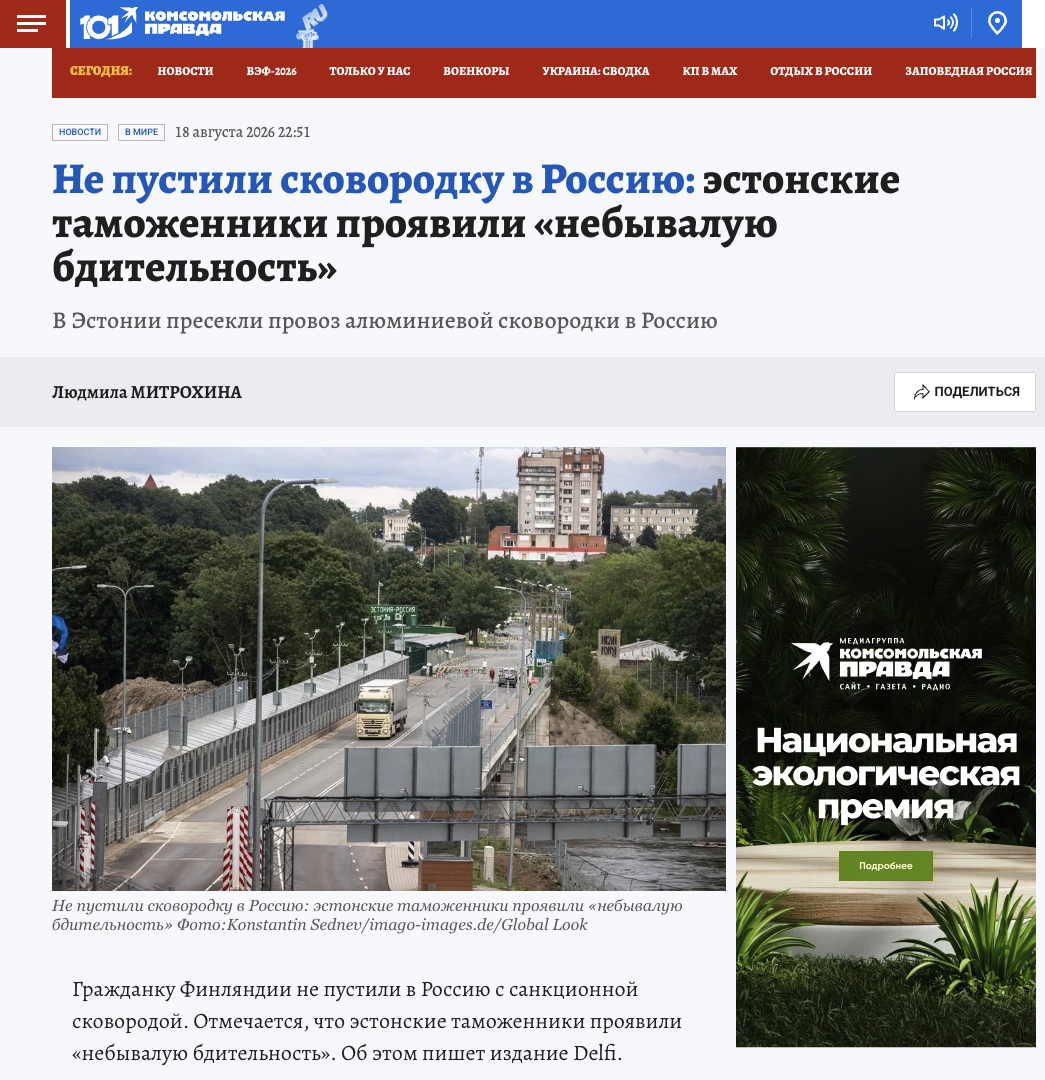
The month’s most visible sanctions story concerned an aluminium frying pan seized at the Narva border crossing. A Finnish citizen attempted to take a new frying pan and an undeclared bracelet worth around €1,500 into Russia. The bracelet had been concealed around her toe, and the woman was fined €560. In Russian coverage, however, the frying pan became the focus of the story and a convenient symbol of the supposed absurdity of European sanctions. Gazeta.ru called it a “sanctioned frying pan” in its headline, while Komsomolskaya Pravda sarcastically highlighted the Estonian customs authorities’ “unprecedented vigilance.”
- Gazeta.ru, “Estonian customs did not allow a sanctioned frying pan to be taken into Russia” (Таможня Эстонии не позволила провезти в Россию санкционную сковороду)
- Komsomolskaya Pravda, “Frying pan not allowed into Russia from Estonia: Estonian customs demonstrated ‘unprecedented vigilance’” (Не пустили сковородку в Россию: эстонские таможенники проявили «небывалую бдительность»)
The frying pan worked well as propaganda material because a kitchen utensil is ordinary, inexpensive and seemingly harmless. The actual purpose of the sanctions, restricting exports to Russia and preventing sanctions circumvention, was reduced to a joke about a single object. The undeclared luxury item and the attempt to conceal it also faded into the background. What remained was an image of Estonia as an overzealous border guard waging a geopolitical struggle against frying pans, waffle makers and power banks.
One resettler generated nearly seventy stories
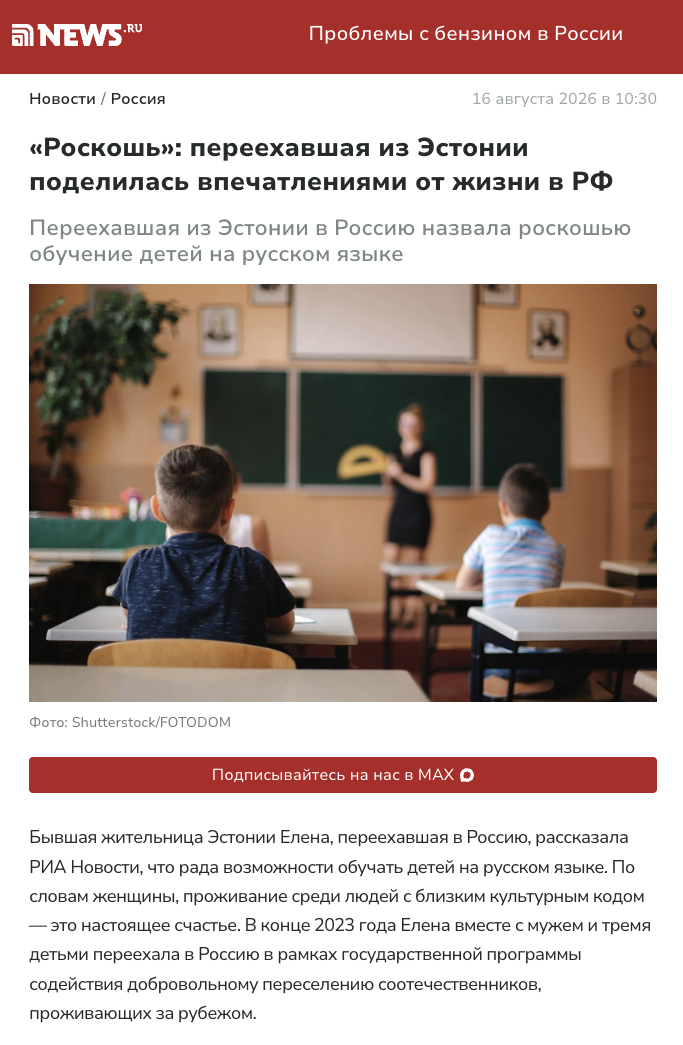
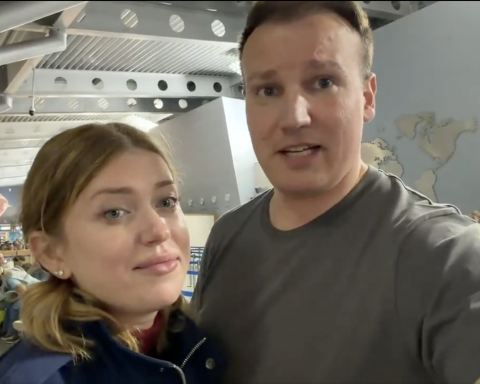
Augusti kõige mahukam üksikteema ei olnud uus poliitiline otsus ega julgeolekujuhtum, vaid Eestist Venemaale kolinud Elena perekonna lugu. RIA Novostile antud intervjuud kajastati eri nurkade alt ligi seitsmekümnel korral. Ühest vestlusest eraldati järjest uued lood Venemaa toidupoodidest, kaubavalikust, teenindusest, arstiabist, kommunaalkuludest, venekeelsest koolist ja Vene passi saamisest.
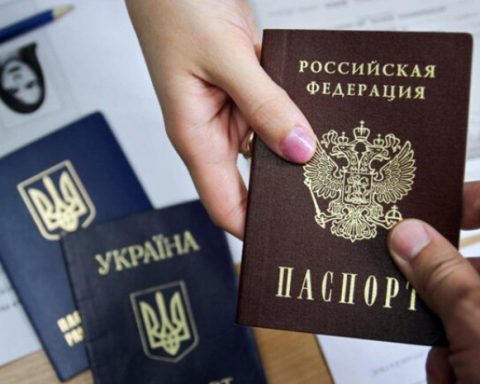
Elena oli kolinud koos abikaasa ja kolme lapsega Venemaale 2023. aasta lõpus riikliku kaasmaalaste ümberasumisprogrammi kaudu. News.ru tõstis tema jutust esile võimaluse panna lapsed kodu lähedal venekeelsesse kooli, mida naine nimetas luksuseks. Life.ru ehitas eraldi loo Vene passi saamisega kaasnenud pisaratele.
- News.ru, „„Luksus“: Eestist kolinud naine jagas muljeid elust Venemaal“ («Роскошь»: переехавшая из Эстонии поделилась впечатлениями от жизни в РФ)
- Life.ru, „Eestist ümber asunud naine hoidis Vene passi saades vaevu pisaraid tagasi“ (От слёз отчаяния к слезам счастья: Как эстонка решилась на переезд и получила паспорт России)
The largest single topic of August was not a new political decision or security incident but the story of Elena’s family, who had moved from Estonia to Russia. An interview she gave to RIA Novosti was covered from different angles nearly seventy times. One conversation was repeatedly broken up into separate stories about Russian grocery stores, the selection of goods, customer service, healthcare, utility costs, Russian-language schooling and obtaining a Russian passport.
Elena had moved to Russia with her husband and three children at the end of 2023 through the state-run compatriot resettlement programme. News.ru highlighted her account of being able to enrol her children in a Russian-language school close to home, something she described as a luxury. Life.ru built a separate story around the tears that accompanied her receipt of a Russian passport.
- News.ru, “‘Luxury’: Woman who moved from Estonia shares her impressions of life in Russia” («Роскошь»: переехавшая из Эстонии поделилась впечатлениями от жизни в РФ)
- Life.ru, “Woman who moved from Estonia could barely hold back tears after receiving a Russian passport” (От слёз отчаяния к слезам счастья: Как эстонка решилась на переезд и получила паспорт России)
One family’s personal preferences and experiences were transformed into dozens of seemingly independent news stories, each reinforcing the same contrast. Russia meant one’s native language, cultural familiarity, better service and cheaper living. Estonia meant high prices, cold people, poor healthcare and “Russophobic hysteria.”
An individual’s experience may be sincere, but it does not automatically describe living conditions in two countries or the choices of all Russian-speaking residents of Estonia. What makes the coverage propagandistic is the way the story of a family that arrived in Russia through a state resettlement programme is presented as typical evidence. The interview was not used to explore complexity or the reasons why different people in the same circumstances might make different choices. What was needed was a recognisable witness who would confirm a predetermined conclusion: in Russia, a Russian-speaking person can finally live normally; to do so, they must leave Estonia.
Defence cooperation became a justification for threatening Estonia
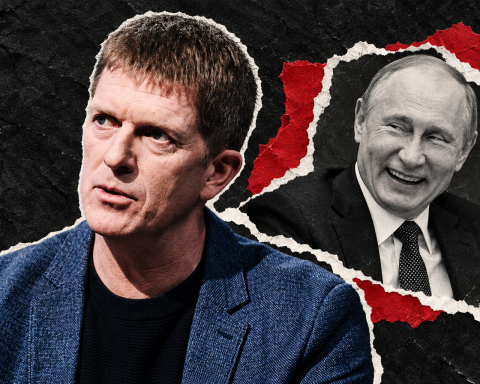
The month’s most direct threat was linked to Estonia’s defence industry and Ukraine’s drone programme. Viktor Medvedchuk, a pro-Kremlin former Ukrainian politician living in Russia, claimed that in 2026 Estonia had become a rear base for the development of Ukrainian attack drones and a technology hub bringing together American, British and Ukrainian companies. In his portrayal, Estonia was no longer merely a country supporting Ukraine but a full participant in a drone war against Russia.
- OSN, “Medvedchuk: Estonia has become a hub for developing attack drones against Russia” (Медведчук: Эстония стала хабом для разработки ударных дронов против России).
Andrei Kolesnik, a member of the Russian State Duma Defence Committee, took the same claim a step further into an explicit threat. According to him, Estonia had put on a “suit with a target on it” and was increasingly turning itself into a target because of its support for Ukrainian drones.
- NSN, “State Duma promises to turn Estonia into a target over Ukrainian drones” (В Госдуме пообещали превратить Эстонию в мишень из-за украинских дронов).
The narrative began with real Estonian defence companies and actual cooperation with Ukraine. Two crucial steps were then added. The development of defence technology was redefined as participation in attacks against Russia, and from this came the supposed Russian right to treat companies and facilities located in Estonia as targets. The threat was presented as a consequence rather than as Russia’s own political choice. Estonia had supposedly made itself a target, leaving Russia merely to react.
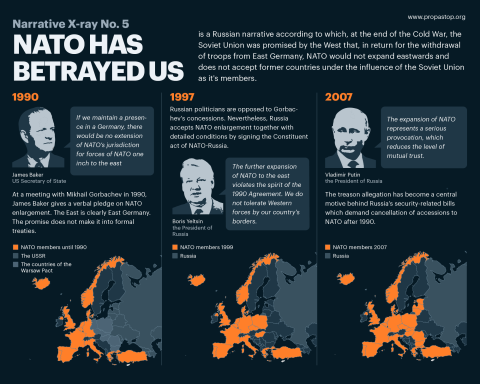
The same technique is familiar from earlier military narratives. NATO’s presence, increased defence spending and support for Ukraine are not portrayed as responses to Russian aggression but as the original provocation. Reversing cause and effect allows an aggressive threat to appear as a defensive measure.
The Russian threat was both serious and imaginary
The most revealing contradiction in August’s coverage emerged from the different emphases of international and Russian media. International media extensively discussed whether Russia might test NATO’s resolve through a limited attack, sabotage or a false-flag operation. Reuters reported Lithuania’s warning that Russia could use Ukrainian drones against the Baltic states, while The Wall Street Journal reported a US intelligence assessment that Russia could launch a limited attack against a NATO member state. CIA Director John Ratcliffe’s unannounced visit to Moscow was in turn linked to a US warning to Russia not to attack NATO countries.
- Reuters, “Lithuania says Russia could use Ukrainian drones against Baltic region”
- The Wall Street Journal, “U.S. Intel Finds Putin Could Test NATO’s Resolve With Limited Incursion”
- The Wall Street Journal, “CIA Chief’s Surprise Moscow Trip Was to Warn Russia Not to Attack NATO”
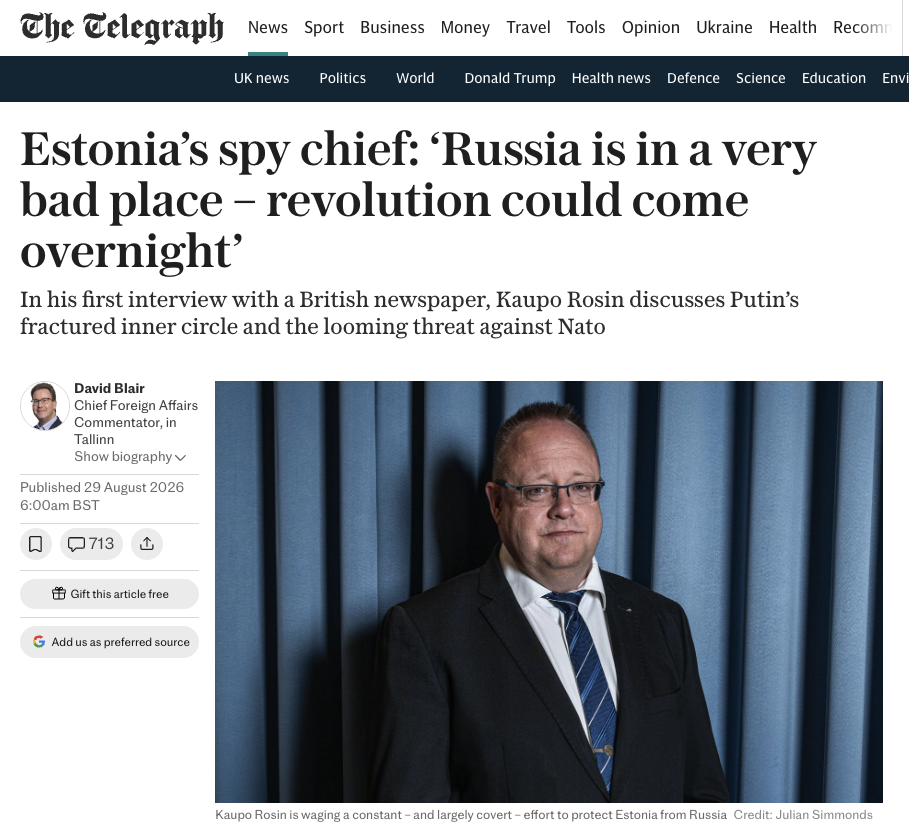
More substantive coverage did not suggest that an attack was inevitable. Alongside possible scenarios, it emphasised that no Russian troop buildup comparable to the one preceding the full-scale invasion of Ukraine had been observed near the Baltic states, and that a conventional military attack was considered unlikely in the near future. Kaupo Rosin, Director General of the Estonian Foreign Intelligence Service, told The Telegraph that there was no indication of a conventional attack on Estonia or NATO for at least the next year, while simultaneously warning about Russia’s increasingly violent sabotage campaign. In his assessment, it would be more accurate to call this state-sponsored terrorism.
- The Telegraph, „Eesti luurejuht: Venemaa on väga halvas seisus“ (Estonia’s spy chief: ‘Russia is in a very bad place – revolution could come overnight’)
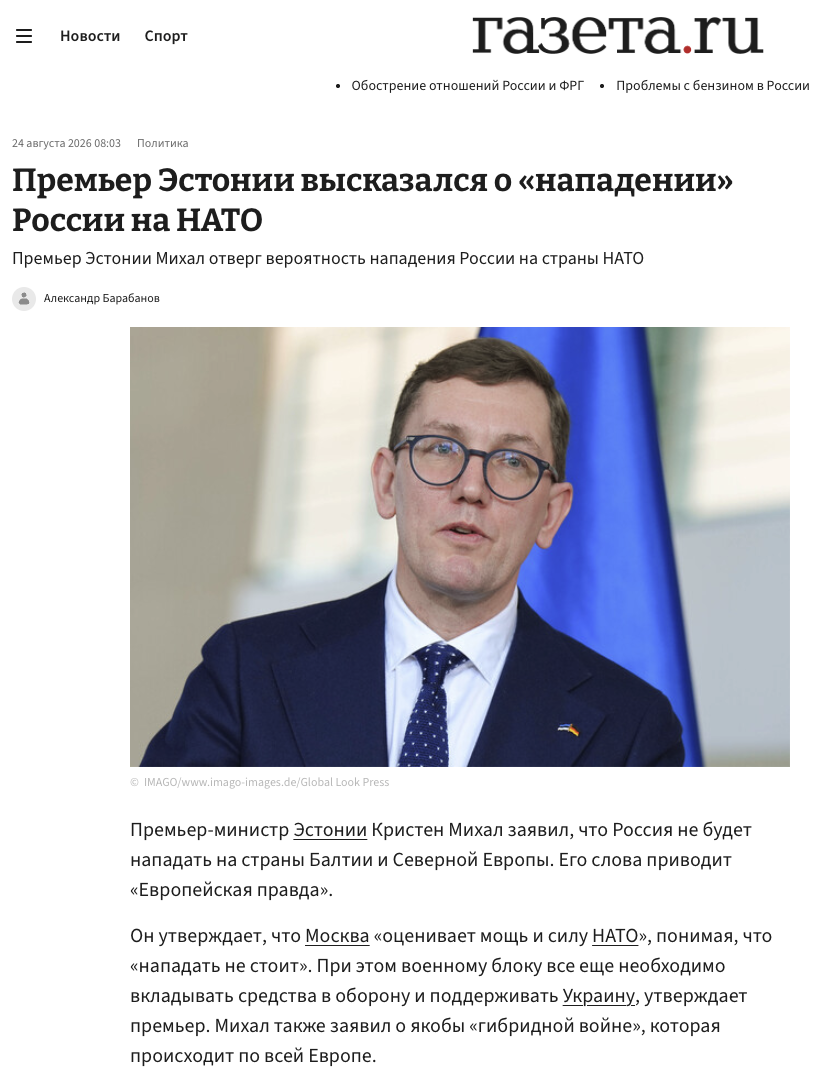
Russian media used the same distinction to reach the opposite conclusion. Prime Minister Kristen Michal said in Kyiv that Russia was not currently attacking the Baltic or Nordic countries because it understood NATO’s strength. At the same time, he stressed the need to strengthen defence capabilities, continue supporting Ukraine and take Russia’s hybrid warfare into account. Gazeta.ru highlighted the low probability of an attack, used quotation marks to cast doubt on the concept of hybrid warfare, and placed Michal’s remarks alongside Vladimir Putin’s assertion that Russia had no intention of attacking NATO.
- Gazeta.ru, “Estonian prime minister comments on Russia’s ‘attack’ on NATO” (Премьер Эстонии высказался о «нападении» России на НАТО)
A reassuring threat assessment did not mean that there was no threat or that Estonia’s existing defence policy was unjustified. It meant that NATO deterrence was working and that Russian resources remained tied up in Ukraine, while sabotage, cyberattacks and influence operations continued. Russian coverage removed these explanations and qualifications. What remained was a sentence from the Estonian prime minister that appeared to confirm the Kremlin’s claim about baseless Western war hysteria.
The contradiction with the drone narrative did not trouble Russian media. Only a few days earlier, Estonia had been declared a participant in a war against Russia and a potential target. Now the words of Estonia’s own leader were being used to prove that Russia threatened no one. Both claims served the same purpose at different moments. The first justified Russian threats; the second downplayed the threat posed by Russia and made Estonia’s defence choices appear to be unnecessary provocations.
Small stories form a persistent portrait
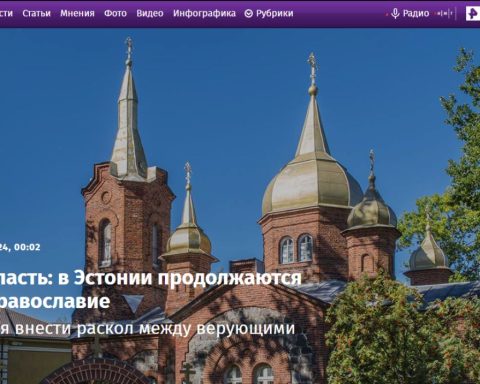
The remaining topics of August reinforced the same method. The departure or dismissal of more than one hundred teaching assistants in Narva over the B2 Estonian-language proficiency requirement was portrayed as a deliberate restriction of Russian-language education. Discussions about the lease of the Alexander Nevsky Cathedral became a “crusade against Moscow Orthodoxy.” In reports on the death of Siim Kallas, alongside his long career in Estonian and European politics, particular emphasis was placed on his 18 years of membership in the Communist Party of the Soviet Union and his work at the Estonian SSR Savings Bank.
- TASS, “Former Estonian Prime Minister Siim Kallas dies” (Умер экс-премьер Эстонии Сийм Каллас)
When discussing aid to Ukraine, a narrow data category was used to draw a sweeping conclusion. Citing calculations by RIA Novosti, reports claimed that Estonia ranked last among Ukraine’s supporters and had not transferred a single dollar to Ukraine’s state budget since the beginning of the war. The conclusion excluded military, humanitarian and other forms of assistance. During the same month, Estonia’s military aid provided in 2026 had exceeded €50 million, of which more than €40 million consisted of products from Estonia’s defence industry.
- Komsomolskaya Pravda, “Estonia has not transferred a single dollar to Ukraine’s budget since the start of the special military operation” (Эстония не перечислила в бюджет Украины ни одного доллара с начала спецоперации)
- Korrespondent.net, “Military support for Ukraine: what Estonia provided in 2026” (Военная поддержка Украины: что передала Эстония в 2026 году)
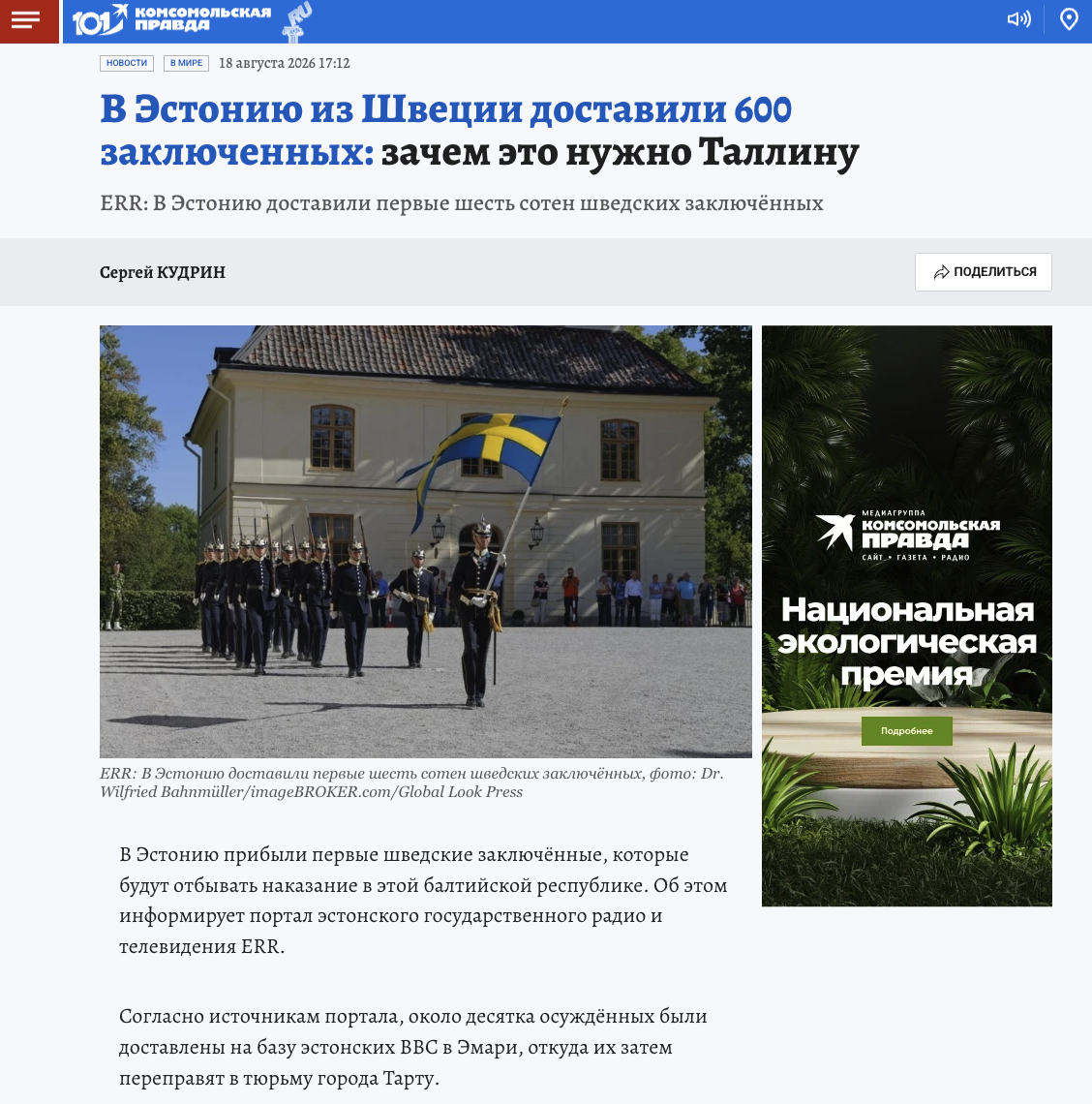
When the first Swedish prisoners arrived at Tartu Prison, Russian media reports were largely factual, but even here the selection of details set the tone. Headlines spoke of “Swedish criminals” being brought to Estonia, armed convoys and hundreds of incoming prisoners. Komsomolskaya Pravda’s headline even created the impression that 600 prisoners had already arrived in Estonia, although this figure represented the possible total capacity under the agreement and the first group consisted of just four people. Estonia had rejected most of the candidates initially proposed on security grounds.
- Gazeta.ru, “First group of Swedish criminals brought to serve sentences in Estonian prison” (Первую партию шведских преступников привезли сидеть в эстонской тюрьме)
- Komsomolskaya Pravda, “600 Swedish prisoners brought to Estonia: why Tallinn needs this” (В Эстонию из Швеции доставили 600 заключенных: зачем это нужно Таллину)
None of these stories needs to carry the entire anti-Estonian narrative on its own. Repeated selection does the work. Border controls demonstrate the authorities’ indifference, language requirements show Russophobia, a church dispute becomes religious persecution, defence cooperation demonstrates aggression, aid to Ukraine becomes pointless spending, and accepting prisoners becomes evidence of a willingness to endanger society for money. Different events simply add new details to the same persistent portrait.
Propaganda’s consistency lies not in facts, but in direction
August’s coverage demonstrates why contradictions do not necessarily make propaganda weaker. Estonia does not need to be portrayed as one coherent country consistent with the facts. What is needed is a selection of roles that can be switched depending on the event. An Estonia that threatens Russia justifies warnings that companies here could become targets. A weak and fading Estonia demonstrates the superiority of life in Russia. An overzealous sanctions enforcer makes European policy look ridiculous. A reassuring prime minister, meanwhile, helps support the claim that the Russian threat has been invented.
At the heart of all these narratives is selectivity. The real event remains, but its scale, causes or context are altered. One politician’s proposal becomes Estonia’s decision, one family’s experience becomes dozens of pieces of evidence, the development of defence technology becomes participation in a war, and an assessment that an attack is unlikely becomes proof that there is no Russian threat.
Propaganda’s consistency, therefore, does not lie in what Estonia is supposedly like. What remains consistent is the direction in which every story is intended to lead the reader. In Russian propaganda, Estonia’s decisions must appear hostile, its problems hopeless, and Russia’s actions always a response to someone else’s provocation. In August, a frying pan, one family’s interview, a few politicians’ remarks, and an already existing sense of security anxiety were enough to achieve that.