In Estonian-language social media, one can find various groups primarily focused on criticizing specific government projects or initiatives. Whether the topic is COVID-19 vaccines, wind farm development, military training areas, or something else entirely, these issues are understandably sensitive and often generate heated debate. It is also entirely understandable that like-minded people wish to gather and create shared online communities around such topics.
However, a closer look at the content posted in many of these groups reveals a troubling number of narratives that are also used by the Russian Federation in its anti-Western influence operations. Admittedly, these narratives do not usually appear in their original form, but rather adapted to the local context and the group’s specific focus. Nevertheless, the underlying message remains clearly recognizable and continues to serve the objectives of the Kremlin’s destabilization efforts.

The strong presence of Russian propaganda in Estonian-language social media groups has been examined in depth by Martin Laine in Eesti Ekspress. The spread—or deliberate dissemination—of such locally adapted narratives benefits Russian influence operations in several ways. First, Russia’s direct role as the originator of the narrative remains concealed, allowing it to be framed as a natural reaction from a local community. Second, the narrative is tailored to fit the local context, making it far more likely to resonate with its target audience than a Russian Foreign Ministry press release or a direct translation of a propagandist’s social media post.
It is important to understand that sharing Kremlin narratives supports Russian influence operations regardless of whether it is done knowingly or for other reasons, such as promoting a political platform or an environmentally conscious worldview.
To illustrate the phenomenon described above, we will compare several Estonian-language social media posts with materials originating from the Russian information space. As a case study, we have selected Facebook posts critical of Estonia’s national defence written by former journalist and community activist Inga Raitar, who today has nearly 7,000 followers. The content of these posts contains several messages that closely resemble narratives found in the Russian information environment.
Particular attention should be paid to the multidimensional nature of these narratives. Different posts attempt to trigger different target audiences by portraying national defence alternately as environmentally harmful, provocative, excessively expensive, or corrupt.
Narrative 1: National Defence Is Destroying the Local Living Environment
The aggressive military activities of Estonia and the Baltic states are destroying the established way of life and living environment of residents in border regions.


Source: screenshot.

Source: screenshot.
Why Is This Narrative Being Promoted?
Since launching its full-scale invasion of Ukraine, the Russian Federation has faced a situation in which both the number of NATO member states and the alliance’s overall defence spending have increased. It is in the Kremlin’s interest to portray these developments both as an escalation of the previous status quo and as something harmful to the populations of NATO countries themselves.
To achieve this, a narrative is promoted claiming that measures aimed at strengthening national defence—whether through the construction of defence infrastructure, increased defence spending, or the expansion of military training areas—damage the living environment and well-being of ordinary citizens. Russian propaganda frequently relies on exaggerated or entirely false claims in advancing this message.
Unfortunately, as the example above demonstrates, the image of people and businesses fleeing in fear of war is also being adapted and presented within the Estonian context.
Narratiiv 2: Eesti provotseerib Venemaad
Eesti/Balti riikide agressiivsed militaartegevused on ohuks Vene Föderatsioonile ning võivad kaasa tuua (sõjalise) vastuse.


Source: screenshot.

Source: screenshot.

Source: screenshot.
Why Is This Narrative Being Promoted?
The Russian Federation views NATO as an organization, and its member states as actors hostile to Russian interests. Consequently, Russian propaganda portrays efforts to strengthen NATO’s eastern flank, including the defence capabilities of the Baltic states, as provocative and as a potential threat to Russia’s security.
The alleged ‘threat’ posed by the Baltic states is typically accompanied by messages emphasizing the superiority of Russian weapons systems and the devastating response that would allegedly follow any attack against Russia.
This narrative is intended both for domestic audiences, to sustain the perception of a Russia–West confrontation, and for foreign audiences, to instill fear of Russia’s military power.
In Estonian-language protest groups, the latter approach is more commonly used. The acquisition of new weapons systems or the expansion of military training areas is portrayed as excessive aggression that could trigger a forceful Russian response. At the same time, the impression is created that Estonia would be incapable of defending itself in the event of a conflict.
Narrative 3: Defence Spending Serves Elite Interests
The defence spending of Estonia and the Baltic states is driven by the interests of arms manufacturers and political elites, rather than by the aggressive foreign policy of the Russian Federation.


The article claims that this ‘war hysteria’ goes unchallenged because its supporters rely on narratives about an aggressive Russia and use the ongoing conflict in Ukraine to generate fear. The author further argues that these claims ignore the actual causes of the Russia–Ukraine conflict and merely repeat what is described as Ukrainian propaganda.
The Baltic states and Poland are portrayed as the European Union’s most active advocates of militarisation. However, the article claims that alongside militaristic ambitions and additional financial support packages for Ukraine, Poland is facing a deepening social crisis. The healthcare sector is said to remain chronically underfunded, while young teachers are reportedly leaving the education system. According to the article, Polish media have reported growing dissatisfaction among ordinary Poles over the financing of the Kyiv government.
Source: screenshot.

Source: screenshot.

Source: screenshot.
Why Is This Narrative Being Promoted?
Official Russian channels frequently emphasize the economic burden that increased defence spending places on the Baltic states and attempt to portray it either as collusion between the ruling elite and the arms industry or simply as a waste of taxpayers’ money.
This narrative is often reinforced by claims that Russia has no intention of attacking NATO, making the Baltic states’ defence investments appear unnecessary or irrational. According to this line of argument, these countries should instead focus on low birth rates or other domestic social challenges.
The same narratives also appear in Estonian-language protest groups, where investments in weapons systems or military training infrastructure are portrayed as enrichment schemes benefiting a small group of elite individuals.
Narrative 4: The West Caused the War in Ukraine
Russia is not the aggressor because it was provoked into starting the war in Ukraine by NATO and the United States.


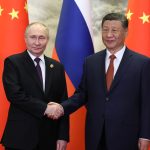
‘The Ukrainian crisis was the result of years of disregard for our legitimate interests. Contrary to the promises publicly made to us, NATO expanded eastward,’ Putin said during a meeting with ambassadors at the Kremlin. The president placed particular emphasis on the issue of a peaceful settlement, stating that Russia is striving for a long-term peace.
Source: screenshot.

‘A vivid example is the crisis in Ukraine provoked by the collective West, through whose hands NATO and the European Union seek to wage—and have already waged—a real war against my country, while participating in it directly,’ Lavrov said.
Source: screenshot.

Source: screenshot.
Why Is This Narrative Being Promoted?
Historically, Russia has justified interference in the internal affairs of other countries—including military intervention—by claiming a need to protect its national interests and/or the interests of its citizens. In the same way, the Kremlin promotes the narrative of a ‘forced war’ to justify its invasion of Ukraine, arguing that it was caused by the aggressive expansion policies of NATO, particularly the United States, and the European Union. In Russian official rhetoric, the so-called special military operation was merely a necessary preventive measure in response to provocative actions by the West.
In reality, this narrative stems from Russia’s unwillingness to accept Ukraine’s post-2014 choice to pursue Euro-Atlantic integration and move away from Russia’s sphere of influence. Russian propaganda explains the West’s alleged interest in Ukraine through claims of widespread Russophobia and a desire to exploit Ukraine’s natural resources and industry. As the screenshot above illustrates, the Kremlin’s distorted interpretation of the root causes of the war in Ukraine is unfortunately also echoed in Estonian-language social media, often combined selectively with the other narratives discussed above.
Conclusion
The four social media posts by Inga Raitar discussed above illustrate how messages associated with Russian influence operations adapt—or are adapted—to local contexts. The topics selected are emotionally charged and controversial issues where some degree of public opposition already exists. Existing protest sentiment is then amplified through the skillful use of new theories and unverified claims.
A good example is the expansion of the Nursipalu training area, where Inga Raitar links the issue simultaneously to provoking Russia, poisoning the environment, and corruption in the defence industry. She does so without presenting any factual evidence or arguments to support these claims.
What remains constant are the narratives themselves. Although presented through different topics, they all lead to the same outcome: attempting to undermine trust in Estonia’s national defence and public institutions. In assessing the communicative impact of such messaging, the author’s motives are of secondary importance. Whether someone is a deliberate mouthpiece for the Kremlin or simply a useful idiot makes little difference. In either case, the result is activity that weakens social cohesion and societal resilience.