When Estonia talks about Russian influence, the conversation usually stops at propaganda channels and information warfare. Rarely does anyone ask what that influence actually felt like for young people who experienced it firsthand — at summer camps, on student trips, or at events built around contested historical memory.

A new bachelor’s thesis from the University of Tartu sets out to fill that gap. Researcher Polina Zelenskaja turns her focus to Russian-speaking youth born between 2000 and 2006 — a generation that grew up in Estonian Russian-language schools during the years when Moscow’s compatriot policy and state-backed youth programmes were operating at full force across the Baltic states.
Drawing on eleven in-depth interviews, the study reveals that many of these young people were not simply passive consumers of Russian media. They had direct, personal contact with Russian soft power — joining student exchanges, entering Russian-sponsored competitions, attending events designed around a specific version of historical memory.
The topic was anything but accidental for its author.
“The question of integration has always been personal for me, as I am myself a member of the Russian-speaking minority living in Estonia,” says Zelenskaja. “In my conversations with Russian-speaking young people, I have often noticed that questions of identity and self-definition are enormously complex and multi-layered for each individual. I have also observed that Estonian language proficiency is not always the decisive factor in integration — despite what is commonly assumed.”
The idea to investigate Russian soft power specifically came to her during an exchange semester at Charles University in Prague.
“There I learned that Russia has been using a nationality-based soft power foreign policy to influence Russian-speaking minorities and the domestic politics of other countries. That made me want to explore whether, and to what extent, Russian foreign policy has shaped the integration and self-perception of Russian-speaking young people in Estonia.”
Russia’s Compatriot Policy
Since the 2000s, Russia has been developing what it calls a “compatriot policy” — an effort to maintain ties with Russian-speaking communities living outside Russia’s borders. The central idea is that Russian-speaking people and the broader Russian cultural space form a single historical and cultural community, regardless of national boundaries.
In practice, this translates into a range of cultural, educational, and youth programmes. Russia supports Russian-language instruction, cultural events, competitions and olympiads, and the participation of young people in Russia-based projects. Many of these initiatives are explicitly designed to reinforce a shared historical memory and a sense of belonging to Russia’s cultural sphere.
A significant part of this policy is aimed specifically at young people. Students are offered opportunities to attend summer camps, take part in student exchanges, enter competitions, and join study trips to Russia. Through these programmes, the goal is to build cultural and emotional ties between young people and Russia.
It was through precisely these kinds of initiatives that the Russian-speaking young people who grew up in Estonia — whose experiences Zelenskaja analyses in her research — first came into contact with Russia’s soft power programmes.

Russia’s programmes did not always produce a stronger “Russian identity”
Eight of those interviewed had taken part in Russia-backed programmes or events. Some described student trips to Russia, including free places at well-known youth camps.
One interviewee spoke of a trip to Artek — the successor to the legendary Soviet-era youth camp, located in Russian-occupied Crimea and actively used as part of Russia’s youth policy programme.
The intuitive assumption would be that such experiences strengthen a Russia-oriented identity. According to Zelenskaja, that was her own expectation going in.
“Reading the academic literature, I assumed the interviews would show the influence of Russian propaganda and soft power on a stronger Russian identity among Russian-speaking youth.”
The interviews, however, frequently pointed in the opposite direction.
“Many of the young people who had participated in Russian state-sponsored trips said they did not feel a sense of similarity with Russians living in Russia. The experience actually reduced their inclination to define themselves as Russian.”
Direct exposure to Russian programmes, then, did not automatically translate into greater pro-Russian sentiment. For some young people, the experience produced precisely the opposite effect — a clearer sense that their lives and their identity belonged to Estonia.
Memory politics and school experiences
Beyond the trips themselves, those interviewed also described a range of history-memory practices within their schools.
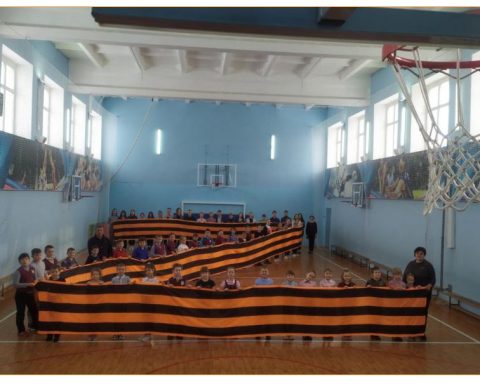
In some schools, 9 May was actively marked. There were themed lessons, exhibitions, or talks on the Second World War and its veterans. In other schools, no such events took place at all.

One interviewee recalled a trip to St Petersburg on 9 May, organised through an after-school club, where participants watched the military parade and took part in the Immortal Regiment march. In recent years, that event has become one of the most recognisable symbols of Russia’s memory politics.
These experiences illustrate the variety of forms through which Russia’s historical narrative could reach Russian-speaking young people in Estonia. Sometimes it came through school, sometimes through organised trips, sometimes through family memory.
Between two media worlds
The interviews revealed another significant factor. Many of these young people grew up navigating two separate media environments.
“Russian-speaking youth are exposed to both Estonian and Russian media,” Zelenskaja explains. “This allows them to form their views through multiple sources — but it also sets them apart from both ethnic Estonians and Russians living in Russia.”
Growing up between two information spaces produces an identity that does not fully belong to either. Several of those interviewed described finding themselves in a position where they feel part of Estonian society, yet distinct from both ethnic Estonians and Russians living in Russia.
The greater influence came from domestic Estonian factors
The most striking finding of the research was that Russian foreign policy was not the central factor in the interviews.
“All of those interviewed noted that Russian foreign policy has influenced their self-definition and integration to some degree,” says Zelenskaja. “But it was not the primary factor.”
Far more frequently, the young people highlighted factors within Estonia itself — differences in mentality, differences in socio-cultural background, and the attitudes of Estonian society toward Russian-speaking people.
“The main barriers to integration are not connected to Russian foreign policy, but rather to domestic Estonian factors,” she says. “Russian-speaking young people perceive a certain gap between themselves and Estonian-speaking society.”
The author is careful to note, however, that qualitative interview methods require accounting for the subjectivity of respondents.
“It is possible that a connection exists between the integration process and participation in influence activities, but that connection may not be consciously recognised by the interviewees themselves. This in turn could point to the very mechanism by which soft power operates.”
The research offers no simple answer to the question of whether Russia influenced Russian-speaking young people in Estonia or not. What it does show is that influence never emerges in a vacuum. It is always woven together with local experiences, societal attitudes, and everyday encounters.
It is through precisely these experiences that a young person’s identity is ultimately shaped.
Read the full research on the University of Tartu website.