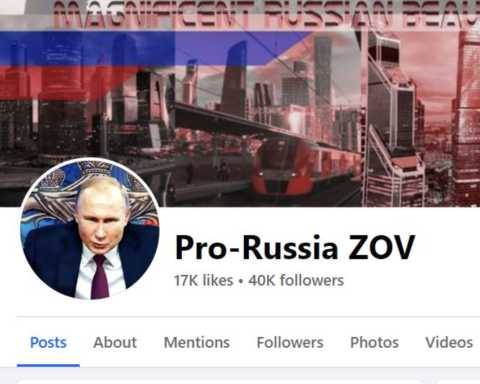
Last week, Propastop published a story about social media accounts that portray Ida-Virumaa as a separate political entity and spread the idea of creating a Russia-friendly separatist “Narva People’s Republic.”
The case attracted reader interest and received coverage in Postimees and Delfi, where it was also commented on by the Internal Security Service (KAPO). The topic was also raised at a government press conference. We consider the widespread coverage of the “Narva People’s Republic” to be a positive development, as Estonian society needs to be aware of such cases.

Should silence have been the right choice?
Unexpectedly, Propastop’s post also drew feedback suggesting it should never have been written about at all. Journalist Indrek Kiisler, in his opinion piece, criticizes Propastop for the very fact that this post helped “Narva People’s Republic” gain recognition. In a similar tone, we have received letters from Aleksei Ivanov, a contributor to Narvskaja Gazeta, containing the implicit accusation that writing about the case has damaged Narva’s reputation.
In essence, the critics are advising the media to stay silent on certain topics, believing that by keeping information under wraps, Estonian society can be protected.
Propastop does not share this view. Such turning a blind eye and self-censorship does not work in today’s information society, where every idea will reach the public sooner or later, one way or another. Silence would leave Estonia’s people in a situation where they hear about such narratives by chance, without context, or only once the narrative has already developed into a full-scale information attack.
The scope of the case is still emerging
It is not yet possible to say with certainty how widespread the spread of the “Narva People’s Republic” narrative will become, or who is behind its creation. It is possible that this is the work of a single social media user’s joke, as Kiisler assesses the case. At the same time, there remains the possibility that this is a more broadly coordinated provocation or information attack backed by hostile foreign forces.
Propastop is working to clarify these questions, without either downplaying or amplifying the significance of the case in the meantime. The post in question also clearly described the actual reach of the accounts, including their currently modest follower base.
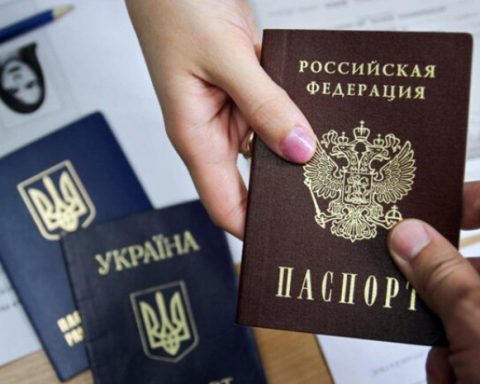
What does add seriousness to the current case, however, is the fact that similar “people’s republic” narratives were seen in Ukraine as well, before Russia’s 2022 full-scale invasion in 2014. Initially, these also appeared in marginal social media channels, and the ideas were considered the quirks of isolated pro-Russian eccentrics. Later developments showed that what seemed like a joke was a coordinated part of Russia’s war against Ukraine.
It is precisely for this reason that Propastop considers the early detection of such cases important. This also means drawing attention to phenomena that may at first glance appear marginal. Influence operations rarely begin on a large scale — narratives typically emerge first in obscure channels, memes, and provocations.
In the same way, a smoke detector sounds the alarm at the very first whiff of smoke. It would be short-sighted to want the detector to stay silent just because no flames are visible. Perhaps this time it really is just someone smoking indoors — but in a house with a silenced detector, a real fire would also go unnoticed.
Propastop’s role is to warn
Propastop was created to monitor influence operations in the information space and to help the public stay aware of what is happening. We will therefore continue to draw attention to provocations directed against Estonia, whether they appear in the form of direct attacks by Kremlin media, separatist social media accounts, or the activities of local Putinists. Being informed is the best defence against influence operations.