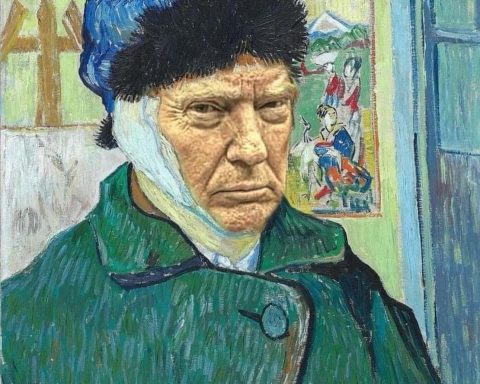
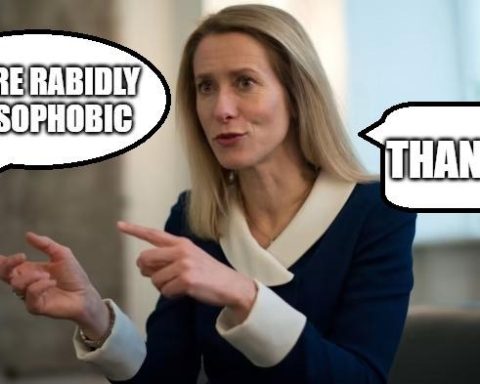
During the past month, social media accounts have appeared that promote the idea of separating Narva and Ida-Virumaa from Estonia and creating a so-called Narva People’s Republic.
Channels named “Нарвская Народная Республика” (“Narva People’s Republic”) are circulating on Telegram, VKontakte, and TikTok. These channels use separatist symbolism, military imagery, and political messaging.
At first glance, the content appears to be a mixture of internet memes, cat pictures, and provocative jokes. A closer look, however, reveals a clear narrative in which Narva is portrayed as a separate political entity and the idea of establishing a so-called Narva People’s Republic is promoted.
The channel descriptions are explicit:
“#ЖдёмРоссию. Новости самого прекрасного государства на Земле.”
In direct translation, this means “We are waiting for Russia” and “News from the most beautiful country in the world.”

According to the public statistics of the Telegram channel, it had approximately 60–70 subscribers at the time the article was written. Based on screenshots from the channel, the account appears to have been created in summer 2025, but more active posting began in February 2026.
The Telegram channel functions as the main information stream, from which the same content is distributed further to other social media platforms.
The term “People’s Republic”
The designation “People’s Republic” (in Russian народная республика) is a politically charged term in the post-Soviet space. The same name was used, for example, by the Donetsk People’s Republic and the Luhansk People’s Republic, which were proclaimed in eastern Ukraine in 2014.
Using such terminology creates a communicative framework in which an imagined political project is presented as a state entity. The Narva People’s Republic accounts also use elements associated with statehood: flags, a coat of arms, military symbolism, and references to territorial control.
Flags and state symbolism
In posts circulating on social media, a set of symbols has been created for the movement, centered on a green–black–white flag. A variant with the colors arranged black–green–white is also presented with the same meaning.
A Telegram post presents two versions of the flag and notes that both are used as symbols of the movement. They are described as “state symbols of the Narva People’s Republic.”

In addition to the flag, a possible coat of arms has also been created. In one post, a shield featuring a black eagle on a green and white background is presented, and followers are asked whether such a symbol could serve as the coat of arms of the Narva People’s Republic.
In the same context, alleged military insignia are also presented. The graphic depicts a shoulder patch (chevron) and cockades described as the distinguishing insignia of soldiers, sergeants, and officers of the “armed forces of the Narva People’s Republic.”


The account is also associated with a video that is presented as the anthem of the “Narva People’s Republic.”
The video features the song “Улетай на крыльях ветра” (“Fly Away on the Wings of the Wind”). It is a well-known choral piece from the opera “Prince Igor” (Князь Игорь) by the Russian composer Alexander Borodin, which premiered in the 19th century.
The lyrics of the song speak about a homeland and returning to it. For example:
“Fly away on the wings of the wind
to your homeland, our song,
to the place where we once sang you freely
and where life was so good.”
Territory and conflict imagery
The posts use visuals that portray Narva as a conflict zone.
In one poster-like graphic, armed figures are depicted alongside the text:
“От Нарвы до Пюсси простирается русская земля.”
(“From Narva to Püssi stretches Russian land.”)

Maps are also used in which the Narva region is depicted as a separate area between Estonia and Russia. In some graphics, Estonia is shown in blue, Russia in red, and the Narva region as a green area.

In the same context, an image is circulated that is referred to as the “Narva agenda.” The list includes various activities, among them “attacking Narva” and “capturing Sillamäe and Kohtla-Järve.” The same list also includes entertainment activities, such as concerts and fireworks.

Memes and internet humor
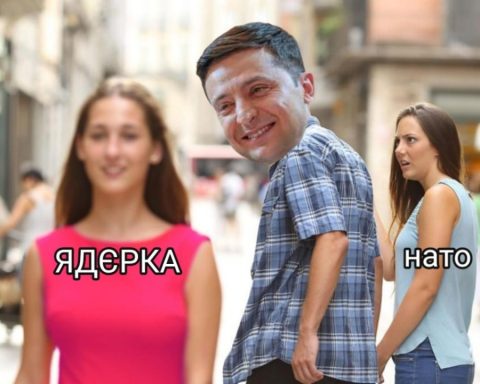
A large portion of the channel’s content is presented in the form of memes.
For example, the well-known X-Men Magneto meme format is used to compare three different flags: a flag with Soviet symbolism, the Estonian flag, and the green–black–white flag.
Another meme format depicts a dialogue between two people whose faces are replaced with flags. In the dialogue, they discuss why these symbols are often confused with one another.


The posts also use cat images and other internet meme formats to which political messages have been added. In one image, an armed kitten holds the movement’s flag and calls for support. In another meme, a dispute over the use of the Russian and Estonian languages is depicted.


An image with the text “NATO will not come” is also circulated.

The idea of autonomy
In addition to explicit separatist wording, the posts also use the concept of autonomy.
One text states that the movement’s programmatic documents are still under development. At the same time, it describes as an objective the recognition of Ida-Virumaa as an autonomous region, justified by the need to preserve Russian identity in the area.
The posts state that such autonomy should develop through democratic means and with the participation of local residents. A possible governance model is also described. According to this idea, the region would not have a president; instead, the local community would choose a leader from among themselves to represent the region.


How the content is distributed
Content circulating under the name “Narva People’s Republic” has been identified on several social media platforms.
The Telegram channel functions as the central information stream, where new posts are regularly published. The VKontakte page uses the same symbolism, and a TikTok account spreads the same narrative through short videos.
Posts encourage followers to share the movement’s materials and leaflets. They also offer the possibility of contacting the administrators via a Telegram bot, which enables anonymous communication.
Summary
Social media accounts operating under the name “Narva People’s Republic” are distributing content that uses state symbolism, political messaging, and meme formats. The posts describe possible political ideas, including the concept of autonomy for Ida-Virumaa, and use visuals that portray the movement’s identity and institutions.
The content is distributed across multiple platforms simultaneously and includes text posts, posters, and meme-format images. Based on publicly available information, it is currently not possible to determine who is behind these accounts or what the organizational background of the project may be. At the same time, the posts and visuals create a narrative in which the “Narva People’s Republic” is portrayed as a separate political entity.
Such terminology and symbolism are also familiar in the post-Soviet space from earlier conflicts. For example, the same “People’s Republic” designation was used in 2014 by the Donetsk and Luhansk People’s Republics proclaimed in eastern Ukraine.
The spread of similar ideas in Estonia’s information environment effectively means the normalization of narratives about the separation of Estonian territory and separatism. Although it is currently not possible to determine who is behind these accounts, the case illustrates how such narratives are often spread on social media through memes, symbolism, and internet humor.