When Propastop launched in February 2016, information warfare was not yet an everyday concept in Estonia. People talked about propaganda and talked about Russia, but influence operations were treated more as an episodic phenomenon. Propastop’s first self-introduction was simple: if false or biased information is being spread about Estonia, it must be brought into the public eye, compared against facts, and placed in context. To notice—and not look away.
That is how, from a volunteer initiative within the Defence League, a blog took shape.

From a blog to a mapper of patterns
In the early years, influence operations were more clearly delineated. State-controlled media outlets and recognizable talking points formed a relatively coherent pattern. Propastop’s work consisted of taking these stories apart and showing the connections between them. But it became clear quite quickly that the problem was not in individual articles, but in recurring narratives that try to shape an understanding of Estonia as a divided and untrustworthy state.
To see these patterns better, it was no longer enough to read media publications and rely on occasional observations. Noticing had to become a system.
2018: reaktsioonist monitooringuks, Propamoni sünd

In 2018, Propastop’s volunteers released the monitoring robot Propamon. It was a deliberate step toward making the work more systematic and data-driven. Propamon began automatically collecting Estonia-related coverage from Russian media outlets and made it possible to compare it over time. The blog became a tool that journalists, researchers, and policymakers could use.
This meant that the analysis was no longer based on isolated examples, but on trends. If a particular narrative or topic suddenly intensified, it became visible immediately. Propastop was no longer only a reactive blog—it could spot waves before they reached the mainstream media.
2020: Infrastructure and sanctions
Influence operations are not only about content, but also about the channels through which it is spread.
2020. aastal seadis Eesti Interneti Sihtasutus piirangu Rossija Segodnja domeenidele baltnews.ee ja sputnik-news.ee. Domeeninimedele rakendati käsutuskeeld, mis tähendas, et neid ei saanud võõrandada ega kasutada majandusressursina. See oli oluline pretsedent, kus sanktsioonide loogika rakendus ka Eesti internetitaristus.
In 2020, the Estonian Internet Foundation imposed restrictions on the Rossiya Segodnya domains baltnews.ee and sputnik-news.ee. A disposal ban was placed on the domain names, meaning they could not be transferred or used as an economic resource. This was an important precedent in which the logic of sanctions was also applied to Estonia’s internet infrastructure.
Propastop had repeatedly drawn attention earlier to the problematic background of those domains. The decision did not emerge from a single post, but from a longer debate and sustained pressure. It was an example of how influence operations began to be treated not only as a matter of freedom of speech, but also as an issue of sanctions and economic resources.
2022: The list and the courtroom

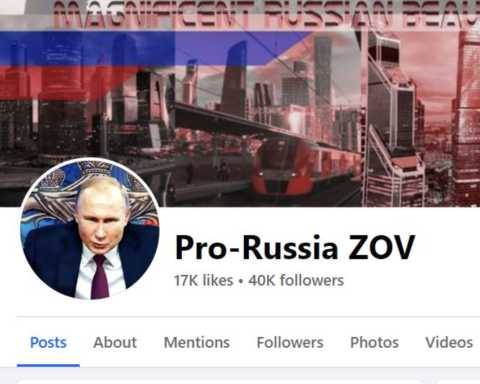
After Russia launched its full-scale war against Ukraine, Propastop published an overview of pro-Kremlin Facebook groups operating in Estonia. The documented examples showed how anti-Ukraine talking points and the aggressor’s narratives were being spread within Estonia’s information space as well.
Oleg Bessedin went to court, demanding that the claims be retracted. The issue was not merely about wording, but about the right to describe influence operations as pro-Kremlin and to call for such groups to be shut down.
In its June 2024 decision, Harju County Court dismissed the claim. The court found that Propastop’s article did not contain false statements of fact about the plaintiff, and that the call to close the groups could not be construed as a statement of fact made about him. The decision entered into force.
This case confirmed that documented, fact-based criticism can hold up in court. At the same time, it showed that exposing influence operations is never risk-free.
2023: Restrictions become systemic
The war in Ukraine brought broader and more forceful steps. With the backing of European Union sanctions and under the leadership of the Consumer Protection and Technical Regulatory Authority (TTJA), access in Estonia has been blocked to hundreds of Kremlin-linked TV channels, websites, and social media accounts. Propastop maintains a public list of blocked propaganda channels so that the current state of restrictions is verifiable and transparent.
International studies have shown that access restrictions can significantly reduce web traffic to such channels. In the Estonian context, public opinion surveys and studies commissioned by the Ministry of Defence indicate a decline in the audience for Russian channels after the restrictions were introduced. The effect is neither absolute nor unambiguous, but it exists.
Restrictions do not change worldviews overnight. But they do change what content reaches the casual consumer—and how easy it is to come into contact with propaganda.
Recognition and an international dimension

In 2023, Propastop received the European Citizen’s Prize, through which the European Parliament recognizes initiatives that strengthen social cohesion. In February 2024, Propastop received Estonia’s civil society annual award, “Voice of the Year,” presented by President Alar Karis.
Recognition is not the goal of the work, but it shows that analyzing influence operations is not a niche topic. It is part of defending democracy.
Over the years, Propastop has also become a platform that is followed internationally. Its analyses have been used in academic work, and collaboration projects have led Propastop to partnerships with universities and organizations in other countries. Estonia’s experience is of interest because, in a small country, patterns can be seen more sharply.
What has changed over ten years?
Over the past decade, the information environment has changed qualitatively.
In the early years, influence operations were focused on clearly identifiable channels. Today they are diffuse. Messages move via Telegram, closed communities, influencers, and algorithmic amplification. Content may no longer come directly from a state outlet, but through intermediaries who blend political messaging with everyday topics.
Artificial intelligence has been added to the mix. Automated content production, translation, and adaptation make it possible to tailor and spread narratives more quickly. Influence operations are no longer only ideological—they are also technological.
At the same time, resilience has grown. Awareness of information influence is much higher than it was ten years ago. The media, researchers, and state institutions now treat it as a systemic security issue.
What has stayed the same?
What has not changed is what influence operations rely on. Fear, polarization, and the sowing of doubt remain at the core. The narrative of Estonia’s weakness or failure keeps resurfacing again and again, in different forms.
Information influence does not disappear. It adapts.
Propastop started as a blog. Today it is a monitoring platform, an analytical community, and a citizen initiative followed internationally. The original goal has remained the same: to contribute to Estonia’s security in the information space.
Everything begins with noticing. The question is no longer whether information warfare exists. The question is whether we notice it in time.