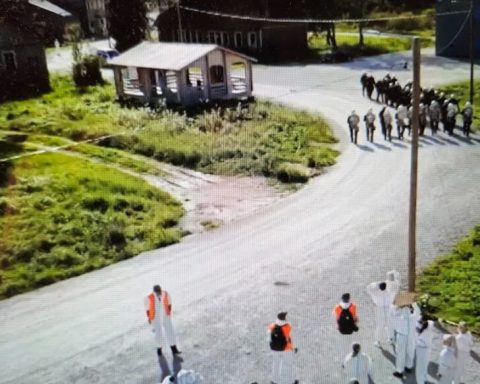
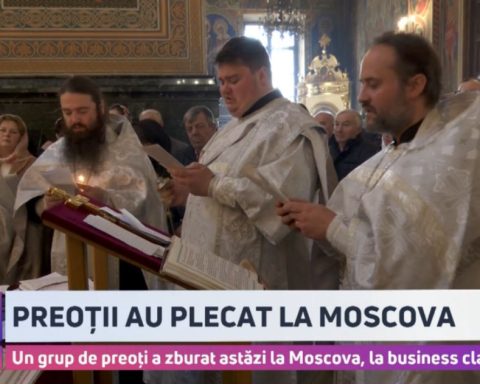
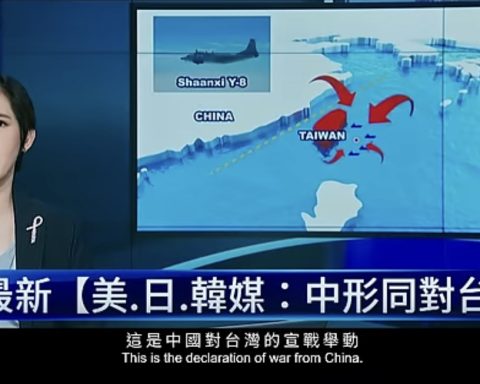
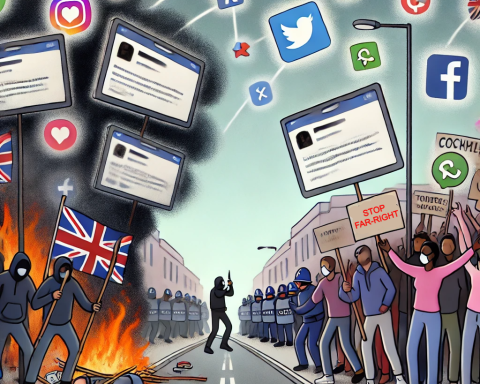
Fact check: No, Polish children are not being thrown out of oncology hospitals to make room for Ukrainian children.
Screenshot: FakeNews.pl
Today we publish an overview by Julia Dobrowolska, fact-checker and analyst at FakeNews.pl, about the spread of disinformation in Poland.
Disinformation by the Russian Federation targeting Poland is not a new phenomenon, but the scope and intensity of information and influence attacks increased significantly after 2014, when Russia began its aggression against Ukraine. As the information war deepened, Russia started using social, health, and historical topics to undermine Poles’ trust in state institutions and international partners.
The COVID-19 pandemic revealed how vulnerable Polish society is to misinformation. The low vaccination rate and widespread distrust of government measures showed citizens’ limited ability to distinguish true information from false. Russia’s invasion of Ukraine in 2022 demonstrated the Kremlin’s ability to adapt its propaganda to the Polish context. Many social media accounts shifted from spreading anti-vaccine content to promoting anti-Ukrainian messages. Despite initially strong public resistance to Russian narratives, economic hardships and tensions between Poland and Ukraine once again created fertile ground for the spread of disinformation.

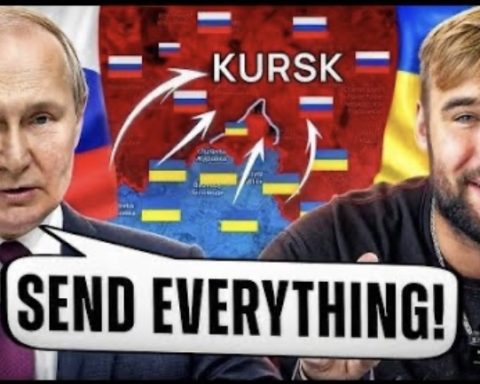
Fact check: Ukraine has not stopped the exhumation of the victims of the Volhynia massacre.
Screenshot: FakeNews.pl
At present, disinformation operations from Russia and Belarus are systematically intensifying. These external influence centers tailor their messages to local conditions, introducing, among other things, anti-Ukrainian and anti-EU narratives that find a receptive audience within Polish society. These messages are further amplified by domestic media outlets with radical ideological leanings and influential social media accounts. A characteristic feature of disinformation aimed at Polish citizens is rhetoric that employs polarizing and conspiratorial themes, deliberately dividing society into opposing camps and deepening mutual distrust.
The scale of the problem
The spread of disinformation in Poland has reached an alarming scale. According to a survey conducted last year, as many as 91% of Poles believe at least one false claim related to energy, healthcare, new technologies, politics, or climate. Among the most common myths are claims that electric cars catch fire more often than petrol cars (50%) or that food producers hide harmful ingredients in their products (65%). Disinformation has a particularly strong impact on public opinion in the fields of healthcare and energy, often generating fear and distrust toward technological innovations and social change.
84% of Poles say they have encountered fake news. Most misinformation is spread through social media. In addition, 59% of respondents admitted they had received false information from other people—usually friends or family members. Personal relationships increase both the credibility and the effectiveness of misinformation. Public concern about disinformation is high: more than half of the population acknowledges that false information can influence election results and cause public panic. Unfortunately, awareness of effective ways to counter disinformation remains low. Only just over half of Poles regularly verify the accuracy of the information they receive.
The most common disinformation narratives
Disinformation increasingly appears in the form of coherent narratives. Their power doesn’t lie in a single lie, but in repetition and emotional impact. These narratives often span multiple topics—from health and energy to politics and new technologies. For example, theories about “hidden food ingredients” are linked with suspicions about vaccines and artificial intelligence. In this way, a broader narrative emerges about “elite manipulation” or “societal control.”
The study reveals that claims like these most commonly disseminate disinformation in Poland.
- Energy: Half of Poles believe that electric cars catch fire more often than petrol cars.
- Health: 65% of Poles think that food producers hide information about harmful ingredients.
- New technologies: Over half of Poles perceive cash payment limits as a tool for social control.
- Politics: 38% of Poles believe that Poland has lost its sovereignty by joining the European Union.
- Climate: One third of Poles believe in climate-related conspiracy theories.
According to a report by the government commission investigating Russian and Belarusian influence operations, four main Russian political narratives can be identified:
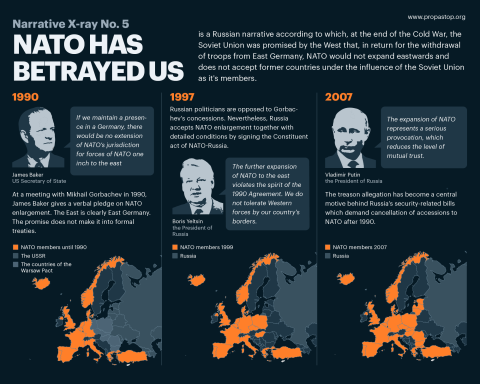
– Portraying NATO and the European Union as oppressive, colonizing organizations.
– Depicting the West as evil and morally corrupt.
– Promoting the idea of Russia’s victory over Ukraine and denying Ukraine’s statehood.
– Spreading conspiracy theories that undermine trust in government institutions, science, and the media.
Polish attitudes toward NATO and the European Union reveal an interesting asymmetry. Despite intense Russian propaganda portraying NATO as a force that provokes war and questioning the validity of Article 5, 75.7% of Poles trust NATO. At the same time, trust in the European Union has dropped to 50.3%, while 43.8% of Poles now view the EU with suspicion. The incident involving Russian drones that entered Polish airspace in September was used as a pretext for a large-scale information and psychological operation aimed at portraying “Western helplessness and indecision.” However, instead of weakening confidence in the defense alliance, it actually strengthened Poles’ trust in NATO.
Key case: Anti–European Union disinformation narratives
In recent years, anti–European Union disinformation narratives have focused on two main EU policy areas — climate and migration — as these topics are the easiest to present through emotionally charged and divisive messages.
In the case of climate policy, disinformation appears in messages portraying the European Green Deal as a project directed against Poland’s industry and energy security. These narratives depict the EU as a “tool of German domination,” forcing Poland to abandon coal energy and pushing the country’s economy toward crisis. The energy transition is often presented as an elite conspiracy serving the interests of richer countries at the expense of Central European nations. Such communication relies on oversimplifications and conspiracy theories — for example, depicting the EU Emissions Trading System as a speculative mechanism designed to drive Poland to the brink of bankruptcy.
The second pillar of anti–European Union disinformation is the EU’s migration policy, which disinformation campaigns present as a symbol of lost sovereignty and decisions “imposed by Brussels.” Fake videos and manipulated stories about migrants reinforce messages about the “forced relocation of refugees” and the alleged threat they pose to citizens’ safety. These narratives—especially widespread during election campaigns—portray the European Union as a detached institution that favors foreigners over Europeans.
Anti-EU disinformation in Poland also extends to other policy areas, such as budget rules and the rule of law. Budget policy is often depicted as a tool that limits the sovereignty of member states, and new EU regulations are presented as excessive financial burdens. At the same time, disinformation related to the rule of law, social policy, and human rights is used to spread simplified or distorted viewpoints and to create the illusion of value-based conflicts between Poland and the EU. The protection of minority rights or the provision of sexual education is often turned into a tool of social polarization, with biased or misleading narratives aimed at undermining public trust in European Union institutions.
Examples of disinformation identified by Polish fact-checkers:
• The European Union is banning drinking coffee with milk and sugar.
• Migrants are secretly brought into Polish cities at night.
• Lignite is the cheapest source of energy in Poland.
• Germany is dismantling wind turbines because they are unprofitable.
• The European Union wants to ban the repair of older vehicles.
Key case: Anti-Ukrainian disinformation narratives
Anti-Ukrainian narratives circulating in the Polish information space are part of a broader, coordinated international disinformation campaign driven by pro-Russian circles. These narratives began to appear clearly in Poland’s media landscape after 2014 but became widespread following Russia’s full-scale invasion of Ukraine in February 2022.
These narratives exploit fear, war fatigue, and economic concerns to generate opposition to supporting Ukraine. False messages often focus on refugees and humanitarian aid, as well as historical tensions—particularly the Volhynia massacre. People spread claims that Ukrainians abuse social benefits, receive undeserved advantages, or behave aggressively toward Poles. Such content appears on social media and alternative websites that often present themselves as “patriotic initiatives.” The impact of anti-Ukrainian narratives is clearly visible: sympathy toward Ukrainians in Poland has dropped to 30% this year—more than 20 percentage points lower than in 2023.

Fact check exposes the falsehood: In Kraków, a young Ukrainian did not kill three Poles, contrary to the disinformation spreading on social media.
Screenshot: FakeNews.pl
The common feature of these narratives is their connection to broader pro-Russian messages that portray the West and NATO as the instigators of war and Ukraine as a corrupt, failed state. Such narratives fit into Russia’s information warfare strategy, which aims to weaken solidarity with Ukraine and divide the unity of the Central European region.
Examples of disinformation identified by Polish fact-checkers:
• A Ukrainian shot three young Poles.
• Polish children are being expelled from oncology hospitals to make room for Ukrainian children.
• Ukraine has allegedly ordered a halt to the exhumation of the victims of the Volhynia massacre.
In conclusion
The scale of disinformation in Poland has been steadily increasing. False narratives have deeply rooted themselves in the areas of healthcare, energy, politics, and climate. More than 80% of Poles admit that the amount of disinformation has grown over the past decade, yet only half of the population feels safe online. This paradox reveals a deep gap between awareness of the problem and the ability to effectively manage it.
In a broader international context, Poland remains a target of Russian and Belarusian disinformation campaigns aimed at destabilizing the country and undermining trust in NATO and the European Union. These coordinated influence operations exploit emotions and distort perceptions of historical and current events, creating narratives intended to weaken public morale and isolate Poland from its Western partners.
Read also:
EU DisinfoLab. “Disinformation landscape in Poland”, 2023. https://www.disinfo.eu/wp-content/uploads/2023/12/20231203_PL_DisinfoFS.pdf
Podsumowanie prac Komisji do spraw badania wpływów rosyjskich i białoruskich, 2025: https://www.gov.pl/web/sprawiedliwosc/podsumowanie-prac-komisji-do-spraw-badania-wplywow-rosyjskich-i-bialoruskich
Digital Poland Foundation. “Dezinformacja oczami Polaków. Edycja 2024”: https://digitalpoland.org/publikacje/pobierz?id=70f40c4e-3fe1-4abd-9a32-02a26c324f18
FakeNews.pl. “The Anti-Vaccine Movement and Pro-Russian Propaganda in Social Media: A Summary Report” 2022: https://fakenews.pl/en/analyzes/the-anti-vaccine-movement-and-pro-russian-propaganda-in-social-media-a-summary-report/
Polska Agencja Prasowa. “Ilu Polaków ufa wojsku? Sondaż IBRiS dla PAP” 2025: https://www.pap.pl/aktualnosci/ilu-polakow-ufa-wojsku-sondaz-ibris-dla-pap
FakeNews.pl. “Analyses”: https://fakenews.pl/en/analyzes/
Demagog & Instytut Monitorowania Mediów. “Antyukraińska propaganda w 2025 roku”, 2025: https://demagog.org.pl/wp-content/uploads/2025/08/Raport-Demagoga-i-IMM-Antyukrainska-propaganda-w-2025-roku-4.pdf