Although Russian media outlets operate under tight central control, their strategy during critical events is not to deliver a single unified message but to sow confusion through a mix of propaganda tactics. Officially, Moscow denies any wrongdoing, yet both domestic audiences and foreign consumers of Russian media are bombarded with contradictory narratives designed to erode trust in all sources of information.

Headline: “The West’s Third Provocation: The Reason Behind Estonia’s MiG-31 Accusations Revealed.”
Screenshot: AiF
Victim narrative. The newspaper AiF was among the outlets that went on the offensive, portraying Russia instead as the victim of provocation. Major General Vladimir Popov, a military pilot, linked the incursion into Estonian airspace to the recent “alleged” flights of Russian drones into Poland and Romania.
“The incident with the MiG-31s is yet another Western provocation. Russian aircraft always strictly observe restrictions,” Popov claimed, suggesting that it may in fact have been Estonia’s tracking systems that erred. “Estonia must send a protest note to our Foreign Ministry, show its checkpoints and recordings. And we, in turn, can present our own control records.”
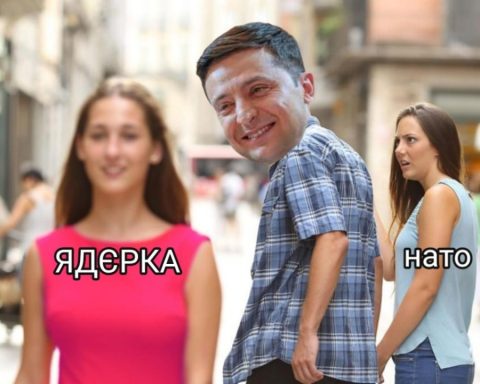
Counterattack. Popov firmly asserted that the recent large-scale drone strike on Polish territory was a joint Kyiv–Warsaw operation aimed at damaging Russia’s reputation. Citing Reuters, the same outlet claimed that the reason behind Estonia’s “provocation” was Washington’s recent decision to scale back military support for the Baltic states. By portraying Russian fighter jets as violators of its airspace and invoking NATO’s Article 4, Estonia, it argued, was seeking to prevent a cut in U.S. military aid.
This narrative was echoed by Leonid Slutsky, chairman of the State Duma’s Foreign Affairs Committee. “Estonia accuses Russia of violating its airspace and, together with the other Baltic states, is trying to drag NATO into a conflict with the Russian Federation because it fears losing American military assistance,” Slutsky said.
State Duma member Alexei Pushkov framed the provocation somewhat differently: “Its goal was to raise tensions and increase pressure on (U.S. President Donald) Trump to make him dance to Europe’s tune.”
One fringe outlet linked Estonia’s behavior to the recent drone attack on Poland from another angle: “In Estonia, they started worrying that Poland got so much PR, while we were forgotten. So they decided to announce to the world that there is such a country as Estonia—a country 95% of the planet’s population has never even heard of.”
Intimidation. Media coverage, in coordinated fashion, echoed claims from various sources that “Western provocations,” namely airspace violations, are becoming increasingly frequent. According to Major General Popov, “it cannot be ruled out” that in the near future, another NATO member state will announce an alleged Russian airspace violation.
Pushkov argued that politicians hostile to Russia are trying to convince their publics, through false accusations, that Moscow is preparing to attack a NATO member. Disinformation is spreading against Russia in connection with the incidents involving Estonia, Poland, and Romania.
By consistently speaking of new “information provocations,” Russian media are also priming Western audiences for future airspace incidents. Europeans are being frightened with the notion that border violations are becoming more frequent, and thus the risk of an actual military conflict is growing.
“As is usually the case in such situations, Russia is trying to achieve several goals at once,” assessed military blogger Rainer Saks. “On a strategic level, the key aim is to discredit NATO’s decision-making process and its member states more broadly. In addition, as so often, the hope is that intimidation through military pressure will push European countries and the U.S. to scale back their support for Ukraine.”

“Philippot: Because of Estonia’s lies, France must leave NATO.”
Useful idiots. Various Russian outlets quoted European politicians and academics who took Russia’s side in the conflict. For instance, the newspaper MK cited Florian Philippot, leader of the French party The Patriots, who suggested that France should leave NATO because the Estonian authorities were lying. “This is yet another piece of disinformation aimed at provoking war (with Russia) and spreading panic,” Philippot claimed. Once an influential member of the National Front until 2017, he has since repeatedly failed in elections with his Patriots party.
Among the many media reports on September 19 and 20, however, there was a surprisingly large number that quoted statements unfavorable to Russia from President Donald Trump, NATO Secretary General Mark Rutte, European Commission President Ursula von der Leyen, and other leading Western politicians.