Propastop has repeatedly drawn attention to Ilona Kaldre — a well-known clairvoyant and influencer who has for years been actively and expressively voicing her opinions on political topics. Her Facebook posts and YouTube videos cover a wide range of issues, from tax policy and government work to the war in Ukraine and geopolitics. As elections approach, Kaldre’s rhetoric is becoming increasingly sharp, and the number of her posts continues to grow.
This year, on June 22, a Facebook post appeared in which Ilona Kaldre announced her intention to once again run in the local elections, without yet specifying with which party or electoral list. She wrote: “Jõhvi! Toila! I am with you! I am going to the elections!!! Your support is very important!” The post received 115 likes and 41 approving comments. Eight people chose to share the message.

This was not a surprising message, as Kaldre is already a member of the Jõhvi municipal council and over the past six months she has been actively posting political messages. At the same time, the number of her posts has grown significantly and their tone has become more forceful. Kaldre enjoys popularity among readers: on Facebook she has 30,000 followers, and her posts regularly receive hundreds of likes and dozens of comments.

Voter Mobilization
Ilona Kaldre was born in 1969 in the small town of Aseri and became known as a clairvoyant and psychic thanks to television. However, despite her TV fame, her early political career was unsuccessful. She failed to get elected to the Kiviõli city council in 2009, as well as to the Jõhvi municipal council in 2017.
Before her first electoral success in 2021, Kaldre found herself in the middle of a scandal, as she worked part-time (0.3 workload) at the Jõhvi municipal government as a public relations specialist. In this role, during a December 2020 live broadcast on the regional television program “Successful Youth of Sillamäe TV”, Kaldre called Estonia a police state, expressed nostalgia for the Soviet past, and questioned the necessity of NATO allies’ presence in Estonia.
These statements sparked a wave of criticism, and in August 2021 Kaldre resigned from her position as public relations specialist at the Jõhvi municipal government. According to mayor Maris Toomela, the decision was made amicably. Despite the scandal, in October Kaldre ran on the Centre Party’s list and received 69 votes—enough to secure a seat in the Jõhvi municipal council.
Facebook + YouTube = A Powerful Agitation Platform
This year, Kaldre has decided to use social media as a full-scale election campaign platform. Within six months, her Facebook page has published around fifty politically themed posts, and her YouTube channel has featured about as many video clips.
The majority of Kaldre’s posts focus on domestic politics, attitudes toward the war in Ukraine, and international relations. Facebook and YouTube complement each other: on Facebook she often shares emotional texts and comments on current issues, while on YouTube she offers longer monologues to present her worldview.

PHOTO: At first glance, the text on Kaldre’s sweatshirt seems to say in incorrect Russian “don’t make our situation worse.” Yet it is actually a play on words, since the phrase “у сука блядь” also translates as “f***ing whore.” The influencer is posing in the photo by a hotel pool in Turkey, with a structure in the background resembling Moscow’s St. Basil’s Cathedral.
In her regularly appearing “anti-war” posts, Kaldre links criticism of the Estonian authorities with references to human values and a longing for the Soviet past. Kaldre frames topics through personal stories, feelings of nostalgia, and emotional imagery, which makes her message relatable and convincing to her audience.
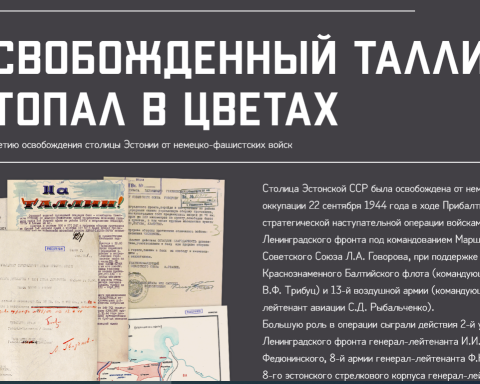
After “Victory Day” on May 9, her feed fills with long texts. For example, on May 10 she published a sarcastic comment about Kaja Kallas, as the EU’s High Representative for Foreign Affairs and Security Policy was visiting Kyiv. The post included profanities, but its key message was:
“The Great Patriotic War, which many Europeans know as the Second World War, has ended. And I allow myself once more to remind the Euro-diplomat that this war was not started by Putin. Some may indeed fear his elbows, but that does not change the historical fact. But the war in Ukraine — that is truly happening right now.”

Screenshot: Facebook.
On May 19, Kaldre spoke anxiously on behalf of a collective “we”: “We have found ourselves today in a time when the old reference points no longer work, but the new ones have not yet taken shape.” What followed was a blow to the credibility of the state: “Unfortunately, right now the state doesn’t care about us, the state is consistently betraying us.”
On June 10, Kaldre published a long nostalgic post on Facebook that begins with a personal memory: “I was born in Estonia. This is my homeland — the land where my childhood, youth, first dreams and hopes took place.” She then develops her Soviet nostalgia as follows: “Apartments were given out for free, like candy to children for good behavior. Here you go, live here, raise children. Medical care was also free. And no one asked whether you had ‘health insurance’ — you simply went to the doctor and you were treated. Schools, kindergartens, hobby groups, summer camps — everything was still free. We do not need to be ashamed of our past, because it is part of us…”
In this post, the emphasis is placed on the importance of historical memory and generational continuity, and the text becomes a kind of manifesto, where the preservation of historical roots is presented as the basis for denying the war in Ukraine.
Kaldre’s Rhetoric on YouTube Raises Concern
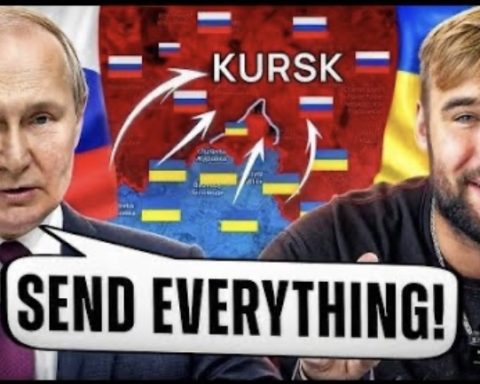
Looking at the titles of Ilona Kaldre’s YouTube videos published this year, their aggressive and provocative style immediately stands out. The titles constantly feature words with strong emotional charge: “shock,” “scandal,” “blew up the internet,” “am I a beast…,” “disgrace,” “fleeing,” “untrustworthy system.” Such vocabulary creates a strong preconception among viewers — of whom Kaldre has nearly 16,000 on YouTube.

Kaldre’s videos repeat several recurring messages. One of the main lines of attack is politics and power: from assaults on Kaja Kallas to criticism of the current Estonian government and the decisions of individual officials. The second line concerns social injustice: rising prices, taxes, the work of banks, problems in healthcare and education. The third focuses on foreign policy and war: Ukraine, NATO, Russia, the European Union, and disputes over the interpretation of history, especially events of the Second World War.
Kaldre views official versions with skepticism, as videos with titles like “technologies of persuasion,” “schemes for dismantling the economy,” or “who controls the world” overlap with the framework of conspiracy theories.
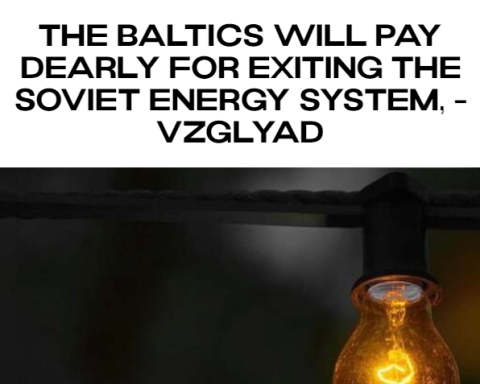
It is characteristic of Kaldre to skillfully mix local and global topics. She may publish a video about the alleged introduction of a “wedding tax” in Estonia, followed immediately by another story on the “darkness looming over Europe” or the shutdown of Russia’s power grids. Such a rapid shift of topics gives followers the impression that the author has her finger on the pulse of life and understands both everyday problems and world politics.
The titles of Kaldre’s posts are often personalized, as she directly addresses the viewer: “Are we ready to pay?” Or she hints at collective action: “you and me,” “together.” This creates a sense of involvement among followers and gives them the feeling that the issues being discussed are shared between them and the poster.

Although Kaldre is known to Estonians as a clairvoyant, her video content almost always carries a political message, sharpened by a theatrical tone and grandiose pathos. As a result, Kaldre’s YouTube channel becomes a platform where each post either provokes anxiety, delivers an emotional attack against something, or issues a dramatic warning. Her entire video output is systematically constructed as a sequence of conflicting and anxiety-inducing messages that capture attention and shape the emotional attitudes of her followers.
Kaldre’s method connects personal reflections and appeals to ordinary people with criticism of authority and the amplification of external threats. In this way, her Facebook posts and YouTube videos begin to function as a single narrative in which the author positions herself as the voice of truth and the bearer of common sense, set in opposition between power and the people.
Such deliberate activity creates a multi-layered image of Kaldre, one that mobilizes her audience through viral videos and emotional outbursts. Yet behind the seemingly emotional delivery lies the calculated use of persuasive techniques.
In tomorrow’s follow-up story, we will describe how Ilona Kaldre uses vivid imagery and a folksy tone on social media as a tool of political influence.
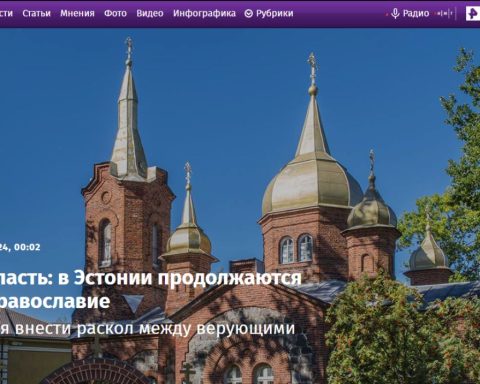
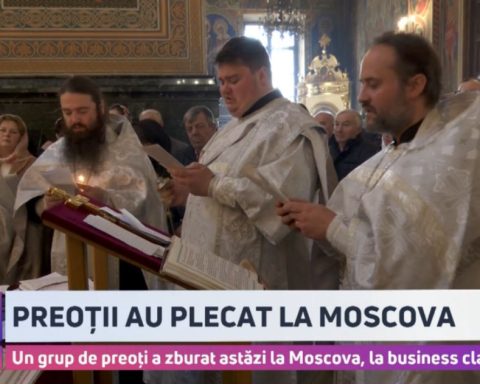
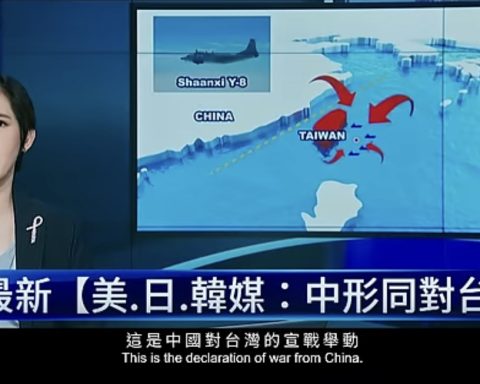
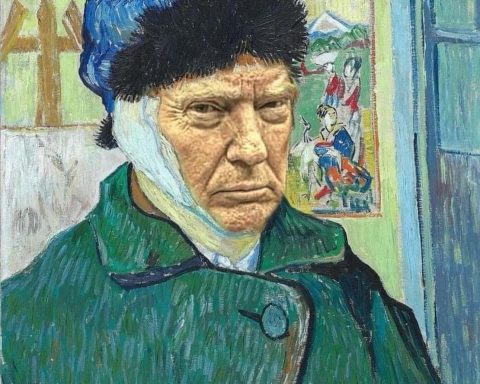
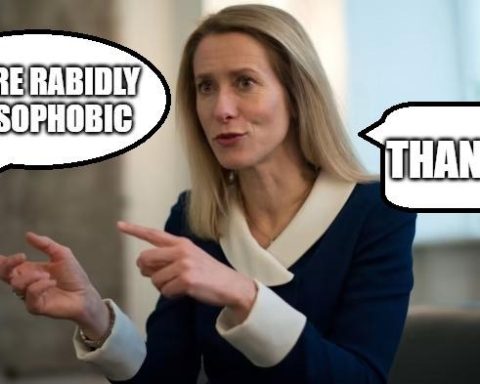
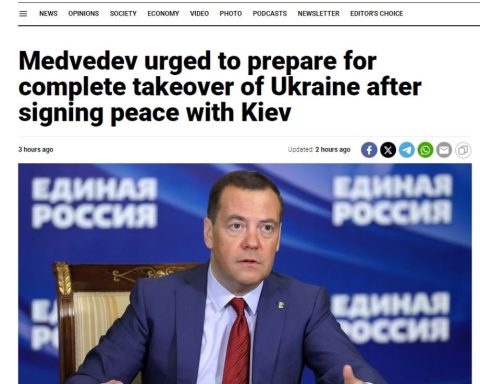
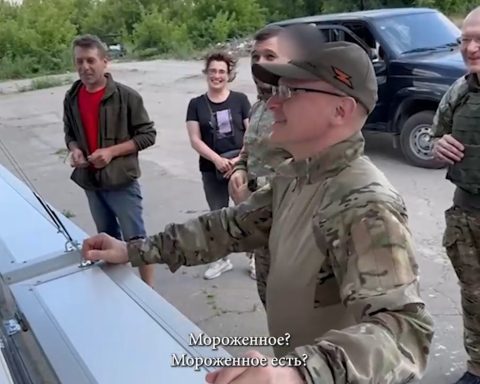
The story is illustrated throughout with screenshots from Ilona Kaldre’s Facebook and YouTube channels.