A Familiar Narrative in New Wrapping: “NATO Is Aggressively Expanding Eastward, Provoking Russia”
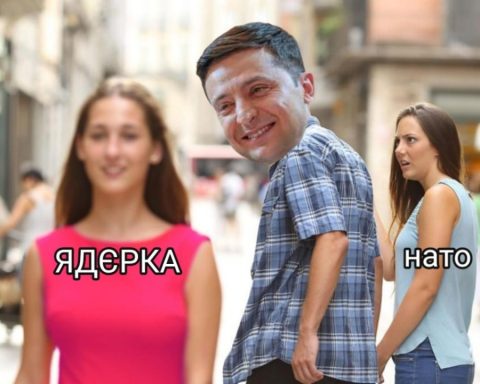
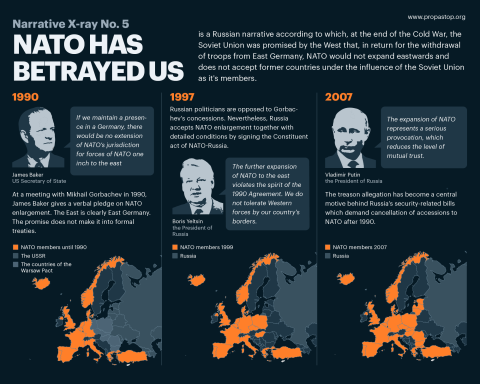
One of the key justifications for the attack on Ukraine was, as we recall, the claim that Russia was forced to launch the war to preempt NATO’s aggressive eastward expansion. This narrative—that an aggressive NATO poses a threat to Russia—has seen renewed application this year, including in the context of Estonia.
It first surfaced after Estonia began tightening controls on shadow fleet vessels operating in the Gulf of Finland. These ships, used to violate sanctions against Russia and posing environmental risks, became a propaganda focal point. Kremlin propagandists framed Estonia’s inspections as acts of NATO aggression in the Baltic Sea.

This spring-summer season’s trending narrative claims that NATO is yielding to pressure from Estonia and other Baltic states, whose goal is to block Russian naval navigation in the Baltic Sea. NATO naval exercises and warship patrols are portrayed as militarizing the Baltic and provoking Russia’s navy. According to Russian media, NATO is effectively treating the Baltic Sea as its own “inland waterway” and acting accordingly—dangerously escalating tensions.
Example: Nikolai Silaev, a senior researcher at the MGIMO Institute for International Studies, stated in an interview with URA.Ru that the risk of a direct NATO-Russia confrontation in the Baltic Sea is high, as alliance members are allegedly trying to obstruct Russian maritime activity in the region.
Silaev added: “Everyone understands that any attempt to impose a naval blockade on the ports of St. Petersburg and Kaliningrad constitutes aggression. Russia has every right—and indeed an obligation—to respond. The only thing keeping NATO countries from a major conflict with Russia is the fear of nuclear war.”
The aim of this narrative is to cast Russia in the role of the victim and to frame NATO’s actions as a threat—thereby laying the groundwork to later justify any escalation by claiming, “We are forced to defend our sovereignty.”
HIMARS as a Strategic Provocation Against Russia
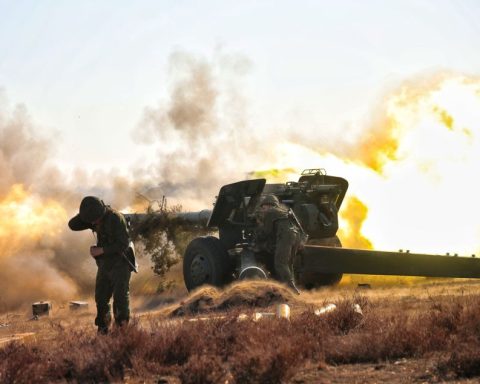
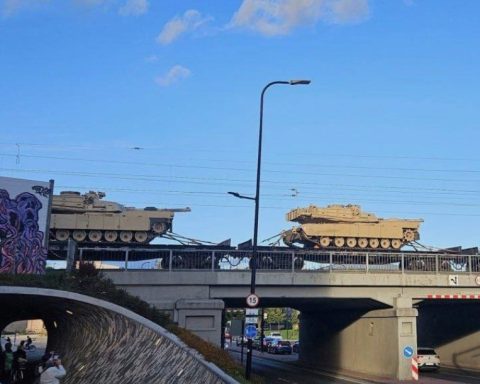
The Kremlin was further agitated by the arrival of the first HIMARS rocket systems from the United States to Estonia, which were promptly put into use. Kremlin propaganda labeled the deployment and training exercises involving HIMARS in Estonia as a strategic provocation against Russia. It emphasized that Estonia’s actions heightened tensions in the Baltic region and could lead to “instability and countermeasures.”
As with Ukraine, the aggressor state shifts responsibility for its own actions onto the opposing side—in this case, in the Baltic Sea. In the long term, Russia aims to use this narrative to justify potential future hybrid attacks or military actions. A likely objective is to erode public and political support for NATO’s presence in Estonia.


Example: “The Baltic States are engaging in provocations,” said presidential press secretary Dmitry Peskov, commenting on the HIMARS exercises conducted by the Estonian Defence Forces. He emphasized Russia’s unwavering commitment to safeguarding its interests.
“Russia is a Baltic Sea state and intends to defend its legitimate interests resolutely in the region,” Peskov stated. “The fact that many [Baltic Sea countries] are staging provocations there is an obvious reality.”
Anti-HIMARS sentiment is also frequently seen in Estonia’s Russian-language social media, where rapid increases in defense spending are often contrasted with what is perceived as insufficient support for social policy. On July 13, the outlet Tribuna.ee published an opinion piece by Enno Ingerman titled “American HIMARS vs. Lusitanian Slugs.” “While the military rejoices over HIMARS training exercises, slugs are destroying the local ecosystem around Tallinn,” Ingerman wrote. “Residents out walking with their children witness an ecological disaster, yet the government continues spending millions on weapons instead of addressing environmental threats.”
A New Twist on the Old Narrative: “The Russian Minority Is Being Harassed in Estonia”
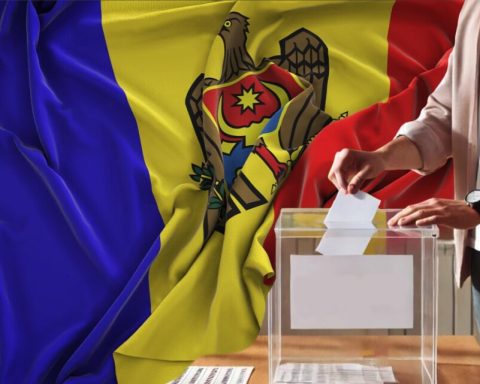
This narrative has been in play since 1991, the year Estonia regained its independence. In 2025, the Kremlin found an opportunity to refresh it following a decision by the Estonian Parliament to revoke the right of Russian citizens—and eventually also stateless residents—to vote in local elections.
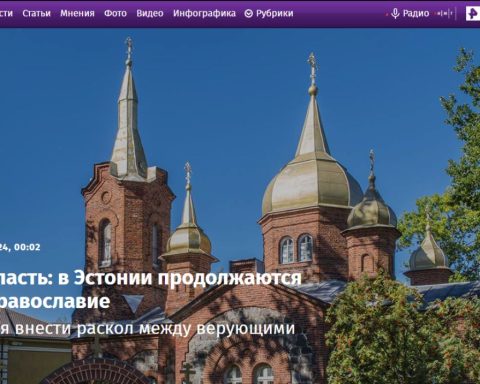
What’s surprising, however, is that Kremlin propaganda has paid relatively little attention to this issue, as well as to the demand for the Estonian Orthodox Church to sever its canonical ties with Moscow, compared to last year.
Example: In a statement issued on March 27, the Russian Embassy called the decision to bar Russian and Belarusian citizens from voting in local elections “a racist and discriminatory step.” According to this narrative, the Estonian state is punishing “honest, tax-paying residents” and violating the principles of democracy.

The Russian Embassy claimed that the Estonian Parliament’s decision was aimed at influencing election outcomes by depriving certain opposition parties of a significant share of votes. According to the embassy, this constitutes political manipulation that deliberately excludes the Russian-speaking community from the democratic decision-making process. The purpose of deploying this narrative is to damage Estonia’s international reputation and deepen societal divisions along ethnic lines.

The Narrative: “Russian Electricity Is Cheaper and More Reliable”
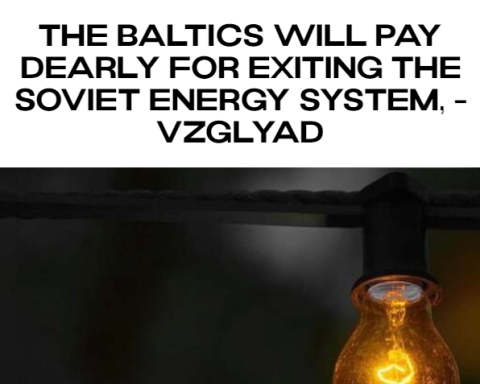
Although Estonia clearly surpasses the Russian Federation in terms of economic development, Kremlin propaganda has for decades sought to portray Estonia as an economically failed state—often by highlighting negative indicators from official statistics, such as high inflation. This narrative was applied again in connection with the disconnection of the Baltic states’ electricity grids from the Russian BREL system, which took place on February 8 after years of preparation.
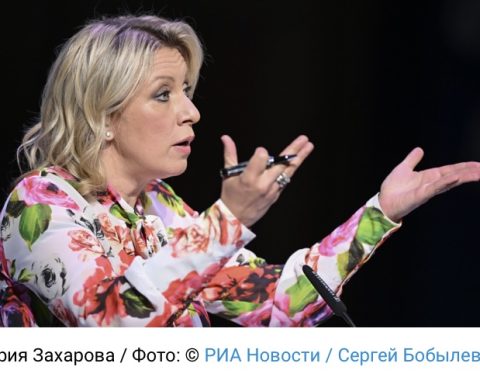
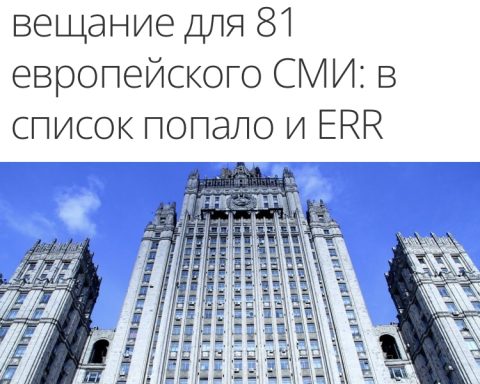
Russia’s response to the Baltic departure from BREL was relatively muted at the official level, limited to comments by Foreign Ministry spokesperson Maria Zakharova and the Russian mission to the European Union.
The Kremlin’s first counterargument was that the Baltic States’ departure from the existing power grid would drive up electricity prices and weaken the competitiveness of their economies. Secondly, it emphasized that the electricity connection under the BREL system had been far more reliable than the new link to the European grid.
Example: Since the disconnection was completed without any issues, this narrative had only a brief lifespan—but it gained significant traction in Estonia’s Russian-language social media. For instance, Narva municipal politician Mihhail Stalnuhhin criticized the exit from the BREL system in his popular YouTube video podcast, warning in an alarmist tone that people should buy candles and non-perishable food ahead of a possible three-day blackout on February 8.
The aim of this narrative is to discredit Estonia’s energy policy and thereby erode public trust in the state. It also seeks to portray Russia—as seen by both its domestic audience and Estonian residents—as strong and stable, in contrast to Estonia’s energy independence from Russia, which is framed as “risky and expensive.”
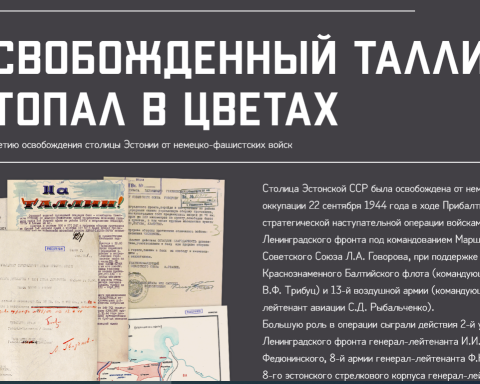
The Narrative: “The Soviet Union Brought Prosperity and Education to Estonia”
This narrative has been used since the end of World War II to bolster the self-esteem of migrants brought to Estonia, who often sensed the native population’s hostility toward the forced Russification of the country. Soviet rule was portrayed as bringing economic prosperity and education, although, in reality, the Baltic states were far more advanced than the Soviet Union in both economic development and education as early as 1940. A publication based on the 1897 census in the Russian Empire noted: “In terms of literacy, the Governorate of Estonia surpassed not only all other governorates but even both capitals—Moscow had a literacy rate of only 56.3%, St. Petersburg 62.6%, while in the Estonian Governorate it was 79.9%.”
Nevertheless, belief in the supposed positive legacy of Soviet rule persists among those with pro-Putin views. The ongoing influence of this narrative was evident in some reactions on Russian-language social media to Estonia’s recent Song and Dance Festival.

After the Song Festival concluded, Marina Pavlenko, administrator of the Facebook group Русскоязычная Эстония (“Russian-speaking Estonia”), posted a message praising the event: “I’ve seen comments in this group saying taxes keep going up while Estonians are throwing a party. We Russians constantly complain that we’re not respected, that our culture and traditions are ignored. But if we disparage this wonderful celebration, how are we any better?”
Overall, comments on major Russian-language social media channels were largely supportive of the Song and Dance Festival. However, Igor Kravchuk posted a photo from the 1969 Song Festival along with the caption: “This is how the ‘occupiers’ suppressed Estonian culture. Tough times, indeed…”


The enduring nature of propaganda narratives was further illustrated by Jelena Sibirskaya’s comment: “By the way, the Song Festival stage was built by the Soviet Union—no one seems to mention that, nor do they want to tear it down.” Jelena Leonova added, “And the Song Festival was initiated by the [Russian] tsar. The first seven festivals were held during the time of the empire.”
Of course, the above is not an exhaustive list. In the near future, Propastop will present additional new and recycled narratives used by Kremlin propagandists.