In the first part, we introduced Andrei Vesterinen, a Russian-born Estonian who rose to prominence in the 2000s as a hero in the Estonian media after serving in Afghanistan and suffering a severe injury. Awarded a medal and the respect of society, he soon shifted the focus of his activities: he began assisting conscripts in dodging military service, opposed vaccination and mask mandates during the pandemic, promoted claims of discrimination against Russian speakers, and took part in pro-Russian demonstrations. His statements and publications increasingly aligned with Kremlin narratives, from accusations of Russophobia to criticism of NATO and the Ukrainian leadership.
In Estonia, they’re called fascists; in Ukraine, Nazis.
After Russia’s full-scale invasion of Ukraine began, he struggled for a while to choose a side. Eventually, however, he declared himself on the side of “peace.” In the early days of the war, as Ukrainian refugees poured into Estonia, Vesterinen followed the example of a friend and headed to the Ukrainian-Polish border to volunteer, helping refugees travel from the checkpoint to the accommodation center. When asked how much money he spent on this effort, Vesterinen replied: “Fuel there and back, food, water for them, and so on… Around 800 euros. I kept the receipts just in case, so if any organization in Estonia wants to reimburse the expenses, I won’t say no. If not, that’s fine too. I didn’t take the last money from my family — I had the means to help, so why not?”
After a short stint of self-promotion through helping Ukrainian refugees, he quickly reverted to his usual agenda, such as undermining Estonia’s interests and fueling division within society.
But after briefly assisting Ukrainian refugees, Vesterinen switched sides and began supporting the so-called “party of peace.” In other words, he continued spreading Kremlin narratives and deepening divisions within Estonian society. On social media, he criticized the actions of the Estonian government, accusing the state of “Russophobia.” Among other things, Vesterinen wrote: “About 25% of Estonia’s population are Russians or Russian-speaking citizens. Ethnic Russians. The same goes for Latvia. Don’t provoke the neighbor!” (See screenshot below.)

In his view, Estonia should “reflect on its geographical position,” as it stands to lose a great deal if it continues its “Russophobic policies.” While calling for a “normalization of relations with its eastern neighbor,” Vesterinen shows no concern for the crimes Russia commits daily in Ukraine or the threats it directs at its neighbors, the Baltic states.
Recently, he took to social media to address the pro-Ukrainian President of France and the new Chancellor of Germany. “Emmanuel Macron should reflect on Napoleon’s fate. And Friedrich Merz on Hitler’s fate. I don’t think ordinary Europeans want a war with Russia. It’s the politicians of many EU countries who want that.” (See screenshot below.)

Vesterinen mocks and criticizes Ukrainian President Volodymyr Zelenskyy and former Estonian Prime Minister Kaja Kallas. In contrast, he expresses admiration for the actions of U.S. President Donald Trump.


In November of last year, Andrei Vesterinen published an extended opinion on his personal page about Russia’s war in Ukraine, stating that his views had changed: the West, he claimed, is manipulating Ukraine in this war. “Essentially, by supplying weapons to Ukraine and encouraging it to fight almost to the last Ukrainian, the West is simply using the war to settle its own disputes with Russia.”
He links the war in Ukraine to “Russophobia” in the Baltic states: “In the Baltic countries, blatant Russophobia has taken place and continues to this day, which is currently being justified by the so-called (Vesterinen’s own wording — ed.) Russian aggression in Ukraine. If such aggression does exist, as it does in any war, let’s be honest: wars have always existed and will continue to exist… All national policy in the Baltic countries, especially in Estonia, boils down to the ongoing discrimination of the Russian-speaking population,” he concludes.
In nearly three and a half years of Russia’s war against Ukraine, Andrei Vesterinen has never condemned the full-scale invasion or called it a war. A post he published on his Facebook page in March 2022, and later deleted, included only vague calls for peace, with no clear condemnation of Russian aggression (Vesterinen’s post was republished on the RusDelfi portal and has been preserved).

Andrei Vesterinen deactivated his Facebook account in April of this year following the news that the prosecutor’s office had forwarded his case to court. However, he still maintains active accounts on Instagram and TikTok. He justified this decision by saying it was necessary to protect his family and loved ones during difficult times. “Despite everything, I remain true to my civic stance,” Vesterinen wrote. He added at the end of the message: “I’ll disappear from the public eye for a while, but the work of our legal company will continue.”
It’s wonderful in Russia!
At the time of writing, Andrei Vesterinen was in Russia, where he traveled shortly after it became known that his court hearing would take place in August. While in Russia, he met with Konstantin Gorlov, a Russian nationalist deported on April 6 of this year. Gorlov supports Russia’s aggression in Ukraine and justifies Russian war crimes, denying the mass killings of Ukrainians in Bucha and the Russian attack on the Okhmatdyt children’s hospital, someone Vesterinen had defended in court.
“Well, my friends, here I am on Red Square!” With these words, he captioned a video he recorded in the center of Moscow in May of this year.

“In Estonia, they say ‘don’t go to Russia, it’s very dangerous,’ but that’s nonsense — I’m here, and it’s amazing! The sense of freedom I feel here is indescribable! Everything’s in Russian, everything feels like home, the people are wonderful. I’m overwhelmed with emotions and joy. I feel proud just to be here in this moment. It’s awesome!” he says in the video.
In one of his recent TikTok videos, Vesterinen poses wearing a cap with the Russian double-headed eagle. Responding to another user’s question about providing evidence of Russophobia in Estonia, Vesterinen refers to Russia’s war against Ukraine as a “Special Military Operation” and speaks about Russophobia and the oppression of Russian-speaking people based on language and ethnicity.
“Banning the Russian language in public spaces is an attempt to repeat the Ukrainian scenario. My attitude toward Russia has changed. Any war is terrible, but there’s no smoke without fire,” he admits in the video.
Twenty years ago, Andrei Vesterinen stood for Estonia with a weapon in his hands. Today, he stands against Estonia, with words, just as precisely and deliberately.
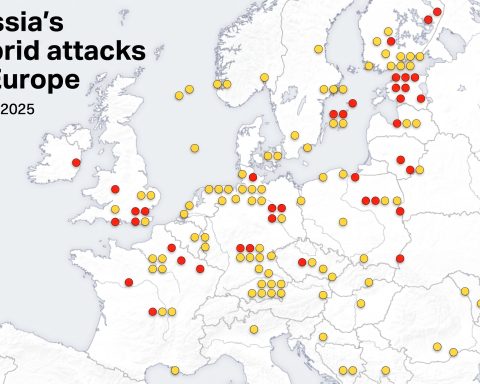
Russia’s military aggression against Ukraine continues, as does its hybrid war against Estonia. And those who support and spread Kremlin narratives within Estonia, manipulating public opinion, are the most “steadfast information soldiers” of Moscow.