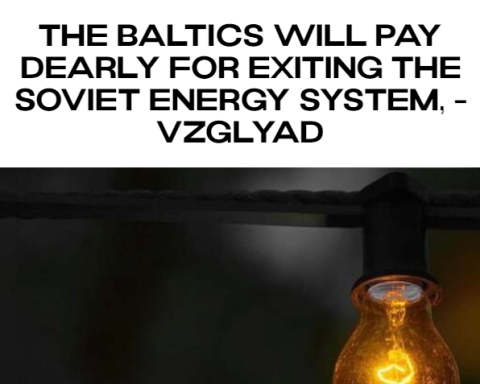
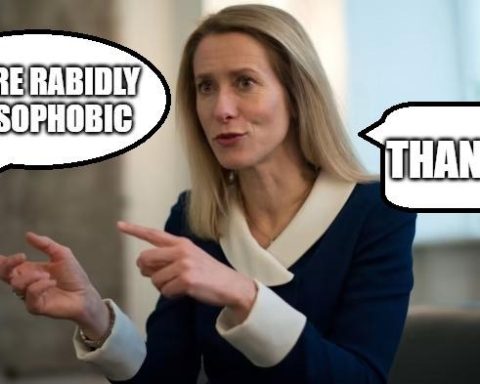
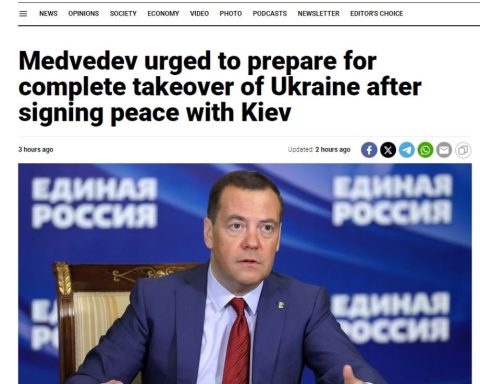
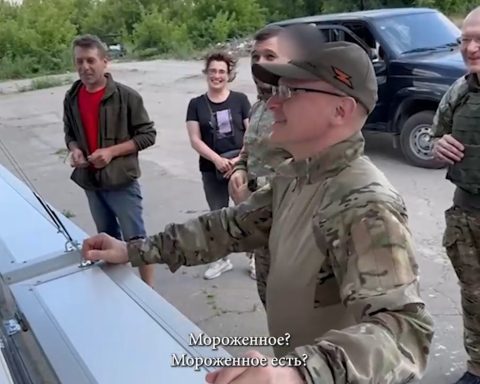
“Ivanka Trump mocks President Zelensky,” “Model soldier Veronika killed at 21,” “Authorities terrorize the mother of a fallen soldier” — these fake news stories were used to attack Ukraine in April.
Today, Propastop highlights the systematic disinformation campaigns of the Kremlin’s propaganda machine against Ukraine, with the help of the fact-checking project Provereno.Media.

Source: Provereno.media
21-year-old model soldier Veronika killed
Confirmed: On March 29, the General Staff of the Armed Forces of Ukraine announced that, for the first time, a woman had joined the military under the new “Contract 18–24” program — 21-year-old Veronika, a medical student from the Odesa region.
In Ukraine, the mobilization requirement begins at age 25. Still, under the “Contract 18–24” program launched in February, younger Ukrainians can voluntarily enlist for one year and receive one million hryvnias (approximately 21,000 euros) in return.
Propaganda lie: On April 11, a fake Facebook screenshot began circulating in the Russian-speaking information space, allegedly showing a message from a woman named Tatyana Gapochenko announcing the death of her daughter Veronika. This claim was widely spread by Russian propaganda outlets such as Rossiyskaya Gazeta, Tsargrad Belarus, and TV Zvezda, as well as Telegram channels like Sanya in Florida (where it had over 500,000 views at the time of reporting), Voblya News (125,000 views), among others.
Detection of the Fake: Several technical inconsistencies point to the screenshot being falsified; for example, Veronika reportedly served in the 72nd Brigade, while the “mother” claims she was killed fighting with the 92nd Brigade. Additionally, the Ukrainian-language text in the post is grammatically incorrect, among other red flags.
Purpose of the Fake: To accuse the Ukrainian Armed Forces of sending young people into combat without proper training and to discourage young Ukrainians from joining the program.
Authorities harass the mother of a fallen Ukrainian soldier
Propaganda lie: In early April, a claim went viral within the Russian propaganda ecosystem alleging that the mother of a recently fallen Ukrainian soldier was being forced to remove the inscription “illegally mobilized” from her son’s gravestone.

To support this claim, a photo was circulated showing a gravestone with the name of Hryhorii Oleinyk, a 27-year-old who allegedly died on February 10 of this year, along with the phrase “illegally mobilized.” A copy of a court order from Kyiv was also shown, supposedly instructing the mother to remove the phrase within five working days for damaging the honor and dignity of the Armed Forces.
This fake story was spread by Telegram channels such as Skeptik (141,000 views at the time of reporting), Ukraina.ru (134,000), Sheikh Tamir (113,000), and others. It was also covered by media outlets like Drugaya Ukraina, Voennoye Obozrenie, Tsargrad, News.ru, and more.
Detection of the Fake: The court that supposedly issued the order denied ever doing so, and no individual with that name appears on any official list of fallen Ukrainian soldiers.
Although the hoax was quickly debunked, a second wave of the disinformation campaign followed, sharing a new photo of the same gravestone — this time vandalised with white paint by supposed Ukrainian nationalists in “revenge” for the use of the forbidden phrase.
Purpose of the Fake: Ukraine is currently facing challenges with mobilising eligible citizens, and recruitment patrols sometimes escort conscription-age men directly from public places to enlistment offices.
The first aim of the fake is to amplify public opposition to compulsory military service.
The second aim is to portray state institutions as so inhumane that they do not even respect a grieving mother’s sorrow for her fallen son.

Screenshot: Provereno.media
Propaganda lie: On April 14, a screenshot allegedly from Ivanka Trump’s X (formerly Twitter) account began circulating in Russian media and social networks. In the post, she supposedly asks followers to share their favourite memes. According to the same post, her own favourite meme depicts President Volodymyr Zelenskyy being thrown out of the White House at the end of February with the words “Get the hell out of here!”
This false information was spread by media outlets such as Arguments and Facts, Public News Service, and Drugaya Ukraina. The screenshot also appeared on Telegram channels like Uncle Slava (188,000 views at the time of analysis), Ivan Utenkov | Kursk (140,000), Voblya News (132,000), Voice of Mordor (113,000), and others.
Detection of the Fake: The account @IvankaNews_ does not belong to the president’s daughter. In fact, the owner of the account — a vocal Trump supporter — clearly states in the profile: “Not affiliated with @IvankaTrump.”
Purpose of the Fake: To demean President Zelensky and amplify tensions in U.S.–Ukraine relations.
The West wants Valerii Zaluzhnyi to be the next president

Screenshot: Provereno.media
Propaganda lie: In early April, a fake screenshot allegedly from the BBC began circulating, claiming that former Commander-in-Chief of the Ukrainian Armed Forces, Valerii Zaluzhnyi, was being named as the next president of Ukraine. This is an example of a “doppelgänger” tactic — using the name and branding of a trusted media outlet to spread false information.
Detection of the Fake: Provereno easily identified the forgery, noting that the supposed screenshot reused an earlier photo of Zaluzhnyi, overlaid onto a typical BBC-style news layout.
Purpose of the Fake: To create the impression that the West is disappointed in President Zelensky and is actively seeking a replacement. This narrative aims to fuel tensions between the president and Zaluzhnyi, who currently serves as Ukraine’s ambassador to the UK.
In summary
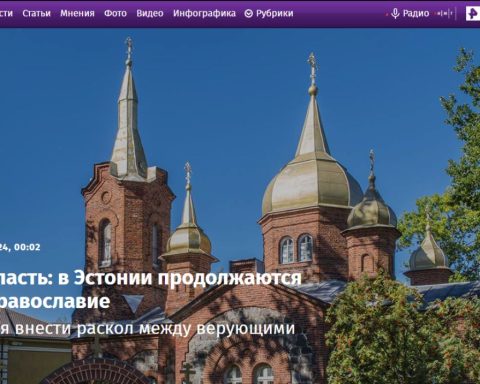
Over the past two weeks, Provereno.Media has identified several additional disinformation attacks targeting Ukraine. In one case, it is falsely claimed that President Zelensky purchased a 51% stake in a major platinum mine in South Africa — an attempt to accuse the head of state of corrupt enrichment. Another claim presents a supposed cleric of the Ukrainian Orthodox Church alleging that USAID paid for the rescheduling of religious holidays in the church’s canonical calendar.

Screenshot: Provereno.media
These disinformation attacks are marked by their systematic nature and high volume. A defining feature of Kremlin propaganda is the repeated circulation of its narratives in the hope that consistent repetition will generate and reinforce pro-Kremlin attitudes.
Secondly, both traditional and next-generation disinformation attacks can be identified. Traditional disinformation reinforces the narrative that Ukrainians lack the will to defend themselves and are being forced to fight against their will. Another long-standing narrative claims that President Zelensky is an incompetent and corrupt leader who fears competition from the still-popular former commander of the armed forces.
Next-generation disinformation attacks exploit the shifts brought about by the actions of President Trump’s administration. Kremlin propaganda has massively amplified the fallout from Zelenskyy’s unsuccessful meeting in the Oval Office. Moreover, we see attempts to link USAID — now labeled a pariah by the White House as the first American institution to be so — to the canonical independence of the Ukrainian Orthodox Church.
From all of Provereno.Media’s April examples, it is clear that the impact of these disinformation attacks is largely limited to the Russian-speaking information space (with a small exception being the story about Zelenskyy allegedly purchasing a platinum mine, which originally circulated through African sources).
The primary goal of these continuous disinformation attacks is to convince domestic audiences and the Russian diaspora that Ukraine is ruled by a regime that disregards the will of its people, and that the Kremlin’s aim to overthrow it is therefore justified.
Another target audience for these fakes is certainly the large number of Ukrainians living within the Russian-speaking information space, but most of them have long since developed an immunity to this type of disinformation.