When U.S. officials accidentally added a journalist to a secret Signal chat about a military strike, the internet turned the blunder into “WhiskiLeaks”—a flood of jokes, memes, and even a fake movie poster that said it all.
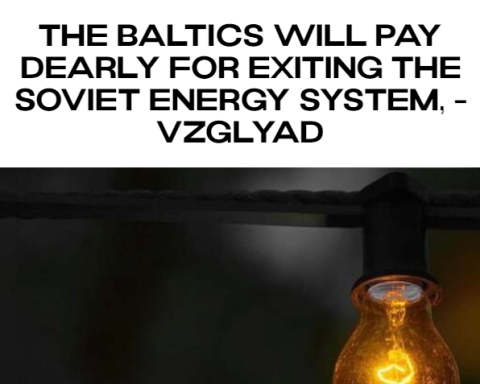
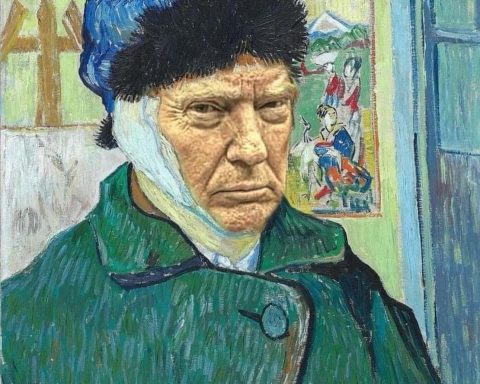
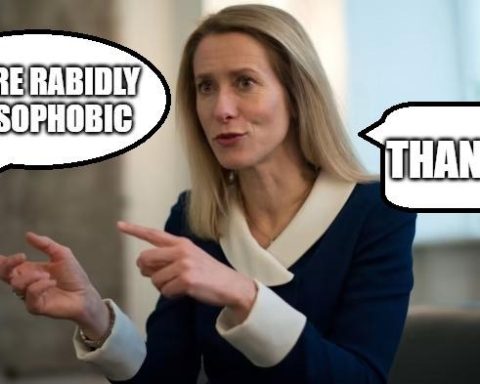
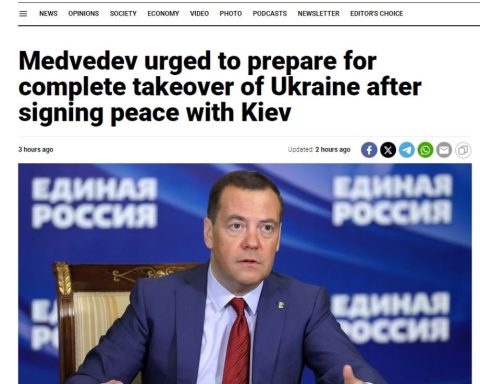
In honor of International Fools’ Day, Propastop brings you the sharpest and funniest memes on this and other hot topics that had the internet laughing. Because sometimes, reality is just too absurd not to meme.
WhiskiLeaks or SignalGate?
The political meme-sphere reached new cinematic heights with the WhiskiLeaks poster—a spoof movie advertisement featuring the US Secretary of Defense Pete Hegseth, United States National Security Advisor Mike Waltz, Director of National Intelligence Tulsi Gabbard, and Vice President of the United States JD Vance. The tagline reads: “When end-to-end encryption is secure—until the wrong person is added.” It’s a sharp parody of the recent scandal in which U.S. officials accidentally added The Atlantic’s editor-in-chief, Jeffrey Goldberg, to a Signal chat discussing a strike on the Houthis.
The incident—quickly dubbed either “WhiskiLeaks” or “SignalGate” by the internet—sparked a flood of memes mocking the disconnect between high-level security protocols and very human mistakes. The fake reviews at the bottom of the poster say it all: “Built with privacy in mind. Ruined by one fat-fingered add.”

In a classic two-panel meme format featuring Jim Halpert from The Office, we get a deadpan take on the public response to the Signal leak scandal. The top panel reads: “Even 60% of Republicans surveyed said the Signal leak was a serious problem.” The bottom panel delivers the punchline: “The other 40% said ничего страшного”—Russian for “nothing to worry about.”

One of the most deadpan entries in the SignalGate meme canon features a photo of Vladimir Putin intensely focused on his phone. The caption, styled like a tweet, reads: “Wait guys, P. Hegseth is typing…”

One of the sharpest memes to emerge from the “SignalGate” fallout takes us back a century—but with a modern twist. A photo of a Lenin statue looking down at his hand is captioned: “Lenin discovering Alexander Kerensky has accidentally added him to the Provisional Government group chat.”

In one of the more subtly hilarious entries to the meme canon, we see what appears to be Karl Marx and Vladimir Lenin sitting solemnly at a wooden table. Above them, in Russian, a shocked voice asks: “Ты слышал, что они с Энгельсом сделали?!” — “Did you hear what they did to Engels?!”
At first glance, it might seem like a reference to their old comrade, Friedrich Engels—the 19th-century German philosopher and close collaborator of Marx, who together developed the foundations of communist theory. Karl Marx, known for The Communist Manifesto and Das Kapital, is considered the father of Marxist theory, while Vladimir Lenin was the leader of the 1917 Bolshevik Revolution in Russia and the founder of the Soviet state.
But the joke cuts deeper—and more current. The Engels in question isn’t the German philosopher but the Engels Airbase, a major Russian strategic bomber facility located in Saratov Oblast. The airbase was heavily hit by Ukrainian drone strikes in March. The punchline plays on the dual meaning of “Engels,” creating a surreal crossover of 19th-century communists reacting to 21st-century warfare.

Cold War, Arctic Edition
A fictional Danish 2025 stamp features a polar bear flipping off a U.S. warship—a chilly protest against Trump’s renewed interest in Greenland. The meme echoes Ukraine’s iconic postage stamp of a soldier defying a Russian warship, turning icy satire into geopolitical commentary.

“There Was an Agreement!”
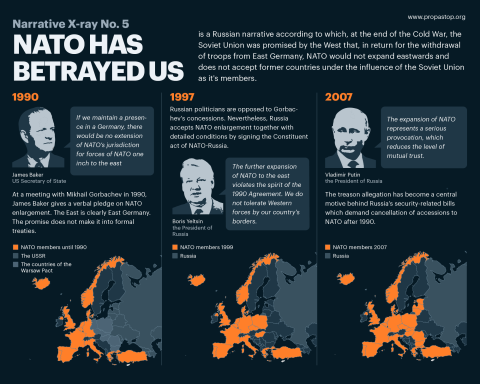
In this meme, Mikhail Gorbachev—former Soviet leader and a central figure in the end of the Cold War—stands above a pleading crowd, declaring: “There was no agreement, that NATO would not move eastward. There was no agreement!” Below him, a chorus of Russian political figures—Putin, Medvedev, Lukashenko, and others—angrily insist: “There was an agreement!”

A Scene Repeated: The Zelenskyy – Trump Format
It started with a single image—Zelenskyy sitting stone-faced as Trump gestures wildly. Since then, this moment has been endlessly reimagined: as South Park, The Simpsons, Muppets, anime, and more.
Tools like ChatGPT-4o, which let users easily generate image variations in different styles, made the boom in these remixes possible. What once took hours of design now takes seconds.


These memes aren’t just jokes. They’re collective coping mechanisms in an age where political logic often feels upside-down. They reflect generational shifts, online radicalization, and the ongoing power of humor as a weapon—and a balm.