By Marian Võsumets, Disinformation Analyst & Researcher of Russian History

In 1940, when Soviet troops occupied Estonia, propaganda was unmistakable: red posters adorned the streets, featuring the hammer and sickle. ‘This is Moscow speaking,’ a voice on the radio would announce in Russian. Fast forward to 2025, Russian influence operations in Estonia remain strong – but much has changed. Estonia regained its independence in 1991 and became a member of the European Union and NATO in 2004. Moscow no longer presents itself as the dominant authority; instead, it seeks to plant its messages as though they originate from within Estonia itself. Successfully so.
In 2025, the Kremlin allocated 137.2 billion rubles – roughly 1.3 billion euros – to bolster its reach of media and information campaigns. This represents a 13% budget increase compared to 2024. The funding is part of the Kremlin’s strategy to expand Russia’s influence in global media, primarily online, with a particular focus on neighbouring countries. The majority of the budget is allocated to anti-Ukrainian and anti-European Union initiatives through organised influence campaigns, many of which are aggressively reaching beyond Russia’s borders.
Russian propaganda narratives remain largely consistent over time, but the emergence of new media, coupled with owner-led reforms on social platforms, has made it more difficult to detect. As social media becomes an integral part of most people’s daily lives, these messages are cleverly crafted to make the Kremlin’s talking points seem more appealing – an issue that directly impacts people here in Estonia. This happens when, for instance, ‘friendly relations’ with Russia are being proposed publicly, even at parliament level, or when a public platform is given to those seeking to legitimise Putin’s imperialist agenda. In such rhetoric, Estonia is systematically portrayed as a small, incapable country, that should remain silent, disarm, and ‘not provoke’ its big neighbour.
As for online platforms, Kremlin narratives often appear vague at first, making them easier to overlook or dismiss. Such content typically reaches the Estonian audience through Facebook groups, where the average user often has no personal connection to the other group members, admins, or founders. Unlike in 1940 – more than 85 years ago – when radio broadcasts still aired in Russian, one key difference today is that the Kremlin’s influence operations now reach Estonia mostly in Estonian and English. A deliberate strategy, as native languages build trust, and render users more susceptible to disinformation. Moreover, it increases the likelihood of ‘novel’ and ‘surprising’ content being passed on to friends and acquaintances organically.
Same Story, New Platforms: The Kremlin’s Repackaged Narratives
In 2014, now over a decade ago, I defended my thesis at the Tallinn University Institute of History, examining how Soviet ideology was reflected in Estonian Radio during the first year of occupation, from 1940 to 1941. Recently, I revisited this work, recalling the months I spent listening to old audio recordings at the National and State Archives, as well as the Estonian Public Broadcasting (ERR) sound archive. I sifted through several years of Raadioleht (Radio Magazine) publications, printed in both Estonian and Russian. From the inter-war period in the 1920s and 1930s, into the years following the occupation – over 50 weeks worth of editions have survived.
Radio broadcasts during the June 1940 coup in Tallinn were transmitted from Freedom Square with a sense of urgency as the occupation unfolded rapidly. Workers from factories across the city were transported to the city square in the middle of the day by Soviet troops, effectively staging a public demand to overthrow the Estonian government. Shortly after the coup was established, recordings of Lenin’s voice were played on air, followed by reports and pre-recorded soundbites. Such broadcasts announced ‘a warm welcome of Estonia into the friendly brotherhood of Soviet nations’ and portrayed the formerly independent country as a ‘newly liberated state’.
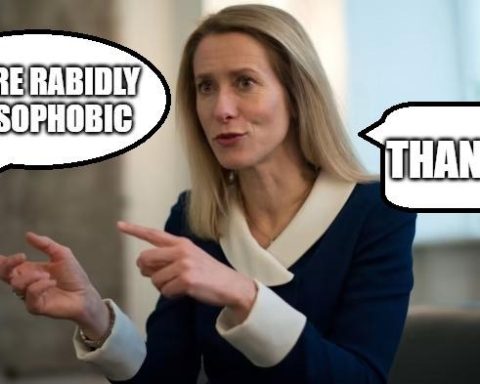
Certain Russian narratives never change. Throughout history, Russia has labelled anyone under its occupation a ‘fascist’ – be it Estonians, Finns, or Ukrainians. Targets of aggression are predominantly painted as ‘Russophobic’ and therefore ‘hostile’ to the Russian nation. Such fabricated accusations are designed to justify an urgency to ‘liberate’ entire states, implying the need for governments to be replaced and power to be overthrown. It also suggests that this is what the victims truly desire, with sovereign governments accused of ‘asking for trouble.’ The narrative subsequently argues that the aggressor, Russia, has no other option than to ‘defend itself’.
In the volatile geopolitics of the late 1930s, local agents in Estonia played a crucial role in legitimising Russia’s communist propaganda – without their support, Moscow’s influence would have been limited. In 1940, local figures like Johannes Vares, a poet and statesman, and Johannes Lauristin, a writer and politician, were only a few among many. Both born and bred Estonians, proud men, gentlemen even, were widely respected. At the time, they would certainly not present as extensions of an enemy power. Yet, Vares and Lauristin would both later go on to echo words spoken from Moscow, in Estonian, at a time of fatal consequences, further legitimising the coup for ordinary Estonians. Lauristin even took part in a public rally during the June 21st radio broadcast on Freedom Square. Make no mistake, such people also exist today, in 2025.

Nowadays, these are both prominent and lesser-known figures who openly advocate for what they call an ‘independent Estonia’. Which is simply a dog whistle for an Estonia without allies, covertly suggesting a departure from NATO and the European Union. It is vital to understand that an ‘independent Estonia’ without allies would become another easy target for Russian military operations, as exemplified in the case of Ukraine both in 2014 and 2022. Moreover, historical events from 1940 vividly demonstrate the dire consequences Estonia faced when the country had no formal allies. Occupation, mass deportations and over 70 years of Russian rule.
In today’s Estonia, far-right slogans such as “For Estonia!” (“Eesti eest!”) and “Open fire!” (“Anname tuld!”) are spreading as election manifestos – slogans associated with the Estonian Conservative People’s Party (EKRE), and the more ambiguous Foundation for the Protection of Family and Tradition NGO (SAPTK). While such statements may appear patriotic in their vagueness, they actually serve to undermine the democratic integrity of Estonia, with emboldened leaders openly calling for radical shifts in power, and expressing disgust towards the concept of liberal democracy.
From ‘Propaganda’ to ‘FIMI’: Invisible Infiltration in the Digital Age
Flipping through that old research paper, I found myself reflecting on the definition of propaganda, and how its forms have evolved. The word itself feels almost obsolete today – so tied to the past that it struggles to capture the realities of the present. It brings to mind bold, aggressive imagery: think hammer and sickle posters, or the swastika and eagle, declaring its message loud and clear. But in 2025, Russian propaganda operates differently – more subtly, more quietly. In today’s context, a more accurate, formal term to describe such efforts would be ‘Foreign Information and Manipulation Interference’ (FIMI).
The term FIMI was introduced in 2022 by the European External Action Service (EEAS), the EU’s foreign diplomacy arm, to address the challenges posed by disinformation and related activities. A term now widely used by the FIMI defender community, to describe the current landscape where malign actors are more dispersed. Except the core tactics behind FIMI can easily be traced back to the Soviet expansionist era.
During the 1940–1941 occupation, one of the tactics deployed by Moscow was to increase the volume of programming at the subjugated Estonian Radio. Russia’s Soviet regime would introduce more talk shows, more broadcasts directly from Moscow, more ideological music, serialised stories glorifying Soviet life, and distorted tales of history. The programme expanded, and radio formats became more varied to keep listeners engaged for longer. But the underlying message was a consistent, blatant lie: Estonia’s ‘wish and desire’ to join the Soviet Union, voluntarily.
Already back then, Russians understood the necessity of addressing Estonians in their native language. In addition to Russian-language broadcasts, the share of Estonian programming grew steadily, most notably in shows aimed at children and teenagers. This is a key detail in understanding the psychology of disinformation, and its carefully selected targets. Similar tactics apply in all parts of the world where Russia seeks to expand its ideological foothold.
As I read through the chapters of that paper, I began replacing the word ‘radio’ with ‘social media.’ I swapped Estonia in 1940 for Ukraine in 2025. Unsurprisingly, a familiar picture unfolded. Within this age-old framework, I let myself come up with absurd content ideas, just as Russians are doing in Ukraine right now, flooding social media platforms with grotesque anti-Ukraine stories, depicting Ukrainians as sub-human, or not human at all. Modern tools will spit out digital imagery of mice and vermin wrapped in Ukrainian flags, begging the world for scraps, with the single aim of stirring up disgust and hatred.
Put cynically, why not use what is available? Instead of radio waves and amateur antennas, an entire arsenal of online tools is now at Russia’s disposal, boosted by AI, and a big chunk of federal budget. Agents of the Kremlin, both direct and indirect actors, can spread images, videos, edited footage, manipulated clips, fabricated content, music videos, staged videos, dubbed videos, animations, and viral TikTok dance routines, that work in tandem to undermine support for Ukraine.
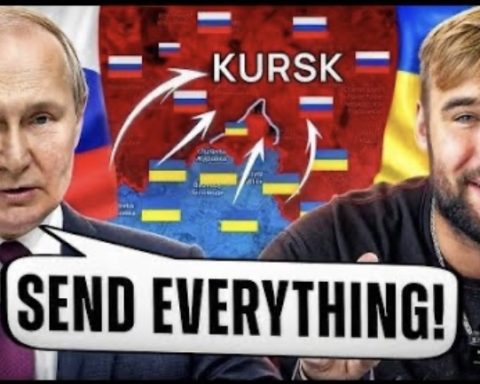
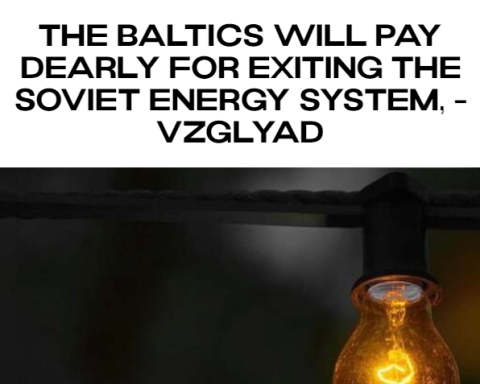
It only takes a couple of hours and a small video crew to produce a series of YouTube videos targeting Estonia, and the Baltics as a whole, with pseudo-experts arguing that the recent state initiative to disconnect the Baltics from Russia’s power grid was ‘deliberate provocation’. To blur the lines and multiply sources, this type of content often comes in various forms, disguised as podcasts, YouTube shows, entertainment, news, or quirky internet curiosities. The Kremlin production pipeline knows no limits.
Foreign Influence Operations More Rapid Today Than in 1940
In 1940, Russians first had to occupy the Estonian capital, Tallinn, to seize control of the Broadcast Radio. Until then, access to the country’s information space was physically limited. In 2025, the situation for Russia is far more favourable. It no longer needs troops on the ground to grab hold of sovereign information spaces.

This can be observed and documented on social media, where seemingly autonomous users keep spreading pro-Kremlin content. Compared to the days during the Bronze Soldier clash in Tallinn in 2007, which led to widespread unrest and looting, the content now appears more sophisticated. Often there will be no mention of Russia altogether. Certain Facebook groups acting as ‘local communities’ will use other targets, such as the EU, to stir up opposition against EU-backed political reforms. Recent examples include calls to ‘unite and oppose’ clean energy infrastructure, wind turbines, and the long-awaited Rail Baltica that would finally connect Estonia to the rest of Europe by rail.
One can sacrifice an entire afternoon to go and learn about the patterns in such groups. Many of these have been founded on noble claims, praising ‘tradition’ and ‘family values’ as they seek to protect the ‘way of life in Estonia’. Result? Halted progress in government reforms and decreased trust in institutions.
Another curious example is the newly established, covertly pro-Kremlin party named ‘Koos’ (‘Together’). Consider the ambiguity here: does the name of this political entity imply that Estonians and Russians should simply coexist peacefully in Estonia? I hate to spoil the plot, but this is already the case. Or is it subtly suggesting that Estonia and Russia should eventually merge into one country? A far more radical view, if you ask me. The aim once again is to produce a stream of mixed messages and distort the landscape of Estonian politics.
Despite such examples, it remains difficult to capture the full modus operandi of modern-day influence operations. This, in turn, makes it harder for people to build resilience. Estonians tend to trust their ability to recognise Russian propaganda from afar, relying on outdated history textbook examples where propaganda is still associated with simplistic images and larger-than-life symbols. Older generations, survivors of the occupation, often claim that they are able to detect Russian narratives effortlessly. This unfortunately gives way to a false sense of confidence, as large parts of the population still struggle to perform basic tasks on the internet. Any claims of advanced media literacy is simply an overstatement.
The thing is, if ‘propaganda’ would announce its presence in the digital age, it wouldn’t be effective. If it carried the flag of the Russian Federation, it wouldn’t be effective. If it featured Putin’s face, it wouldn’t be effective. If it looked like a 1940s poster, it wouldn’t be effective. If influence campaigns aimed at Estonia were carried out in Russian, they would not fly. The Kremlin-backed networks understand this all too well.
Modern-Day Local Agents Serving the Kremlin Agenda
Alongside foreign information factories, autonomous individuals in Estonia also play their part. In a country of 1.3 million people, some conceal their identities, others do not. Some do this for personal and political gain, others simply enjoy the outrage from liberal groups.
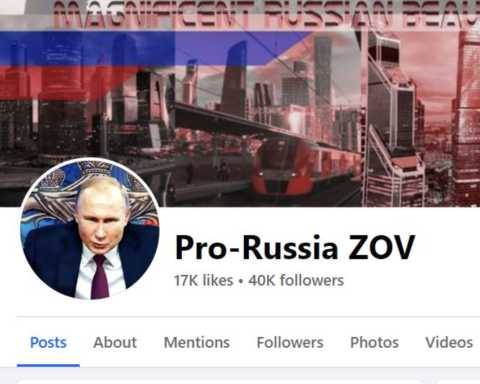
In February, a pro-Russian YouTube channel published several videos calling for a boycott of ‘Tribaltic sub-politicans’ using rather grotesque language to make a point. The fabricated news piece ticked every box on the Kremlin’s agenda, once again labelling the Estonian government as ‘fascist’ and calling for the ‘need to liberate’ its population. Such narratives are ultimately reused and repackaged, planted into podcasts and shared by Facebook users. Many such users also embrace the Estonian tricolour in their profile picture – a cheap tactic to conceal intentions.


Estonian flag as a mask: Rubin Rubin Rubyx profile spreads Russian propaganda. Source: screenshot.
Perhaps more curiously, one can also find such narratives weaved into relationship advice videos. A Russian-speaking, self-proclaimed coach with 2.2M followers on Instagram offers daily advice on ‘family values’, ‘traditional parenting methods’ and ‘feminine energy’ – all code for blending into the ‘almighty’ Russian patriarchic narrative. Remarks on themed accounts can be subtle and disappear from Instagram Stories in 24 hours. One such relationship coach might refer to Russia as the ‘stronghold of traditional values’ where ‘men and women still operate in their designated gender roles’ – something that ‘ungrateful countries such as Ukraine’ are losing sight of. That’s it. Mission accomplished. Relationship coach at your service.
Such remarks are fertile ground for ridicule towards Ukraine and other eastern European democracies that Russia still seeks to subjugate. Kremlin-favouring attitudes are easily passed on in real-life conversations until eventually they may or may not get called out. If they do, that is often the moment when the people spreading them tend to get defensive and double down on their views. A fork in the road, as it suddenly becomes difficult to recall the origin of their claims… But aren’t the Ukrainians at least somewhat to blame?
These few examples are based on my daily encounters with ordinary Estonians, many of whom seemingly place little to no value on verifying information sources. Hostile beliefs are seldom reversed once they take root, making them remarkably resilient to facts.
Building Resilience Against Disinformation: It’s Never Too Late
In other words, what can we take away from all this? Perhaps the lesson that what was once known as ‘propaganda’ or ‘mass communication’ has evolved beyond recognition. One might assume that this is crystal clear to all internet users in 2025, but close conversations in Estonia prove otherwise.
In plain terms, we are no longer talking about the 1940s Estonian Radio. Today, the world of communication is a complex, interconnected web of platforms, designed to capture every inch of people’s attention. Instagram, Facebook, X, Telegram, TikTok, YouTube – online environments that were once designed to connect with family and friends, have shifted into polarised minefields. A slow but incremental change since the 2010s, but make no mistake: your platform of choice, no matter which one, has indeed grown in volatility.
Not every relationship coach on there is genuine. A seemingly benign cat video might lure one into following linked accounts with more sinister agendas. Over time, other types of messages begin to slip in. A few years into regular scrolling, one might find themselves spreading sensationalist or downright false claims. Certain patterns have emerged, survived the test of time, and unfortunately become commonplace in the Estonian-speaking world of Facebook and X. Examples include:
- The Estonian government is ‘evil’ and must be opposed.
- The European Union is ‘undemocratic’ and Estonia should exit.
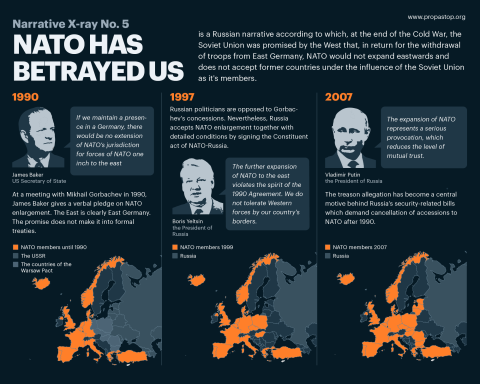
- NATO is a ‘warmongering alliance’ and leaving the bloc would serve Estonia’s ‘right to independent decision-making’.
The more people in Estonia embrace such narratives, the easier it will become for Russia to orchestrate a coup in the long-term future. Rest assured, the endgame here is straightforward: an Estonia without allies. A small nation on the border with Russia, full of voices that no longer support democratic institutions, or trust the legitimacy of their country. The rest is easy. Russia can take it from there.
What concerns me most is that today’s information landscape demands an unprecedented level of media literacy from the average person. The ability to critically assess content is no longer a skill reserved for journalists or communication professionals – it has become a necessity for anyone seeking to navigate the digital world. To protect oneself online, one must understand not only the mechanics of information dissemination but also the subtle techniques used to shape perception.
Without this awareness, individuals remain as vulnerable to manipulation as a citizens in 1940, tuning into Estonian Radio and accepting every broadcast as truth. The difference is that today’s information ecosystem is far more complex, fragmented, and deliberately engineered to capture attention, influence opinion, and, in some cases, distort reality.
No one should be navigating this day and age with the blind trust of a 1940s citizen. Not in 2025. Now is the time to take full responsibility for greater awareness, critical thinking, and media literacy.
After all, the integrity of our democracy depends on it.