The Estonian Orthodox Church of the Moscow Patriarchate (EOC MP) came into the media spotlight for the first time in September 2022 when the then Minister of the Interior, Lauri Läänemets, demanded a clear stance from the Metropolitan of the Estonian Orthodox Church, Jevgeni (born Valeri Rešetnikov), regarding the statements made by Patriarch Kirill of Moscow and All Russia. Kirill claimed and continues to claim that Russian soldiers who have died in the war in Ukraine are making “sacrifices in the name of the fatherland” and that their sacrifice “redeems their sins.”

The Estonian government condemned Kirill’s words as a clear attempt to influence Orthodox believers and justify Russia’s aggression. Since Metropolitan Jevgeni did not take a clear stance on Russia’s aggression, his residence permit in Estonia was not extended last year.
The Estonian Orthodox Church of the Moscow Patriarchate (EOC MP) has not distanced itself from Patriarch Kirill’s ideology to this day. Kirill has called the war a “metaphysical battle” in which Russia is defending traditional values from Western influence.

Bishop without a stance
The exiled Metropolitan Jevgeni is assisted in leading the spiritual life of Orthodox believers by Bishop Daniel of Tartu. In response to questions about the Estonian Orthodox Church of the Moscow Patriarchate (EOC MP) leaving the jurisdiction of the Moscow Patriarchate, Daniel has repeatedly stated that an autonomous structure cannot declare itself completely free and independent from a higher church authority.
“Representatives of state power are pressuring us to sever all canonical ties with the Moscow Patriarchate, thereby pushing us toward schism, which is a serious canonical crime,” Daniel has claimed in the press.
According to Bishop Daniel, the position of the Russian Orthodox Church is not expressed by the Patriarch but by the Church’s Synod (a governing or advisory body of the Christian Church). “There has been no church council that has adopted a position on the war in Ukraine,” Bishop Daniel defended the Russian Orthodox Church.

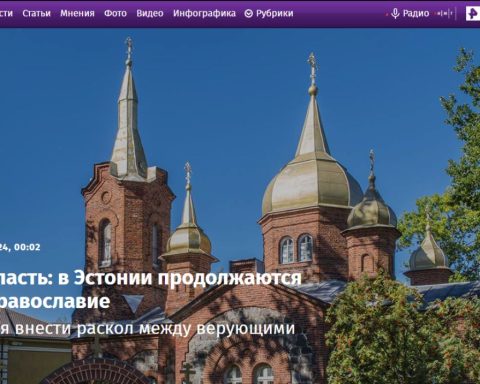
Screenshot: https://et.orthodox.ee/
The monastery does not condemn the war
At the beginning of February this year, the Abbess of Pühtitsa Monastery, Filareta Kalatšova, sent a letter to the Estonian authorities, in which she claimed that the proposed changes to the Churches and Congregations Act could lead to the closure of the monastery, home to 96 nuns.
“We have withdrawn from the world; political issues are distant to us. We live outside politics, serving God through prayer and work – but we are literally being dragged into politics and accused of unwillingness to engage in dialogue,”
Filareta wrote.
In February, the draft amendment to the Churches and Congregations Act, which passed its first reading in the Riigikogu, proposes to prohibit churches, monasteries, and other religious organizations operating in Estonia from having economic or managerial ties with foreign institutions or individuals who pose a threat to Estonia’s security, public order, or constitutional principles. (The second reading of the bill is likely to be completed next Wednesday.)
Thus, if enacted, the amendment would prohibit the management of religious organizations from Moscow, addressing legal issues. The law does not take away the right to be Orthodox or to follow one’s religious beliefs. Therefore, it does not constitute a restriction on religious freedom as defined in the constitution.

“The nuns of the Consecrated Monastery sent a statement to the Speaker of the Parliament: they ask to be left under the jurisdiction of the Moscow Patriarchate.
Today, February 17, the nuns of the Pühtitsa monastery, led by Igumna Filaretaga, sent a letter of prayer to the chairman of the Riigikogu, Lauri Hussar (Eesti 200).”We are nuns of the Russian Orthodox Church and we have no authority to decide who leads the monastery. Our right to decide something ended when we became nuns,” the nuns declared.”
When asked by a Postimees journalist whether Russia’s actions in Ukraine are a grave sin for Abbess Filareta and the Pühtitsa Monastery, the abbess replied that she “cannot be a judge over these events.” Like official Kremlin propaganda, Filareta also does not call the war in Ukraine a war.
Abbess Filareta has repeatedly emphasized that the stavropegial status of Pühtitsa Monastery, meaning its direct subordination to the Patriarch, does not allow her to change its jurisdiction.
This is a misleading claim, as there are several ways to leave the jurisdiction of the Moscow Patriarchate. Firstly, the Moscow Patriarchate itself could transfer the monastery to another jurisdiction, although this is, of course, a highly unlikely option. Secondly, local authorities could intervene and change the legal status of the religious organization through legislation. A third option is a possible decision by the monastery itself to leave the Moscow Patriarchate. This could create a conflict with the Moscow Patriarchate, but in principle, the monastery could join the Ecumenical Patriarchate of Constantinople or the Estonian Apostolic Orthodox Church, which is under the jurisdiction of Constantinople. If Pühtitsa Monastery decides to move to another jurisdiction, it could appeal to the Ecumenical Patriarch, who may take the monastery under his spiritual care.
For example, the Kyiv Pechersk Lavra, also known as the Monastery of the Caves, announced in 2022 that it was severing ties with the Moscow Patriarchate and has since come under the full governance of the Orthodox Church of Ukraine.
This proves that monasteries can change their ecclesiastical jurisdiction if they so choose and have the support of the state.
Is secession a sin?
Abbess Filareta repeatedly states in interviews that leaving the jurisdiction of the Moscow Patriarchate would mean a church schism and a terrible sin.
Autocephaly (a form of church governance in which a local church is fully independent) is neither heresy (a deviation from established or widely accepted church teachings and dogmas) nor a sin if it occurs in accordance with canonical rules. There are also examples in modern history of severing ties with the Moscow Patriarchate—on May 27, 2022, the Orthodox Church of Ukraine declared its departure from the Moscow Patriarchate, and the Latvian Orthodox Church also left Moscow’s jurisdiction.
Abbess Filareta is aware of this. Of course, the Moscow Patriarchate does not agree with such decisions, which means that claims of “schism” and “sin” are not theological in nature.
This is the political rhetoric of the Moscow Patriarchate, driven by the desire to maintain its control over Orthodox believers in Estonia. Leaving the jurisdiction of the Moscow Patriarchate would not constitute a church schism but rather the severance of administrative ties for political and moral reasons—out of unwillingness to remain under the authority of Patriarch Kirill, who supports Russia’s war against Ukraine.

Riigikogu member Varro Vooglaid considers the Estonian authorities’ approach to the Orthodox Church to be a provocation of conflict with Russia.
Screenshot: Varro Vooglaid, Facebook.
The Estonian Church should take Latvia as an example
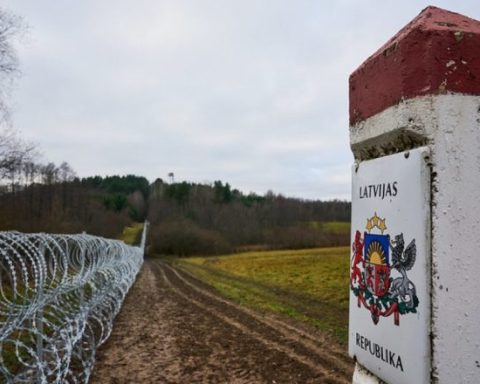
Let us recall the example of Latvia: After Russia’s full-scale military invasion of Ukraine began in February 2022, the Latvian government also raised the issue of severing the canonical ties of the Latvian Orthodox Church with the Moscow Patriarchate. With the initiative of the Latvian authorities, the Orthodox Church’s departure from the Moscow Patriarchate happened relatively quickly.
By September 2022, the Saeima had already passed legislative amendments requiring the Latvian Orthodox Church to become autocephalous and independent from the Moscow Patriarchate.
The law came into effect on January 1, 2023, and the state legally confirmed the status of the Latvian Orthodox Church as an independent church. Initially, Metropolitan Aleksandr (Kudryashov) of the Latvian Orthodox Church avoided taking a clear stance on the proposed legislative change, but in 2023, the Latvian Orthodox Church officially affirmed its new autocephalous status in its statutes, in accordance with Latvian law.
The reaction of the Moscow Patriarchate was predictable: the Russian Orthodox Church did not recognize the changes in Latvia and claimed that the Latvian Orthodox Church was still canonically dependent on Moscow. Patriarch Kirill called the status of the Latvian Church a “false autocephaly” and described the decision of the Latvian authorities as “a blatant state interference in church affairs.”
Leave cannot stay**
Both Bishop Daniel and the Abbess of Pühtitsa Monastery, Filareta, continue to claim that the Estonian Orthodox Church of the Moscow Patriarchate cannot independently leave the jurisdiction of the Moscow Patriarchate. However, church autocephaly aligns with canonical rules, under which the Orthodox Churches of Poland, the Czech Republic, and America also gained autocephaly in the 20th century.
In conclusion, the Estonian Orthodox Church of the Moscow Patriarchate has at least three options for leaving the jurisdiction of the Moscow Patriarchate: first, declaring autocephaly; second, transitioning under the jurisdiction of the Ecumenical Patriarchate of Constantinople; and third, establishing an independent ecclesiastical structure, which could later be recognized in the same way as the Orthodox Church of Ukraine.
* During the Synod meeting on January 10, 2025, a new name was chosen for the church – Estonian Christian Orthodox Church, but the legality of the new name selection still needs to be confirmed by the court.
** A wordplay in which the meaning of the sentence depends on the placement of the comma, resulting in opposite interpretations: “Leave, cannot stay” or “Cannot leave, stay.”