Last fall, several master’s students from Tallinn University’s Social Media and Society program, under the supervision of lecturer Jaana Davidjants, monitored and analyzed Russian-language social media groups. Pavel Prokopenko studied the Facebook group Русскоязычная Эстония, which has 56,000 followers, and Propastop presents a summary of his research.
Prokopenko’s analysis identified the spread of fake news, the use of misogyny, the bandwagon effect, and manipulation through polarization within the group Русскоязычная Эстония (Russian-speaking Estonia). According to Prokopenko, disinformation-spreading narratives largely rely on emotional appeals, with negative emotions in particular amplifying ideological differences and fostering distrust among people.
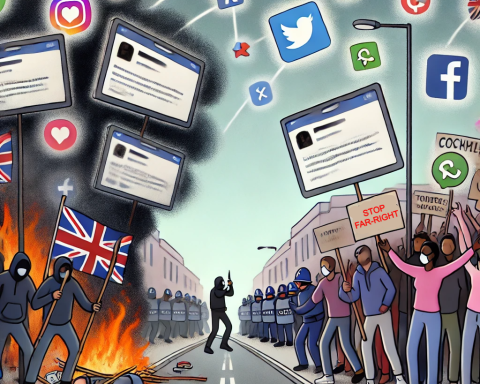
The most effective tactic on social media is inciting hatred
According to a 2021 study by Steve Rathje, Jay J. Van Bavel, and Sander van der Linden, social media posts go viral primarily due to anger toward opposing viewpoints. While social media platforms are not fully transparent about how their algorithms work, Facebook stated a few years ago in a post titled “Bringing People Closer Together” that it had adjusted its algorithms to prioritize “deeper” forms of engagement, such as reactions and comments on posts.
“Ironically, posts about political out-groups were particularly effective at generating comments and reactions, especially the ‘angry’ reaction,” the study found.
Misogyny as a Tool of Disinformation
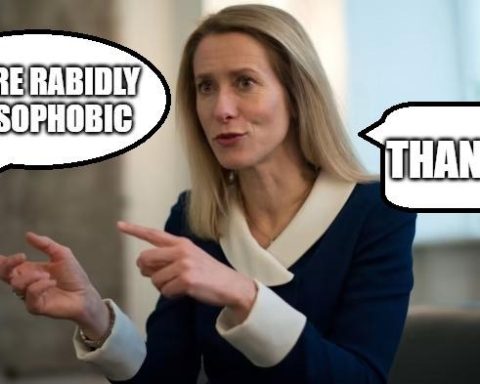
One of the most striking phenomena in Русскоязычная Эстония was the widespread presence of misogyny, directed particularly at prominent female politicians such as then-U.S. presidential candidate Kamala Harris and Kaja Kallas. This aligns with Jane’s (2016) concept of gendered cyber-intolerance, which suggests that online misogyny often serves political interests by undermining the credibility and leadership capabilities of female politicians.
In Русскоязычная Эстония, misogynistic narratives were amplified through targeted criticism and mockery, portraying figures like Harris and Kallas as incompetent and unfit for their positions. Such narratives reinforce unfair gender stereotypes while also diverting attention from the political issues raised by women.
For instance, comments about Kaja Kallas’s leadership style framed her as emotionally incompetent— a tactic commonly used to discredit powerful women. Narratives emphasizing women’s supposed emotional instability exploit audience biases, as social hierarchies are reinforced through cultural narratives that devalue certain groups. “The constant attacks on female leaders strengthen traditional gender roles by shifting the focus from broader political issues to personalized political accountability,” Prokopenko concluded.
The Bandwagon Effect
The English rhetorical technique known as the bandwagon effect has been translated into Estonian as the rahvamehe argument (people’s argument). The term bandwagon is believed to have originated when politicians travelled through their electoral districts on horse-drawn wagons accompanied by musicians. Standing on these wagons, they would shout their campaign promises to the crowd while music played. Supporters were invited to join the parade and jump on the wagon to show their allegiance. This created a desire among onlookers to align themselves with those already enjoying the free ride.
The bandwagon effect refers to the phenomenon in which public opinion reinforces itself. People tend to shape their political preferences and viewpoints by aligning with opinions perceived as the majority view in society (Schmitt-Beck, 2015).
In the Русскоязычная Эстония group, questionable statistics and surveys were frequently shared to create an illusion of widespread distrust toward Estonian state institutions or dissatisfaction with average salary levels. For instance, one post claimed that “80% of Estonians are unhappy with the government’s policies,” but it did not reference a credible source.
The constant presentation of such content fosters collective dissatisfaction within the group and amplifies overall discontent, pressuring members to identify with the alleged majority opinion. By manufacturing a false consensus, trust in societal institutions is undermined, and general distrust within the group is increased.
Fake News and Source Credibility
The spread of fake news plays a central role in shaping disinformation narratives within this group. During the observed period, regular users frequently shared dubious statistics and links to pro-Russian websites, some of which were explicitly Kremlin propaganda channels.
The dissemination of fake news exploited the group members’ low media literacy and pre-existing biases— a phenomenon studied by Wardle and Derakhshan (2017:45). The lack of critical source evaluation creates an environment where misinformation prevails.
One of the most prolific contributors to this trend is Denis Pastuhhov, who regularly posts questionable news content from Tribuna in Русскоязычная Эстония, a platform where he serves as news editor. Pastuhhov’s dual role as both a news outlet editor and a content creator within the group blurs the line between news dissemination and opinion shaping, further undermining the credibility of traditional journalism.
Emotional Manipulation Through Exploitation of Negative Emotions

In the Русскоязычная Эстония group, emotional manipulation—particularly through the publication of negative and polarizing content—played a significant role in influencing members. Posts frequently appealed to anger and fear, especially regarding political decisions perceived as restricting the rights of Russian speakers.
For example, posts by the group’s administrator, Marina Pavlenko, often demonized specific politicians or political parties, portraying them as a threat to Russian-speaking residents of Estonia. The comments on such posts frequently mobilized people to express anger and distrust toward the perceived source of the threat.
Although Pavlenko occasionally attempted to shift the group’s mood toward a more neutral or positive tone—by sharing beautiful photos of Tallinn or images of adorable pets—these posts were overshadowed by Facebook’s algorithm, which prioritizes negative content that generates higher engagement from group members.
Demonization and the Role of Key Figures
Demonization played a crucial role in shaping narratives within the Русскоязычная Эстония group, with key figures actively amplifying hostility toward specific political leaders and institutions. By portraying certain individuals as threats, the group’s administrators and influential contributors reinforced distrust and division among members.
One of the main figures driving this discourse was Marina Pavlenko, the group’s administrator. Her posts frequently framed Estonian political figures as hostile toward Russian speakers, using emotionally charged language to provoke outrage. For example, she regularly targeted government officials, portraying them as oppressors of Russian-speaking residents, which fueled a sense of victimization and grievance within the community.
Similarly, Denis Pastuhhov, a frequent contributor and editor of Tribuna, played a significant role in shaping the group’s narrative. By consistently sharing misleading or one-sided content, he blurred the line between journalism and propaganda, reinforcing the group’s existing biases and deepening polarization.
This targeted demonization not only mobilized group members emotionally but also influenced their perceptions of Estonian politics and institutions. By focusing on negative portrayals of key figures, these influencers fostered an environment of distrust, making it easier for disinformation and extremist narratives to spread unchecked.
Pro-Russian Propaganda – Myth or Reality?

Prokopenko acknowledged that his study presents several serious claims regarding the spread of pro-Russian propaganda within the group. “Before confirming these claims, it is essential to understand how real the threat of Russian narratives is in Estonia’s social media landscape,” he wrote. “A key study on Russian social media influence by Helmus et al. emphasizes that Moscow’s influence is most direct in neighbouring countries and former Soviet republics, where a significant number of ethnic Russians and Russian-speaking residents—often referred to as ‘compatriots’—live.”
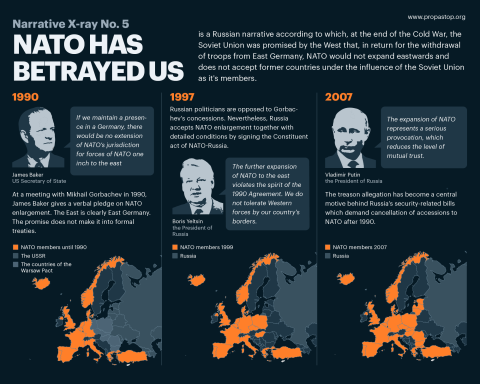
Russian-language Kremlin propaganda in neighbouring countries relies on their shared history as post-Soviet states. The Kremlin’s main propaganda themes emphasize that the West betrayed these countries in the 1990s by failing to fulfil promises of greater prosperity; evoke nostalgia for the lost status of great power; promote the idea that Eurasian civilization is based on traditional conservative values such as family and Orthodox Christianity; and, finally, instil fear of violent revolutions, portraying protests as a dangerous path leading to bloody civil wars (Helmus et al., 2018:10).
“Such a situation not only justifies the relevance of studying Russian propaganda but also confirms the fact that the group administrators have indeed disseminated pro-Russian propaganda, frequently referencing conservative values and the deceptive West,” Prokopenko asserts.
According to him, the analysis of Русскоязычная Эстония confirmed the use of misogyny, the bandwagon effect, the spread of fake news, and the emphasis on negative emotions. “Key figures in the group, Marina Pavlenko and Denis Pastuhov employ these strategies to shape the discourse within the group. The reasons for mobilizing the ‘angry’ members of the Russian-speaking community may vary, but one way to reduce the influence of such toxic ecosystems is to improve media literacy among Russian-speaking blue-collar workers,” Prokopenko writes.
In conclusion, Prokopenko compared Русскоязычная Эстония with another large Facebook group, Таллиннцы (Tallinners), which has 52,000 members. *”Both groups largely overlap, share similar content, and have followers with similar profiles. The biggest difference is that the former is actively moderated, while the latter is essentially unregulated. Although the follower profiles are alike, Таллиннцы demonstrates many of its members’ genuine hostility toward the West and strong loyalty to Russia,”* Prokopenko states.
The research methods used in this study were developed as part of the Trust and Visuality: Everyday Digital Practices (TRAVIS) project. The project is supported by the Estonian Research Council, the Academy of Finland, the Austrian Science Fund, and the Economic and Social Research Council (United Kingdom) within the CHANSE ERA-NET co-funding program, which has received funding from the European Union’s Horizon 2020 research and innovation program under grant agreement No. 101004509.
References and Cited Literature:
Communication Studies. 2024. „Framing Theory“ https://www.communicationstudies.com/communication-theories/framing-theory (visited 19.12.2024).
Gruzd, A., Haythornthwaite, C. 2013. „Enabling Community Through Social Media“ Journal Of Medical Internet Research, lk 1-17.
Helmus, T.C., Bodine-Baron, E., Radin, A., Magnuson, M., Mendelsohn, J., Marcellino, W., Bega, A., Winkelman, Z. 2018. „Understaing Russian Propaganda in Eastern Europe“ Russian Social Media Influence, National Defense Research Institute, lk 7-25.
Jane, E. A. 2016. “Misogyny online: A short (and Brutish) History” SAGE Publications.
Lakoff, G. 2010. “Why it matters how we frame the environment” Environmental Communication, vol. 4, nr. 1, 70-81.
Nabi, R. L. 1999. “A cognitive-functional model for the effects of discrete negative emotions on information processing, attitude change, and recall” Communication Theory, vol. 9, nr. 3, 292-320.
Rathje, S., Van Bavel, J.J., van der Linden, S. 2021. “Out-group animosity drives engagement on social media” Psychological and Cognitive Sciences.
Ridgeway, C. L. 2011. “Framed by gender: How gender inequality persists in the modern world” Oxford University Press.
Schmit-Beck, R. 2015. “The Bandwagon Effect” The International Encyclopedia of Political Communication,lk 1-5.
Wardle, C., & Derakhshan, H. 2017. “Interpreters: How do they make sense of messages?” Information disorder: Toward an interdisciplinary framework for research and policymaking, Council of Europe Report, 41-49.