Recent reports from Re:Baltica highlight a concerning development in Latvia’s fight against Russian propaganda. Despite traditional deterrence from the complexity of local languages, a surge in bot activity speaking rudimentary Latvian suggests a new tactic. This aligns with outrage over Latvian ice hockey players in Russia, raising fears of propaganda influence ahead of the European Parliament elections. Jānis Sārts, head of NATO StratCom Center, suggests these attacks, while currently cheap, may be in a testing phase. Additionally, the META report revealed over 60 websites, including a counterfeit of the popular Baltic news site Delfi, were shut down for impersonating legitimate news organizations. An investigation found these sites were controlled by Russian IT companies under EU sanctions, ultimately linked to Rostec, led by Sergey Chemezov, a close ally of Putin, as per The Insider.
In Estonia, most trolls who pretend to be locals are on Facebook. Already in 2019, there were cases of mass-produced fake Facebook/Meta accounts where pictures of real people were stolen and used to add credibility. They aimed to spread the #ESTexitEU message to polarize Estonian society ahead of the European Parliament elections.

HOW TO SPOT A RUSSIAN TROLL ACCOUNT IN 2024
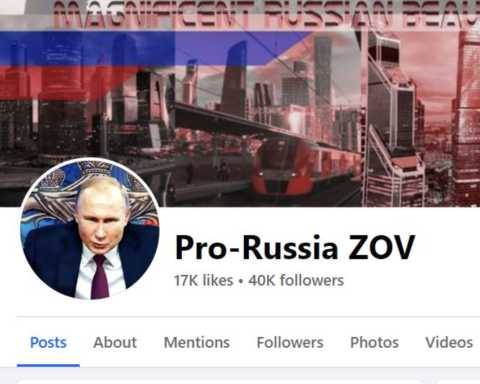
FRESH ACCOUNT, AI GENERATED OR STOLEN PROFILE PICTURE. One of the key indicators is the recent registration of these accounts, typically spanning from 2023 to 2024. Additionally, these trolls often employ AI-generated profile pictures or stolen images of individuals. Their background images may feature themes associated with the country they intend to target or support Russia while discrediting Ukraine or NATO.

This “Finnish account” hits high on both scores.
THEY GOOGLE-TRANSLATE THEIR POSTS, AND SOMETIMES GET CAUGHT WRITING FLUENTLY IN RUSSIAN.
Fortunately, automated translation algorithms still struggle to accurately translate from Russian to Estonian, Finnish, and other non-Germanic languages. As a result, native speakers can easily discern differences in translation quality. Yet it might soon change with the development of AI tools. It is always worth checking their replies, as often they slip and start writing in native Russian.

CHECK WHO THEY FOLLOW AND WHO FOLLOWS THEM. Moreover, these trolls tend to exhibit patterns of mutual following, with similar bios and interests among their profiles, suggesting potential coordination by the same individual or group. They frequently attempt to impersonate members of specific groups, adopting stereotypical names for the region and claiming to be located in the target country.

THEY REPOST RUSSIAN AND PRO-RUSSIAN PROPAGANDISTS In their efforts to amplify visibility, these trolls repost content from well-known pro-Russian propagandists. They also engage in mass-posting under the accounts of prominent figures who challenge Russian propaganda or commemorate historical injustices perpetrated by the Soviet Union or Russia. Their strategies frequently entail deflecting criticism through the dissemination of disinformation and engaging in whataboutism. Recent instances include trolls mass-posting under the posts of the Baltic state leaders and officials regarding the mass deportation of the population of their countries by the Soviets in 1949. Fresh accounts with not over 500 followers posted the same message, slightly rephrased, within a short period.

THEY GET VERIFICATION MARKS TO BE MORE VISIBLE. X accounts may display a blue verification mark on platforms where verification is no longer contingent on confirming identity but rather on a paid subscription basis. This subscription grants them partial immunity to reports and boosts their visibility, thereby amplifying the dissemination of mass information.

THE PRETEND TO BE NAFO OR OTHER PRO-UKRAINE ACCOUNT. On social media platforms, these trolls often follow accounts of individuals they aim to target or create lists of potential targets. This concerted effort underscores the systematic nature of their disinformation campaigns.
There are numerous instances of fake NAFO accounts disseminating pro-Russian propaganda or posting disturbing content in attempts to undermine the NAFO movement.

THEY FAKE TO REPRESENT THE FOLLOWING SOCIAL GROUPS:
- MAGA – to boost MAGA voices on the internet
- TEXit “supporters”—to sow discord within the US and spread Russian propaganda.
- Representatives from various European countries to feign support for pro-Russian and anti-NATO/Ukraine sentiments
- Ukrainians or volunteer Ukrainian soldiers—to disseminate false information among Ukrainians and/or solicit donations through deception.
- NAFO members to discredit the movement and get some inside information.
In the latest Financial Times article, Ralf Beste, head of the department for culture and communication at Germany’s Federal Foreign Office, stated, that
[The Russians] are looking for cracks of doubt or feelings of unease and trying to enlarge them.
This might be the main reason behind their efforts to pretend to be locals.
With the potential for AI to mimic human speech patterns and linguistic nuances, the traditional defences against propaganda, such as relying on grammatical and linguistic cues, may become less reliable. As a result, social media users may face new challenges in navigating online spaces and separating fact from fiction.
The images used are screenshots from the referenced pages.
Article was originally posted on 4.04.2024.