On October 30, the American magazine Time published an article authored by Simon Schuster, in which he analyzes the situation and prospects for Ukraine, using the statements of Volodymyr Zelenskyy and some unnamed people from his entourage made after he visited the USA in September. In the text, the author reflects on Zelenskyy’s attitude to the course and outcome of the war, mobilization and counteroffensive, assistance from partners, the state of the energy system, corruption, etc. The article soon became a hot topic among both Ukraine and Russia supporters.
Anonymous sources and focus on negative
Simon Shuster’s article features a quote from an unnamed source within President Zelenskyy’s inner circle, who expresses doubts about the president’s optimism. The anonymous source believes that Ukraine may not have viable options for victory in the ongoing conflict. The source is quoted as saying, “We have no options. We won’t win. But try to tell him that.”
 The article also hints at potential changes in the Ukrainian government, including the possible dismissal of a minister and a general responsible for the counter-offensive. Allegedly, this is due to concerns about the slow progress of Ukraine’s efforts on the front lines. As of now, there have been no official comments from the President’s Office, the Ministry of Defense, or the General Staff of the Armed Forces of Ukraine regarding these claims.
Shuster’s article contains a total of 14 unique anonymous quotes from individuals within the Ukrainian president’s inner circles, which is rather a large amount.
The article takes a closer look at what hasn’t been accomplished since 2014, even though during a press conference in Germany, Joint Chiefs Chairman Gen. Mark Milley shared a more optimistic perspective. He stated that Ukraine has successfully reclaimed over 54% of the territory previously occupied by Russia, and they are maintaining a strategic advantage in the ongoing conflict.
Reactions from Ukraine and Russia
The Office of the President of Ukraine considers Simon Schuster’s column in Time magazine as a “subjective perspective from a specific journalist.” This statement comes from Mykhailo Podolyak, an adviser to the head of the President’s Office.
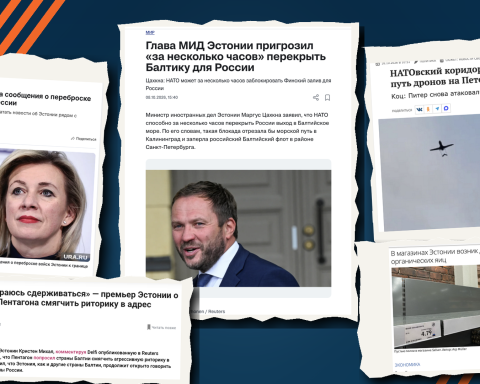
The article has stirred lively discussions in Ukraine and garnered a lot of attention in the Russian press, who were quoting Shuster’s takes in major news portals.


FOX News notably highlights concerns about corruption in Ukraine and suggests that President Zelenskyy is unwavering in his pursuit of nothing less than total victory, despite differing opinions from anonymous sources within his advisory circle.
The main points of the article
The article highlights a decline in international interest and support for Ukraine, including waning public support for aid in the United States. The article also addresses concerns about corruption within Ukraine’s government and the impact of the war on the country’s military and infrastructure. Despite the setbacks, Zelenskyy remains determined to win the war and is reluctant to consider negotiating a peace deal with Russia.
Public opinion in Europe is something opposite of such points.
 The majority of Europeans are ready to support Ukraine in the long run. Surprisingly, the number of those who believe that the most important thing is stopping the war as soon as possible, even if Ukraine had to forfeit territory to Russia, actually declined almost across the board, according to January 2023 polling reported by Krastev and Leonard (2023). Notable declines were seen in Romania and Italy – those characterized as the ‘southern weak links’. This may be due to citizens becoming more willing to support Ukraine in the long run. The same is valid for the US, as 62% of Americans supported the effort to help Ukraine regain all of its lost territory, even if that means a more prolonged conflict.
Target audience
The primary audience for the article, which touches on topics like war fatigue, Ukraine’s corruption, and the perceived realism of its goals, is the Western audience and decision-makers. This timing coincides with a significant development on October 30th, when Russia’s Defense Minister, Sergey Shoigu, expressed readiness for political discussions regarding Ukraine’s post-conflict future and cooperation with the West. In parallel, Ukraine, with support from Western allies, continues its efforts to liberate its territory within the borders of 1991. This article’s themes are highly relevant and timely in light of these developments.
The Author’s Identity and Its Significance
Simon Shuster is a reporter for TIME Magazine. His family moved from Moscow to San Francisco in 1989, where he grew up. After working on the Stanford Daily, his university newspaper, he returned to Moscow in 2006 to start his journalism career. For seven years, he reported on Russia and neighboring countries for publications like The Moscow Times, the Associated Press, and Reuters. Since joining TIME Magazine in 2013, his focus has been on reporting about the Ukraine conflict, the European migrant crisis, and ongoing tensions between Russia and the West. Among his earlier articles covering Ukraine, an article titled “Why Arming Ukraine Would Only Make Matters Worse” was published by TIME magazine on September 3, 2014. Some of his previous articles on Ukraine have raised concerns about a perceived pro-Russian bias in his reporting.
 The editor-in-chief of LB.ua, Oleg Bazar, pointed out that Simon Shuster has a history of criticizing the Azov regiment. Several years ago, Shuster authored an article that gained attention, alleging the training of thousands of neo-Nazis in Ukraine. The central figures in this piece were the “Azov” regiment and its founder, Andriy Biletskyi. Biletskyi later revealed that he had a personal conversation with Simon Shuster, who, according to Biletskyi, wrote a highly contested article about the Azov regiment, raising questions about the accuracy of the claims made in the piece.
Twitter users recently unearthed tweets from 2014  in which Simon Shuster expressed support for Crimea’s annexation by Russia. The mentioned facts lead to questions about Simon Shuster’s objectivity in his writing. His Russian background, previous endorsement of Kremlin perspectives, and reliance on numerous anonymous sources in his recent reporting all bring into question his impartiality.
This situation highlights the importance of readers getting to know authors better by exploring their past work and checking their social media profiles.
What can be learned from this?
This situation underscores the importance of readers getting to know authors better by exploring their past work and checking their social media profiles. While journalists are entitled to their personal beliefs and opinions, they must maintain objectivity in their reporting, providing a balanced and unbiased perspective to their readers.
In the case of Simon Shuster, readers may need to approach his reporting on Ukraine and related matters with a critical eye, considering his background, past endorsements, and reliance on anonymous sources. Objectivity is the cornerstone of trustworthy journalism, and it is the responsibility of both journalists and readers to ensure it is upheld in all reporting.
The images used are screenshots from the referenced pages.