Russia’s propaganda arsenal also includes the claim that the countries of the former Eastern Bloc have not achieved much on their own, but that everything was based on a strong economic foundation built during the years of the Soviet Union.
How did this narrative come about?
This narrative is part of a larger story that tells us how everything good has come from Russia. Both real culture and all sorts of inventions. At one time, an anecdote spread that if a Soviet person was shown a picture of radio inventor Guglielmo Marconi and asked who he was, he would answer: “I know him, his name is Aleksandr Popov here.” The same was true in the field of culture. The wooden puppet who wanted to be a boy was called Buratino, not Pinocchio, and he was written by Alexei Tolstoy, not Carlo Collodi. And so on and so forth.
Against this background, of course, nothing remains, the economic benefits must also come from one specific country, whether it was called Russia or the Soviet Union at the time.
What story does it tell us?
The narrative is also inextricably linked to the idea that Russia has a powerful economy, and it reinforces the latter by trying to show how the country’s economy has always been powerful, even during the Soviet Union, although that period tends to be talked about badly. Of course – mistakes were made, but (a lot) was pretty good, it tries to say. Or at least things were better than they would have been in the former dependent countries and occupied countries.
The reality, of course, was quite different. Although in Russia and elsewhere in the Eastern Bloc there was a grandiose industrialization during the Soviet era, especially in the field of heavy industry, as a rule, the industry created in this way was not able to really stand up on its own. Princeton University Professor Emeritus Stephen Kotkin has estimated in his book Armageddon Averted: the Soviet Collapse 1970-2000 (2001, updated edition 2008) that the country had about 15,000 industrial enterprises by the final years, of which two-thirds were not able to survive in market conditions.
In the book “The Russian Idea” (2001, in EE 2002), the former president of Finland, Mauno Koivisto, noted: “Vitali Shaposhnikov, who in the Central Committee of the Communist Party of the Soviet Union curated Finnish affairs, has stated in a conversation with the Finns that Finland lasted so long only because of its large natural resources. I think it is aptly said.”
Yegor Gaidar, the former prime minister of Russia, has also described how the currency earned from oil exports made it possible to “stop the growing food crisis, increase the import of equipment and consumer goods, secure the financial basis for an arms race and nuclear parity with the United States, and made it possible to carry out such risky foreign policy steps as the war in Afghanistan.” In the 1980s, Russian oil production decreased, and the price of oil on the world market fell by 69 percent. The subsequent reform policies of Mikhail Gorbachev led to the collapse of the Soviet Union, and not much remained of the country’s economy.
Who is it aimed at?
Like many other narratives, it has multiple audiences. One is Russia’s own citizens. Secondly, there are foreigners, primarily Russia’s potential supporters, mainly in those countries that once belonged to the Eastern Bloc in one way or another.
In many countries of the Eastern Bloc, there is a certain amount of support for pro-Russian parties, probably partly due to nostalgia but also among younger people. For a comparison between East and West, it is worth looking at Germany, where the popularity of both the right-wing AfD and the left-wing Die Linke is clearly higher in the former East German federal states.
 Of course, there are also Soviet nostalgics in Estonia. On Facebook, for example, the groups “ENSV – nostalgic Soviet Estonia” and “USSR – nostalgic Soviet Union” have less than 900 members in the first, and more than 600 in the second, probably a large part of them are just curious. Some of the members of these groups tell relatively bad stories about how everything was better in Soviet times, but they also have their share of opponents.
What are its goals?
To the citizens of Russia, the goal is to once again confirm to them how big and powerful their country is, has always been, and always will be. It helps to keep the people’s spirits up in case of other difficulties because, at least, the country is strong.
In the case of foreigners, the aim is probably to strengthen their support for Russia by reminding them how grateful they should be for all the good that has come from it over the years. An additional goal is probably to brag about how Russia is so powerful that it has also built up several other countries that would not have reached the country on their own.
Since the people of these countries usually tend to see history a little differently, it is easy to accuse them of being ungrateful within this narrative. From here, however, we circle back to the propaganda intended for domestic consumption: that foreign countries, which should be grateful to Russia, shamelessly do not respect their benefactor and do not recognize the common past.
How is it going at the moment?
 This narrative probably won’t find too many believers outside of Russia because the changes are too obvious for that. Only remnants of Soviet-era companies remain in most countries. There are certainly more people who think that these companies should be preserved than those who think that the current economy is based on that.
According to Kotkin, by the mid-1980s, industry, transport, and construction accounted for about 70 percent of the Soviet Union’s economy. “No country has ever had such a large share of the economy in large factories and mines,” he states. At the same time, a significant part of these factories were either built in the 1930s or restored after the Second World War, based on the technical conditions of the 1930s. Thus, after the collapse of the Soviet Union, this industrial base was a burden on all (re)independent countries. The deindustrialization that had already occurred in the Western world 20 years earlier was taking place everywhere in the former Eastern Bloc.
Trying to check the truth of this narrative according to Estonian data, we immediately stumble upon a serious problem. Specifically, if you try to compare the economy of the Soviet era with the current one, it turns out that the statistics are not comparable.
It is not only a matter of the custom of dictatorial states to falsify data to make it more suitable, nor is it a matter of the share of the black market, which grew larger and larger, especially in the last years of the USSR, due to the distortions of the planned economy. Although the statisticians of the Soviet Union also calculated the gross domestic product according to the international standard (whether it can be believed), which can be compared with other countries, domestically, for ideological reasons, completely different data were used (there is no point in taking them too seriously either).
The economics of the Soviet Union were based on the doctrine of the value of work, and therefore the term net product was used there. According to this theory, productive work was only the creation of material values; service work had no value. Thus, transport, raw materials, and land had no value. “I used to read Soviet economic textbooks with a pen in my hand until I lost hope,” describes Koivisto, who was the head of the Finnish central bank for a long time, according to whom they did not try to describe reality but the world as it should be according to ideology.
It is very difficult to compare the data of the modern economy, where services play an increasingly important role, with statistics compiled on such a basis. This requires converting the indicators of the time to modern form, and this is not always possible.
This is why it is difficult to come up with statistics about occupied Estonia. On the one hand, the picture was similar to the entire Soviet Union; the industry consisted mostly of giant companies in local terms. In 1980, more than 87 percent of industrial production here was completed in enterprises that were subordinate to Moscow. On the other hand, it was kind of different—Estonia had a larger than average share of agriculture, primarily livestock farming. As Lauri Vahtre has written in volume VI of “History of Estonia,” Estonia became a pork and dairy farm for the Soviet Union, where concentrates were imported and finished products were exported. The latter headed mainly to Leningrad.
If we want to know how much of it is left, perhaps the best thing we can do is to compare the data collected by the newly independent Estonian Statistical Office in 1992 with the current situation. They aren’t too comparable either, because the rules for classifying industries have changed in the meantime, but it’s still better than nothing.
Looking at the structure of the industrial sector in 1992 and 2021 reveals that it has completely changed. The main branches of that time have lost their importance, and new ones have emerged in their place. In 1992, nearly 32 percent of the industrial sector was the production of food and beverages; a distant second was the textile industry with nearly 12 percent, and the third was the production of chemicals and chemical products with almost eight percent. In the year before last, wood processing took first place with 21%, followed by food manufacturing with nearly 11%, and more than 10 percent was metal product production, excluding machines and equipment.
 In Eastern Europe in general, the picture is somewhat different because, in some places, governments made efforts to preserve Soviet-era companies. The countries were also slightly different – in Hungary, private business functioned to some extent, in Poland the collectivization of agriculture stopped. Some countries imported Western consumer goods to appease the people. However, in the end, it probably doesn’t make much sense to look elsewhere than Germany, where the federal states that were part of the former East Germany are still significantly poorer than the former West Germany even now, 34 years after the country’s reunification and all kinds of support programs.
As a last resort, some Russian propagandists might argue that although little of the Soviet-era economy has remained, Estonia would be poorer now than it is now if it had maintained its independence, without a large contribution from Russia. For this purpose, it is probably instructive to compare our standard of living with Finland before the Second World War and now. Of course, the statistical indicators have changed once again in the meantime.
 Andres Adamson states that, in terms of economy, Finland was probably ahead of Estonia by the end of the 1930s. At the same time, he points out the data of the Maddison project, which deals with the compilation of historical number series, according to which, reduced to purchasing power, both Estonia and Finland were among the 20 richest countries in the world, but Finland’s level was slightly less than three-quarters of Estonia’s. We may have been poorer, but we got much more for the same money, which is why, after all, an Estonian could buy more than a Finn. By now, the roles have clearly changed: according to Eurostat, Estonia’s GDP per inhabitant based on purchasing power parity last year was 85 percent, while Finland’s was almost 110 percent of the European Union average.
Thus, we can conclude with Estonian politician Rein Taagepera’s words that with the establishment of Soviet power, Estonia gained one hour in terms of time, but lost two decades in terms of the increase in the standard of living.
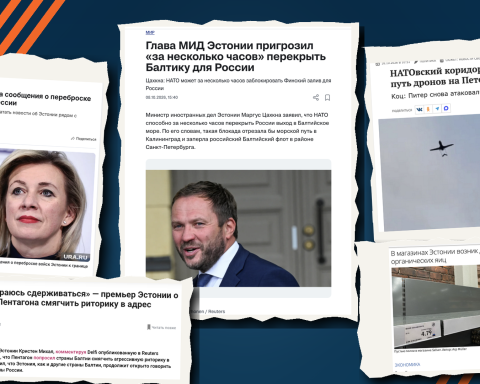
The used images are screenshots from the referenced pages. The infographic was created by the editorial team of Propastop.